

Frankfurt, September 1963. Ferdinand “Butzi” Porsche is twenty-five years old, and the car he designed is sitting on the motor show stand being studied by people who don’t yet know what they’re looking at. It’s called the 901. It has a flat-six engine mounted behind the rear axle, a shape unlike anything else on the floor, and a chassis layout that any engineer in that room could have told you was a problem waiting to happen. Butzi Porsche knew it too. So did his father. So did every person at Zuffenhausen who had spent the previous two years building it. They built it anyway, and in doing so started an argument with physics that the company has been winning, losing, and winning again for sixty years.
A trademark dispute with Peugeot forced a name change before the car reached production. The 901 became the 911, and the world got a car that has never quite followed the rules everyone else agreed to follow. Most performance cars of that era put their engines in the front, over the steered wheels, where the weight is manageable and the handling is predictable. A few put the engine in the middle, behind the driver, which is the layout that pure physics prefers. Porsche put theirs behind the rear axle entirely, which is the layout that physics tolerates with reservations and punishes without mercy when you push past its limits. The company understood the consequences. They chose to manage them rather than avoid them, and that single decision is the reason the 911 is what it is today.
What the Physics Actually Says
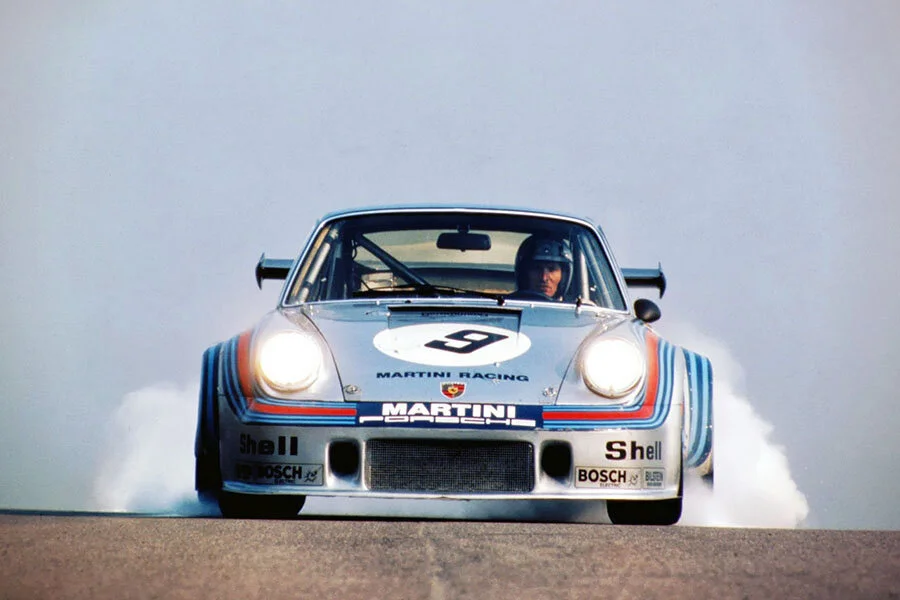
Roughly sixty percent of a 911’s weight sits over the rear axle. In a corner, that mass behaves like a pendulum. The car turns, the rear wants to keep going in the direction it was already traveling, and the result is oversteer: the tail steps out, the nose points further into the corner than you intended, and the car rotates around a pivot point that can move very quickly if you don’t understand what’s happening. Lift off the throttle mid-corner in an early 911 and the weight transfer forward unloads the rear tyres at exactly the wrong moment. The car doesn’t warn you gently. It tells you once, and then it tells everyone watching.
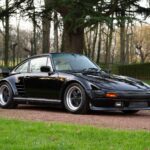
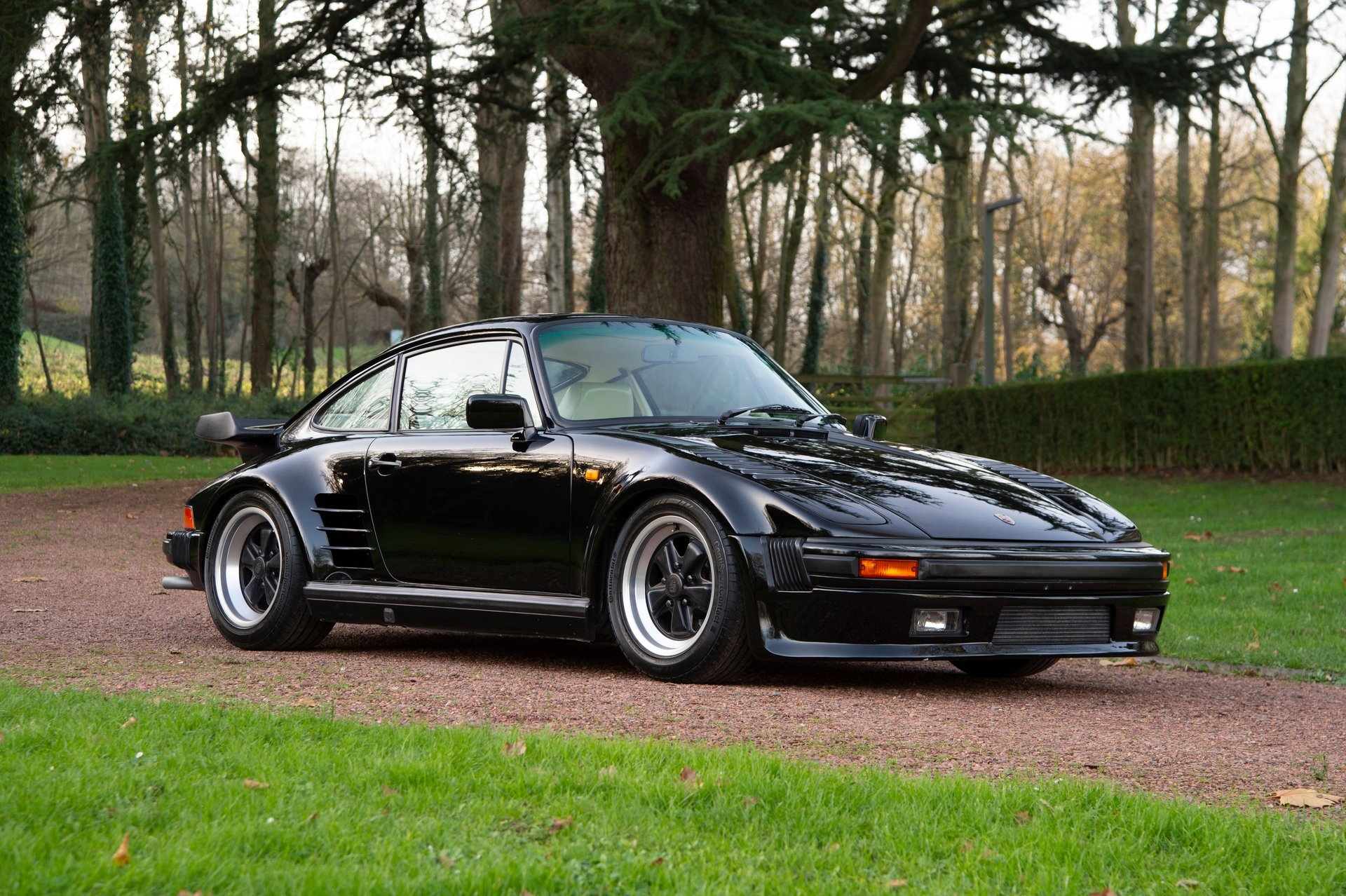
This earned the early 911 a reputation that it still carries in the memories of the people who drove them without fully understanding them. “Widow-maker” was the term that got attached to the 930 Turbo in particular, the 1975 car that added significant forced-induction power to the rear-biased chassis and introduced a new variable: turbo lag. The boost didn’t arrive smoothly. It arrived all at once, mid-corner, asking the rear tyres to deal with a sudden surge of torque at the exact moment the chassis was already working hard. In the hands of someone who knew the car, that power delivery was exploitable. In the hands of someone who treated it like any other sports car, it was genuinely dangerous. The 930 Turbo made very few allowances for the uninformed.
The physics of the 911 isn’t a flaw that Porsche failed to fix. It’s a characteristic they chose to manage, generation by generation, because fixing it would have meant building a different car entirely.
What gets lost in that reputation is the other side of the equation. The same rear weight bias that creates oversteer in extremis also puts the engine’s mass directly over the driven wheels under acceleration, which means traction off a corner exit is exceptional. Braking performance benefits from the same weight distribution for the same reason. In wet conditions, where front-engine cars struggle with front-end push, the 911 plants itself and pulls. The layout creates liabilities and advantages simultaneously, and the engineers at Porsche spent six decades building a car that collected the advantages and managed the liabilities down to something the driver could learn to use rather than fear.
Eight Generations of the Same Argument
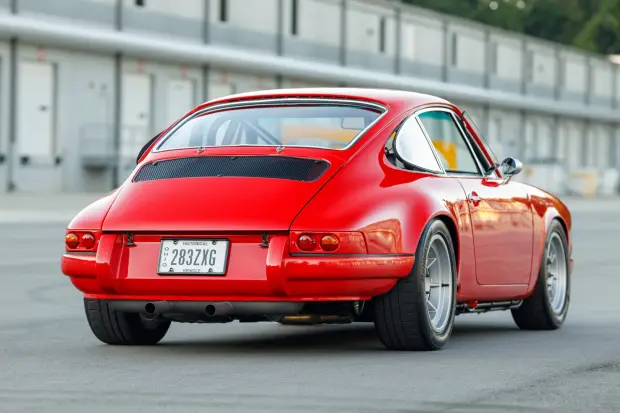
Each generation of the 911 is a record of Porsche’s engineers inheriting a problem from the generation before and choosing, again, not to resolve it by changing the layout. The Carrera RS 2.7 of 1973 added the ducktail spoiler, a functional solution to the rear lift that the engine’s position created at speed. It worked, it looked unlike anything else on the road, and it became one of the most recognizable visual signatures in automotive history. The problem produced the solution. The solution became the identity.
The 964, arriving in 1989, brought optional all-wheel drive to the 911 for the first time, a quiet acknowledgment that some buyers needed the chassis to do more of the work for them. Porsche didn’t market it as a concession. They marketed it as a capability, which it genuinely was, and the Carrera 4 gave the 911 a new audience without alienating the people who wanted the rear-wheel-drive car in its purest form. Both versions existed simultaneously, which is a pattern Porsche has returned to in every subsequent generation: build the car that the physics of the layout makes possible at its best, and then build tools that let more people access it safely.
The 996, arriving in 1997, was the most controversial 911 in the model’s history, not because of what it changed about the chassis but because of what it changed about the engine. Water cooling replaced air cooling after thirty-three years, and a generation of owners felt the loss in a way that went beyond temperature management. The sound changed. The character changed. The specific quality of the flat-six’s voice at high revs, the sound that Porsche owners describe the way other people describe music they heard at a formative age, was different. Porsche had made a rational engineering decision that was correct on every measurable axis and managed to feel like a betrayal to the people who cared most about the car. That tension between engineering progress and emotional continuity is one the company has been negotiating ever since.
The 991 and 992 generations brought turbocharged engines to the base Carrera models, more electronic management systems, torque vectoring, and stability controls sophisticated enough that a driver of genuinely modest ability can now explore speeds that would have been genuinely dangerous in a 1973 RS. Lap times improved. Accessibility improved. The gap between what the car is capable of and what the driver needs to know narrowed considerably. These are real achievements, built on decades of understanding the car’s nature. They are also, depending on who you ask, part of a longer process of softening something that was once uncompromising.
What the Wrong Answer Created
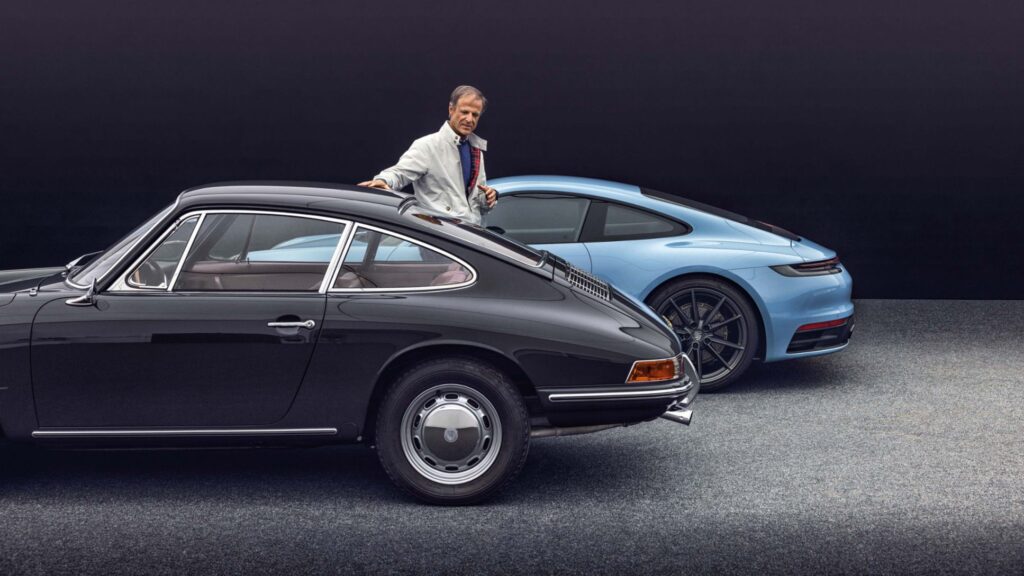
Michael Mauer has been Porsche’s chief designer for over twenty years. He knows the 911’s architecture the way a musician knows an instrument they’ve spent their career playing, and when he talks about the rear-engine layout, he doesn’t talk about it as a constraint. “The shape of the car is closely related to this layout,” he said. “If I had to fundamentally change the layout, it wouldn’t be a 911 anymore.” That’s not a marketing line. It’s a statement about identity that the engineering actually supports. Because of where the engine sits, the front end is low and uncluttered, the wings rise higher than the bonnet, and the silhouette has a specific forward-leaning tension that no front-engine car can replicate. The layout produced the shape. The shape became the icon. They’re not separable.
The drivers who understand 911s best are often the ones who learned on the cars that demanded the most. The rear-engine character asks something specific of the person behind the wheel: smoothness on entry, commitment through the middle of a corner, patience with the throttle on exit. Get those things right and the car rewards you with a communication through the steering and the rear end that drivers describe as unlike anything else at any price point. The 911 tells you what it’s doing. It tells you early, precisely, and honestly, and if you’ve developed the habit of listening, you can use that information to drive the car closer to its limits than feels rational from the outside.
“If I had to fundamentally change the layout, it wouldn’t be a 911 anymore.” — Michael Mauer, Porsche Chief Designer
That relationship between driver and car is a direct product of the layout’s demands. A mid-engine car is more naturally forgiving because the weight is centralized and the balance is closer to neutral. It’s easier to drive quickly. It’s also, in the opinion of many serious drivers, less interesting to drive quickly, because the conversation between car and driver is less specific. The 911 has always had opinions. It has always asked questions. The degree to which modern electronics have softened those questions is real, and it’s a legitimate debate in the 911 community, but the underlying nature of the car is still there in the chassis, still present in the way the rear end loads up under power and the way the nose lightens when you brake hard into a corner. You can feel what Butzi Porsche built in 1963 underneath everything Porsche’s engineers have added since.
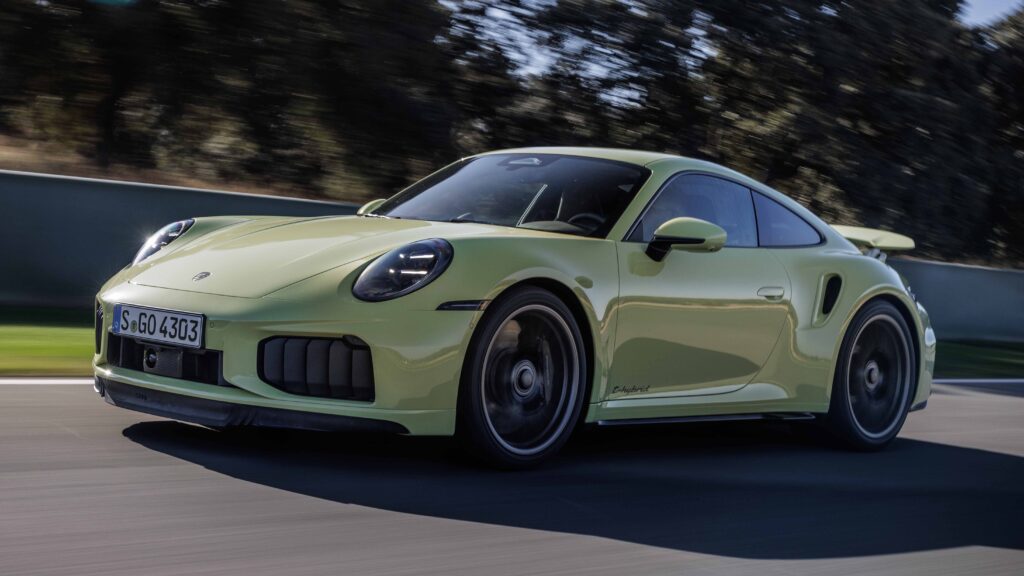
The 992, the current generation, is the most capable 911 ever built. It’s faster, safer, more consistent, and accessible to a wider range of drivers than any previous version. It also has more computers involved in the act of driving than the entire computing infrastructure of the Apollo program. What those computers are doing, at the most fundamental level, is managing the consequences of a decision made in 1963 that everyone knew was technically incorrect and nobody was willing to reverse.
Porsche’s own marketing has always acknowledged this with a kind of quiet pride. “They said the engine should always be in the front,” runs one of their lines. “In the 911, we put it in the rear.” The pride isn’t in the defiance. It’s in what the defiance produced: a car with a character so specific that six decades of engineering progress, two engine cooling systems, eight body generations, and the full weight of modern electronic management haven’t managed to erase it. The 911 still handles the way it does because the engine is still where it is. Everything else is conversation.
Whether the current version’s accessibility comes at the cost of something that made earlier cars worth the difficulty is a question every 911 owner eventually confronts. Drivers who came up on air-cooled 993s talk about the 992 the way veterans talk about a city they used to know. Something essential is still there. Something has also changed. The car is better on every instrument you can measure. Whether it’s better in the way that matters most depends entirely on what you were measuring in the first place.
Engineering data and historical context drawn from Porsche AG technical documentation, Michael Mauer interviews, and accounts from drivers across multiple 911 generations. The Garage examines performance as a set of decisions, not a list of specifications.
The Garage | Vitesse