



Ten Cylinders, One Problem
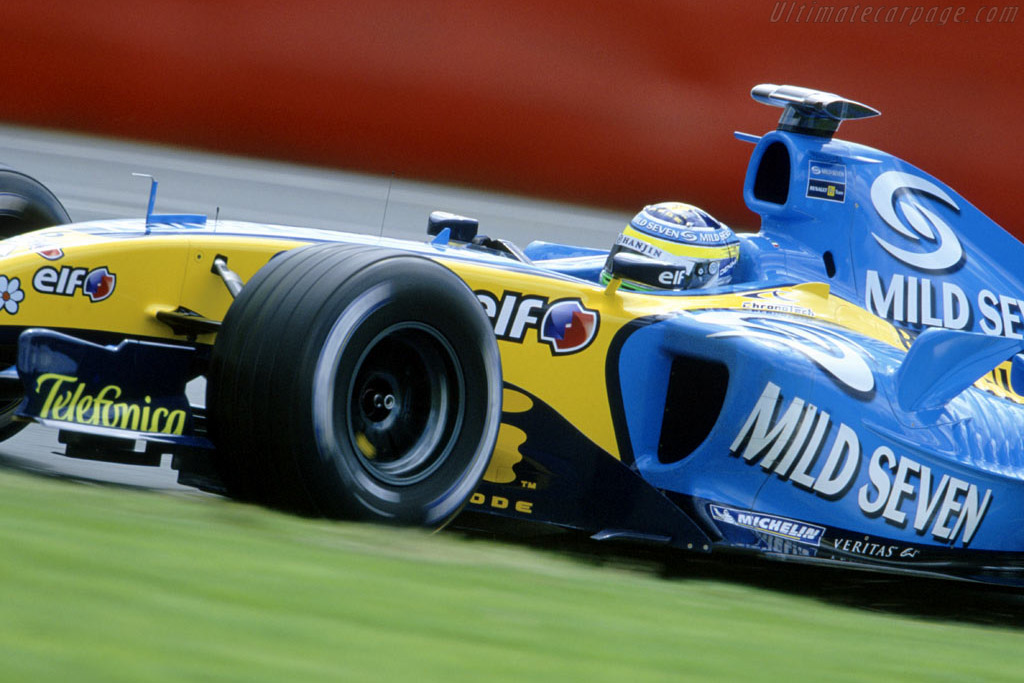
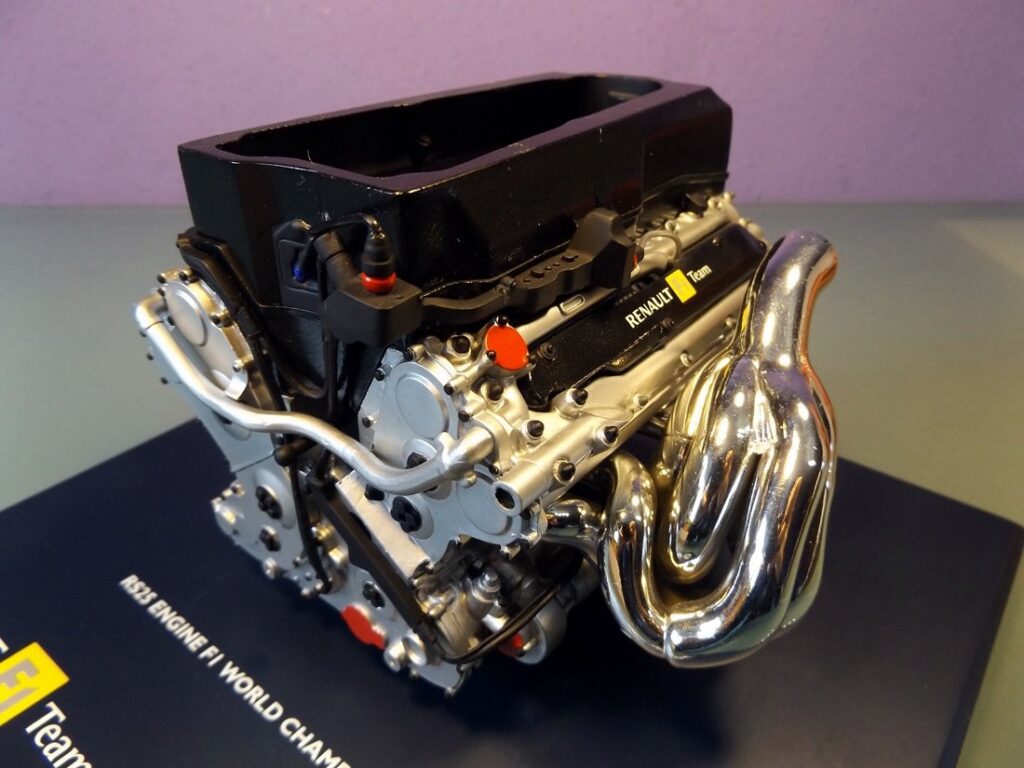
In 2005, the last naturally aspirated V10 Formula One engine turned its final competitive lap. The Renault RS25 carried Fernando Alonso to the championship, and the formula closed around an era that had defined elite motorsport for more than a decade. What followed, in the years after, was a kind of grief that the sport’s fanbase has never fully resolved. The sound is what people talk about. It’s almost always the sound.
That conversation, as understandable as it is, has obscured something more interesting. The V10 wasn’t built to sound the way it did. The acoustic character was a consequence, not a design brief. Understanding what those engines actually were, mechanically and philosophically, makes the loss more specific and more honest than nostalgia allows.
The regulations that governed the late V10 era allowed 3.0 liters of displacement. That ceiling was fixed. The only variable a manufacturer could chase was how efficiently it could extract power from that volume, and the physics of combustion pointed clearly toward one answer: more cylinders, spinning faster.
A naturally aspirated engine produces power through the combustion of air and fuel. The more combustion events per minute, the more power. But individual cylinder size constrains how quickly a combustion chamber can fill, fire, and clear. Smaller cylinders, arrayed in greater numbers, can cycle faster because there’s less mass to move and less distance for exhaust gases to travel. Ten cylinders at 3.0 liters means each cylinder displaces 300cc. That’s a small combustion chamber. It can rev higher than a larger one because the mechanical loads on each individual component are proportionally reduced.
The V10 teams were chasing revs because revs were where the power lived. By the final seasons of the formula, Ferrari’s 056 and the Renault RS26 were both turning north of 19,000 RPM in race conditions. Some qualifying configurations pushed past 20,000. These weren’t engines operating near their limits in the way road car engines do. They were built specifically for a band of operation that most reciprocating machinery never approaches.
The configuration, ten cylinders, wasn’t an aesthetic choice. It was the correct engineering answer to the problem the regulations created.
Why It Sounded Like That
At 19,000 RPM, a V10 fires its cylinders at a rate that produces sound waves in a frequency range the human ear processes as something between a scream and a chord. The firing interval on a 72-degree V10, the configuration Renault used, spaces combustion events unevenly, which creates a harmonic layering that a flat-plane or cross-plane arrangement doesn’t produce. Ferrari’s 056 used a different bank angle, which shifted the acoustic signature slightly toward a sharper, more staccato character. Both were audible from distances that seemed implausible for a mechanical object.
The volume wasn’t designed either. Exhaust systems on naturally aspirated engines at that rev range are moving gases at velocities that force a pressure wave directly into open air. There’s no turbine absorbing energy, no intercooler dampening the pulse. The exhaust exits the system with most of its energy intact, and that energy translates directly to sound pressure.
“The exhaust exits the system with most of its energy intact. What the crowd heard at Monza or Suzuka was combustion physics at a frequency the engineering world had never previously normalized.”
What the crowd heard at Monza or Suzuka, standing three meters from the barriers, was combustion physics at a frequency the engineering world had never previously normalized. It wasn’t theater. It was the byproduct of the engineering solution to a regulatory constraint, heard by people standing close enough to feel it.
Power Without a Floor
The power delivery character of a naturally aspirated engine is inseparable from its rev range. There’s no torque fill, no boost threshold, no point at which stored energy supplements combustion. What the engine makes, it makes entirely from air, fuel, and mechanical rotation. At 19,000 RPM, a V10 in this formula was producing somewhere between 900 and 950 brake horsepower from 3.0 liters. That number came from the top of the powerband, and getting there required the driver to manage the engine’s behavior across a wide rev range where the character shifted noticeably.
Drivers from this era describe the experience in terms of commitment. The engine wanted to be at the top of its range, and working below it felt like leaving the machine incomplete. Jenson Button, in interviews reflecting on his early career, described the sensation of the powerband arriving as something you worked toward rather than something that found you. Michael Schumacher’s throttle traces from this period show a precise, graduated application that reflects an understanding of exactly where the engine’s character changed.
This is meaningfully different from the current hybrid formula’s power delivery. The MGU-K fills torque from low RPM, which smooths the power curve and reduces the cognitive and physical demand of throttle management. That’s not a criticism of the current formula. It’s an observation about what the V10 required and what it rewarded. Drivers who could work precisely within a narrow, high band had an advantage that the current architecture doesn’t replicate.
The Weight of Simplicity
The V10 had no energy recovery system. No battery pack, no motor generator units, no torque vectoring from harvested braking energy. The power unit was, by current standards, architecturally simple: combustion, transmission, done. That simplicity carried its own costs.
Fuel consumption in the V10 era was significant enough that race strategy had to account for fuel load at the start affecting lap time, and the burn rate through a stint affecting tire behavior as the car lightened. This wasn’t the fuel-efficiency optimization that defines current hybrid racing. It was a more blunt calculus: how much fuel do you need to finish, and how much does carrying it hurt you in the first third of the race.
Reliability was the other constraint that simplicity didn’t solve. Engines turning 19,000 RPM are under mechanical stress that no amount of materials engineering fully eliminates. The V10 era’s attrition rate reflected this. Engines failed in ways that the current formula’s more conservative architecture largely prevents. Ferrari’s 056 was revered partly because it combined extreme output with relative dependability. The Renault RS26, which powered Alonso through the 2006 season, was a more aggressive design that required careful management to survive race distance.
“The V10 had no energy recovery, no torque fill, no hybrid architecture. The power unit was, by current standards, architecturally simple. That simplicity carried its own costs.”
Simplicity, in engineering, is rarely a virtue in itself. The V10 was simple relative to what came later, but it was also operating at the edge of what its materials and design philosophy could sustain.
What the 2006 Rule Change Actually Removed
The transition to V8s in 2006 was framed publicly around cost reduction and sustainability, though the noise argument ran in both directions depending on who was making it. What the rule change technically accomplished was a reduction in maximum RPM, a reduction in cylinder count, and a corresponding change in power delivery character that the sport spent the next decade navigating as it moved toward the hybrid formula raced today.
The V8 era produced good racing. The current hybrid formula has produced some of the most technically sophisticated machinery in the sport’s history. Neither of those facts requires softening to make an honest observation about what the naturally aspirated V10 specifically was.
It was an engine that extracted maximum power from combustion alone, without assistance, and that demanded from its drivers a precise physical relationship with a narrow band of operation. The sound was real, but it was the smallest part of what made the formula distinctive. What was actually lost was a specific kind of mechanical honesty: an engine that couldn’t supplement its own deficiencies, driven by people who had to meet it at its limits rather than have those limits softened for them.
The Renault RS26 and Ferrari 056 weren’t the last engines of their kind because the technology failed. They were the last because the sport decided, reasonably, to move toward something more efficient and more sustainable. That’s a defensible decision. It doesn’t change what the formula was, or what it asked of the people who built and drove within it.
The V10 is gone. Understanding it clearly is more useful than missing it. And there’s more to understand than the sound.