


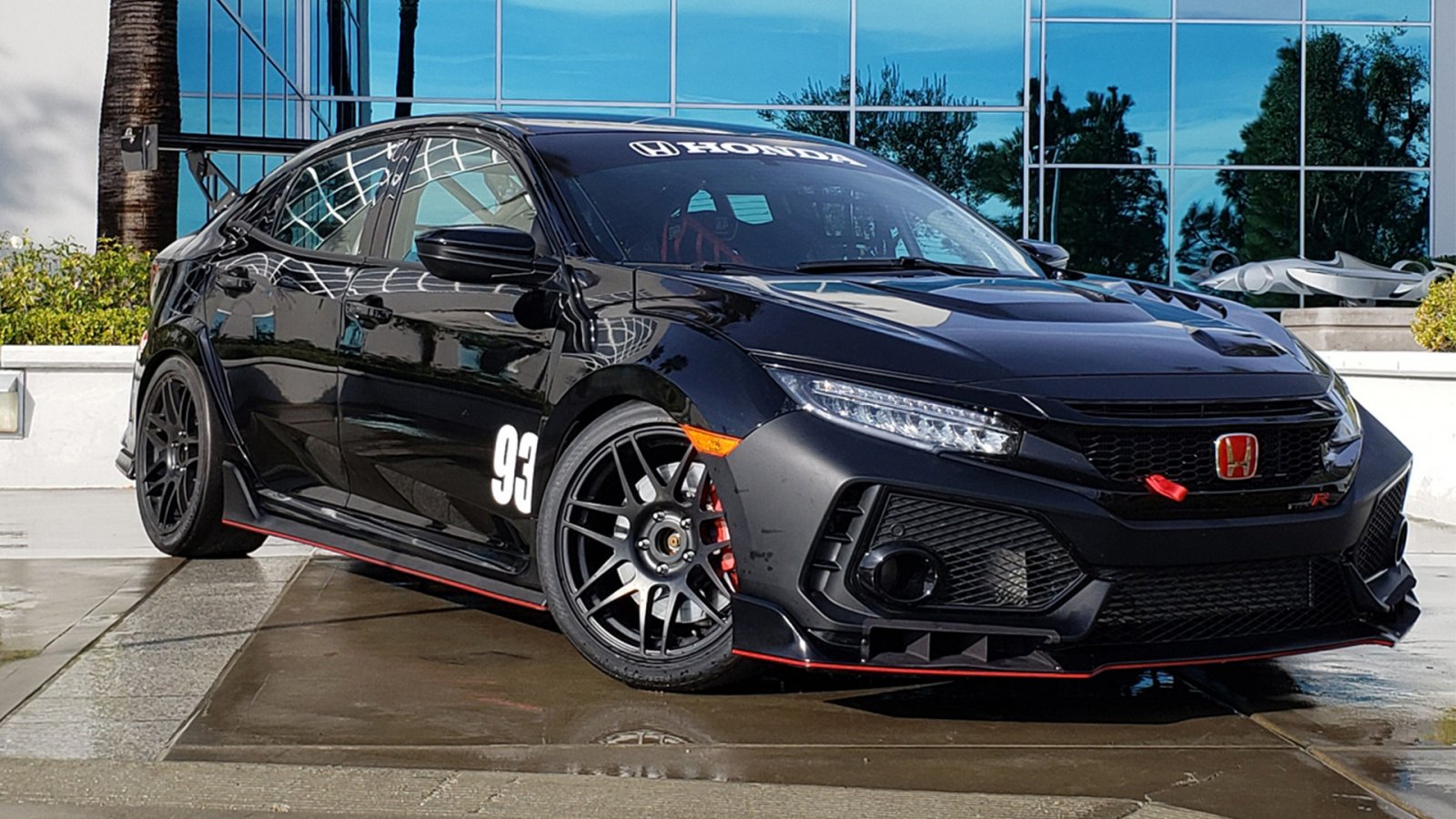
There’s a version of performance that flatters you. It catches your mistakes before you make them, fills in the gaps between your inputs and the road’s demands, and delivers a result that feels better than it should. A lot of modern performance cars work this way, and most of them are genuinely impressive. The Civic Type R doesn’t work this way. It isn’t trying to make you feel faster than you are. It’s trying to show you exactly where you are.
That’s a specific choice, and it runs through everything Honda did with this car.
What the Numbers Don’t Tell You
315 horsepower from a 2.0-liter turbocharged four-cylinder is a real number. So is the Type R’s sub-six-second 0-60. Those figures show up in comparisons and buying guides, and they’re accurate, but they don’t explain the experience. A lot of cars make similar power. Far fewer cars tell you what that power is doing once it leaves the engine.
The difference lives in how the Type R is tuned to communicate. Honda’s engineers didn’t just build a fast front-wheel drive hatchback. They built one that consistently reports back to the driver, through the wheel, through the pedals, through the way the body loads and unloads in corners. The information flow is unusually dense for a car at this price point, and unusually honest for any price point. You feel the tires working. You feel when they’re close to their limit. That’s not an accident. It’s the result of deliberate decisions about suspension compliance, steering calibration, and chassis stiffness that prioritize feedback over forgiveness.
Most drivers won’t notice this immediately. The Type R is fast and capable enough that ordinary driving doesn’t stress it. But push it into a corner at real speed and the conversation starts. The car doesn’t smooth things over. It tells you what it found.
The Steering as a Diagnostic Tool
“The steering doesn’t just turn the car. It reports what the front tires are negotiating.”
Front-wheel drive performance cars have a reputation for steering that feels blunted at the limit. The front axle is doing too many things at once, and somewhere in that compromise, the sensory connection between driver and road gets diluted. The Type R navigates this better than almost anything in its class, and the reason is worth understanding.
Honda’s variable-ratio steering rack changes its response rate depending on steering angle, quicker near center for responsiveness, slower at larger angles to prevent overcorrection. But the more important quality isn’t the ratio. It’s the texture. The wheel loads progressively as grip builds, gives weight when you’re asking the tires to work, and lightens up precisely when traction is beginning to go. That’s not just pleasant. It’s diagnostic. The steering doesn’t just turn the car. It reports what the front tires are negotiating.
This matters in ways that go beyond track driving. On a winding back road, in wet conditions, on a highway on-ramp pushed a little harder than usual, the Type R tells you what’s happening under the car in real time. That information makes you a more capable driver, not because the car is doing the work, but because it’s giving you the data to do it yourself.
The Weight of the Front Axle
The fundamental problem with fast front-wheel drive cars is geometric. The front wheels steer, brake, and put power down simultaneously, and those three demands don’t naturally cooperate. Under hard acceleration out of a corner, the front tires are being asked to pull the car forward and change its direction at the same time. That tension doesn’t disappear. It gets managed.
Honda’s approach in the Type R centers on a limited-slip differential up front, combined with a multi-link rear suspension that keeps the rear axle stable enough to let the front do its job without fighting itself. The LSD distributes torque between the front wheels depending on available grip, which reduces the understeer that plagues most front-wheel drive cars under power. But it doesn’t eliminate the underlying physics. It makes them workable, and it keeps the driver involved in working them.
“The Type R doesn’t solve the problem of front-wheel drive performance. It makes that problem tractable, and then it hands it to you.”
Brake bias plays a role here too. The Type R’s braking is calibrated to allow the driver to use trail braking effectively, carrying brake pressure into corners to rotate the car and settle weight onto the front axle. That’s a technique, not a feature. The car is set up to reward it, but it doesn’t perform the technique for you. The Type R doesn’t solve the problem of front-wheel drive performance. It makes that problem tractable, and then it hands it to you.
Where the Interior Tells the Truth
The wing is the obvious thing. It’s large, functional, and completely indifferent to how it looks parked in a grocery store lot. Honda didn’t put it there for visual drama. It generates measurable downforce at speed, and at the speeds the Type R is capable of, that downforce changes how the rear of the car behaves. It’s an engineering decision that happens to be polarizing aesthetically, and Honda didn’t soften it.
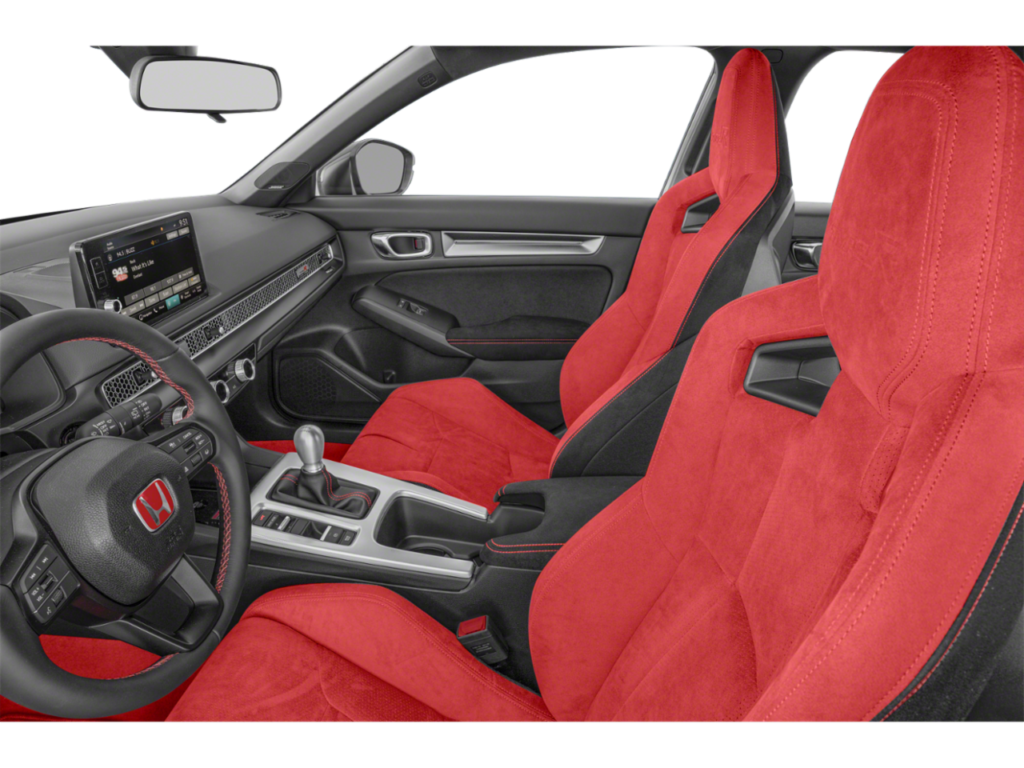
The interior follows the same logic. The Recaro-style bucket seats are firm and bolstered aggressively. They hold you in place during lateral loading and make a two-hour highway drive slightly more work than a plush sport seat would. That’s the trade. The ride in Comfort mode is firm enough that you notice pavement quality. In Sport or Track, the suspension is communicating even more, and the car’s chassis picks up road texture in ways that cross over from feedback into noise depending on the road.
None of this is poor engineering. It’s a set of calibration choices that prioritize engagement and information over ease. The Type R is comfortable enough to live with daily, but it never lets you forget that it’s set up for something specific. It doesn’t adapt to your mood. It asks you to engage with it on its terms.
Why Honest Cars Are Getting Rare
The direction of performance car development over the last fifteen years has been toward more intervention. Torque vectoring, active differentials, adaptive dampers, sophisticated traction control with multiple modes, launch control that times shifts and manages wheelspin automatically. These systems are genuinely impressive and they produce genuinely fast cars. They also compress the skill gradient. A moderately experienced driver in a modern GT car can access most of that car’s performance capability. The gap between what the car can do and what the driver can do narrows by design.
The Type R runs against this. It has traction control and stability management, but they’re calibrated permissively enough that a driver with real inputs can work past them. The car’s limits are reachable, and reaching them requires something. It requires understanding the front axle’s limitations, reading the steering, timing braking correctly, knowing when to carry more speed and when to scrub it. The car teaches these things by making them matter.
“There’s something increasingly rare about a performance car that doesn’t try to compensate for the driver. The Type R is built on the premise that the driver is part of the system.”
There’s something increasingly rare about a performance car that doesn’t try to compensate for the driver. The Type R is built on the premise that the driver is part of the system, not a variable to be smoothed over. That premise is becoming less common as performance technology advances, and as the market for easy fast cars grows. The Type R’s existence is something of a commitment on Honda’s part, a statement that there’s still a driver out there who wants to know what’s happening beneath them, who wants the car to report honestly even when the report is complicated.
At $44,000, the Type R isn’t cheap. But it represents a kind of value that doesn’t show up in spec comparisons. It’s a car that makes you better at driving it the more time you spend with it. That relationship, between a car that gives real information and a driver who learns to use it, is getting harder to find. The Type R offers it without apology, without electronic padding, and without any particular interest in making you feel more capable than you are. It just shows you exactly where you stand.