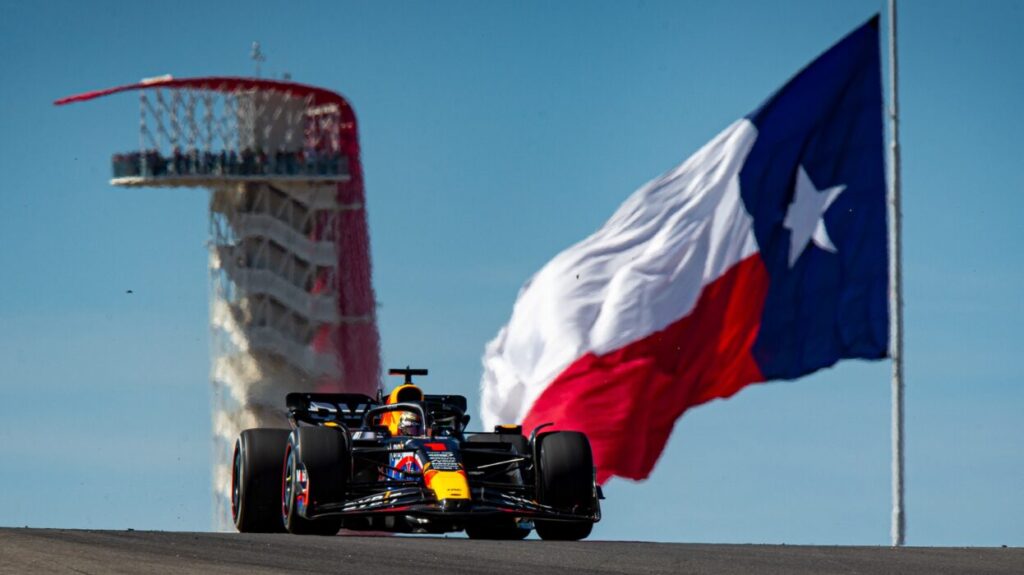
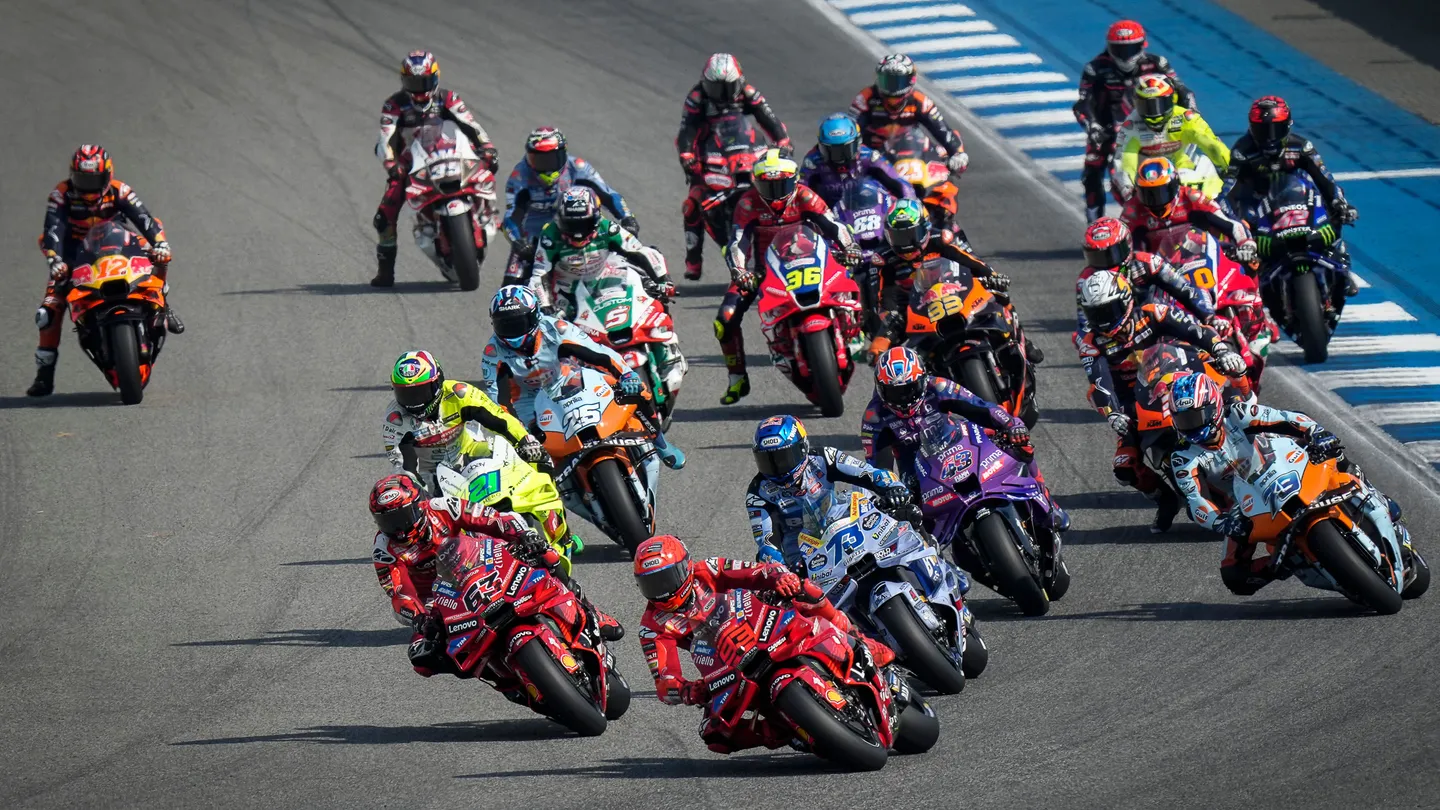
Two sports build the fastest machines on earth and ask completely different things of the people who pilot them. F1 and MotoGP get compared constantly, mostly by people who watch one and assume they understand the other. They don’t. A Grand Prix car and a Grand Prix bike are both built to win races at speeds that would kill an ordinary driver, but the philosophy underneath each one treats the human being inside the machine in almost opposite ways.
That difference doesn’t show up in lap times or television ratings. It shows up in the setup sheet, in the data a team chooses to share between two riders or two drivers, and in how much of the final performance gets credited to the machine versus the person riding it. F1 has spent the better part of two decades narrowing that gap until the driver became one variable among many. MotoGP went the other direction. It let the rider stay messy, idiosyncratic, and exposed, because the sport decided that’s where the value actually lives.
The Setup Sheet as a Personality Test
Walk into a MotoGP garage and look at what separates two riders on the same factory bike. Their handlebar height won’t match. Their footpeg position won’t match. One rider might run more rear brake and less front, trail braking deep into a corner where his teammate releases earlier and trusts the front tire instead. Lean angle tolerance varies by rider the way a golf swing varies by player. None of it is cosmetic. Each choice changes how the bike loads its tires, how it transfers weight under braking, and how much margin the rider is working with when the rear starts to step out mid corner.
Compare that to a Formula 1 garage, where engineers spend the season trying to collapse two cars toward a single optimal setup. Telemetry gets shared between teammates almost in real time. A driver who brakes ten meters later than his teammate isn’t necessarily showing instinct, he’s often executing a setup window the team has already modeled and approved. The car is engineered first. The driver adapts to it.
That isn’t a small technical footnote. It’s the clearest evidence of two different beliefs about where performance comes from. MotoGP treats the rider’s individual feel as a resource worth protecting, even when it makes two bikes on the same grid behave like different machines. F1 treats variance between two cars as a problem to be solved, because variance is inefficient, and inefficiency costs championships.
A MotoGP setup sheet reads less like an engineering document and more like a biography of how one person rides a motorcycle.
What F1 Decided to Standardize
None of this makes F1 wrong. The sport’s commitment to consistency comes from a defensible place. Simulator work lets a team test a thousand setup permutations before a single lap gets driven in anger, and that kind of preparation only pays off if the resulting setup actually transfers cleanly between two drivers. Sponsors and broadcasters want repeatable performance, not a coin flip on which car shows up fast that weekend. And from a pure engineering standpoint, a car that depends heavily on one driver’s specific feel is a car that’s harder to develop, harder to fix when it goes wrong, and harder to explain to a hundred engineers back at the factory who weren’t in the cockpit.
F1 also operates under a regulatory environment that rewards standardization in ways MotoGP doesn’t. Cost caps mean teams can’t afford two divergent development paths within one car concept. Aerodynamic sensitivity means small setup changes ripple through the whole platform in ways a motorcycle’s far simpler aero package doesn’t experience to the same degree. The sport built itself around the idea that the car should be the primary author of performance, and the driver’s job is to extract what’s already there as cleanly as possible.
That’s a coherent philosophy. It’s just not the only one available, and MotoGP proves it by building something almost entirely opposite without losing competitive integrity.
The Rider Has Nowhere to Hide
A Formula 1 driver sits inside a carbon monocoque, strapped into a seat molded to his body, surrounded by structures engineered specifically to keep him alive in scenarios that would otherwise be unsurvivable. The car absorbs an enormous share of the physical risk so the driver can operate closer to the limit without his own body becoming the failure point.
A MotoGP rider has none of that buffer. His body is the suspension system, the aerodynamic surface, and the crash structure all at once. Hang off the inside of the bike too far and he loses front grip. Don’t hang off far enough and the bike runs wide. Get the body position wrong entering a corner at lean and there’s no carbon structure standing between a rider and the asphalt, just leather, armor, and however much time he has to tuck and roll before he stops sliding.
That physical exposure changes what the sport rewards. A rider who finds half a second through pure body positioning, weight shifted three inches further forward than anyone else on the grid thought possible, is doing something that reads as individual skill in a way F1 rarely allows anymore. The car can’t hide a slow rider, and it can’t fully explain a brilliant one either. The performance lives in the body on the bike, not primarily in the machine underneath it.
In MotoGP, the bike doesn’t protect the rider from his own mistakes the way a Formula 1 chassis protects its driver. The body has to be right, every single lap.
That exposure is also why MotoGP crashes look the way they do, and why recovery from a near miss reads as visibly heroic rather than a footnote buried in telemetry. The rider’s margin for error is physical and immediate. There’s no data review afterward that explains away a bad lean angle. The track tells him instantly, and often violently, whether he got it right.
Why This Matters to a Reader Who Only Knows F1
None of this is an argument that MotoGP is the better sport, or that F1’s approach is somehow lesser for having engineered out as much variance as the regulations allow. It’s an argument that they’re answering different questions, and an F1 fan who’s never taken MotoGP seriously is missing a genuinely different way of thinking about what makes a racer great.
Watching MotoGP with that lens changes what you notice. The setup sheet stops looking like a list of numbers and starts looking like a window into how differently two elite athletes can solve the same physical problem. The crashes stop looking like chaos and start looking like the visible edge of a margin that exists in the body, not in a data model back at the factory. And the rider who wins a race by half a second starts looking less like a beneficiary of better machinery and more like someone who found something the machine alone couldn’t give him.
F1 will keep narrowing the gap between car and driver because the sport has decided that’s where the future lives, in simulation, in shared data, in repeatable performance that survives a cost cap and a hundred engineers checking each other’s work. MotoGub is going to keep doing the opposite, because it learned a long time ago that the gap between rider and machine isn’t a flaw to be engineered out. It’s the whole point.
Vitesse | The Grid