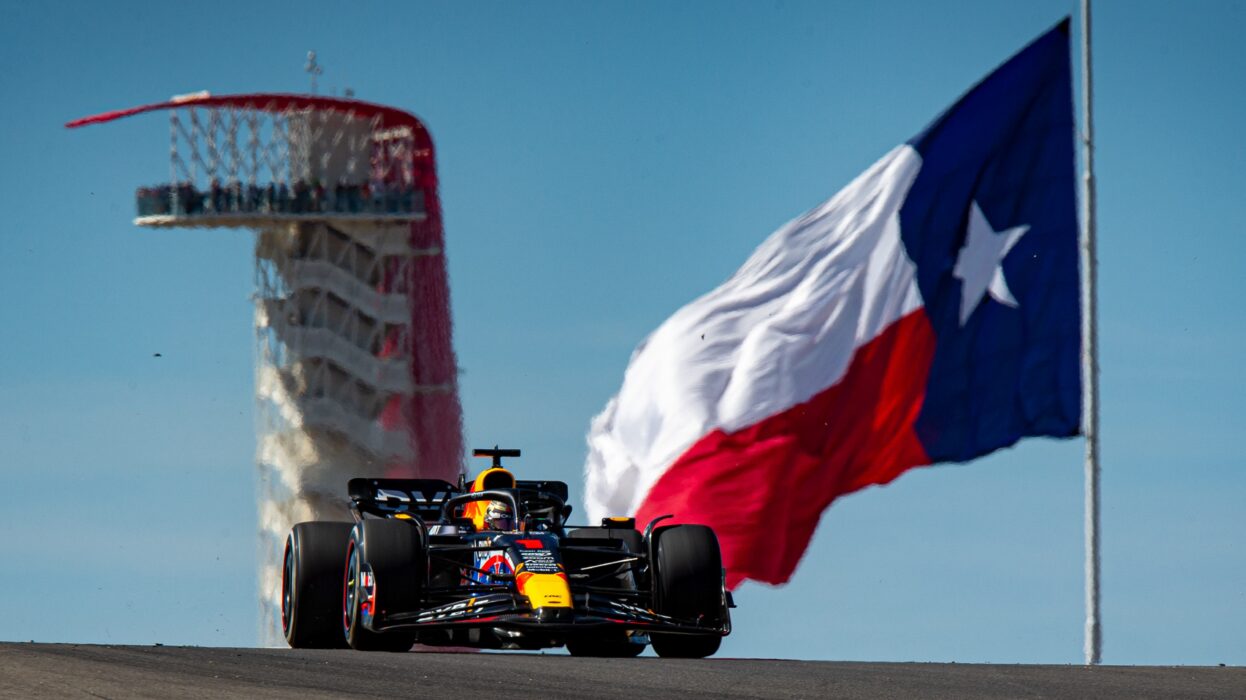
The field on Elroy Road spends fifty-one weeks a year doing what it has always done. Cattle move across it in the slow, indifferent way cattle move, and the grass gets cut, and nothing about it suggests that anyone outside the family who owns it has ever thought about it twice. Then October comes, and for a few days the pasture stops being a pasture and becomes a parking lot, and a man who has spent his whole life around livestock finds himself directing Range Rovers instead of cattle trailers down the same dirt access road.
He has been doing this since the track’s early years, back when nobody in Austin was quite sure what a Formula One race weekend would actually require of the land around it. What it required, it turned out, was overflow parking, and a lot of it, and his field sat close enough to the Circuit of the Americas to matter. So he made a deal, put up signage, hired a couple of hands to wave cars into rows, and watched his pasture generate more in four days than it sometimes did in a season of cattle.
The cows go back out on Monday. Nobody in Europe thinks about the cows.
He says this without bitterness, more as a fact worth noting, the kind of detail that explains something true about how this whole event actually works. Formula One arrives with its own logic fully formed, its own sense of what a race weekend requires and how the ground beneath it should behave. Austin doesn’t argue with that logic. It just quietly builds a parking lot around it, insurance paperwork and portable toilets and a text chain with a coordinator who calls twice a day during setup week, and lets the cows figure out the rest later.
Twelve Hours Each Way
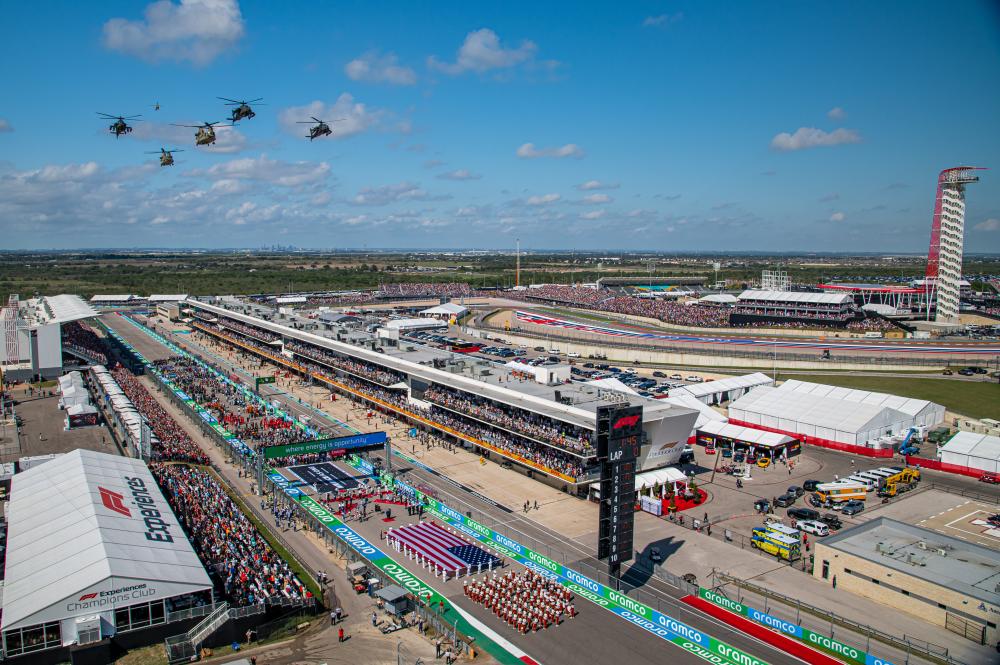
Not everyone who shows up at COTA flew in. A meaningful share of the crowd drove, some of them a long way, from Baton Rouge and Tulsa and towns in South Texas that don’t otherwise come up in conversations about international motorsport. Twelve hours is not an unusual number to hear when you ask people how they got here. Neither is fourteen.
The instinct is to read that as a hardship, the price people pay for wanting to be somewhere they can’t easily afford to fly to. Talk to them for more than a few minutes and a different picture starts to form. The drive isn’t an obstacle they tolerated to get to the race. It’s closer to part of the race weekend itself, a ritual with its own checkpoints, the same gas station outside Waco every year, the same playlist, the same running joke about who always falls asleep first.
Formula One likes to talk about its global audience, the sport’s reach into new markets, the glamour of the paddock and the personalities inside it. Less of that conversation is about a family from Shreveport who has made this same drive four Octobers running, packing a cooler and splitting the driving in shifts, treating the twelve hours as a known and almost comfortable part of the tradition rather than a cost to be minimized. They are not the audience the sport pictures when it talks about itself. They may be closer to the actual one.
What the Menu Doesn’t Say
Somewhere between the paddock club’s catering requirements and what Austin actually knows how to cook, there’s a negotiation happening that most fans never think about. Formula One’s hospitality operation arrives with expectations, refined, consistent, recognizable across circuits from Bahrain to Silverstone. Austin’s food culture runs on brisket smoked overnight, breakfast tacos assembled without ceremony, a barbecue tradition built on patience rather than plating.
A pitmaster who has worked race week catering for several years now describes the adjustment less as compromise and more as translation. The technique doesn’t change. The brisket still goes in the smoker at the same hour it always has, rests the same way, gets sliced the same way. What changes is the presentation, the portion, the framing of a plate that has to read as fine dining to one set of guests and as authentic Texas barbecue to another, sometimes within the same tent, sometimes within the same hour.
You can’t rush a brisket for anybody. Not even for Formula One.
That refusal to bend the fundamentals, even under the pressure of an international spectacle with its own rigid sense of how things should look, says something about what the city is actually offering the sport. Not an imitation of European hospitality. A version of its own, unhurried, unbothered by the calendar it’s been slotted into.
A City That Knows How to Host, Just Not This
Austin has hosted crowds before. SXSW fills the same downtown streets every spring with a different kind of chaos, and ACL turns Zilker Park into a controlled flood of people every fall. The city knows how to manage a crowd that wants to be everywhere at once, loud and mobile and difficult to contain. What it doesn’t have much practice with is the opposite instinct.
A Formula One weekend runs on closed doors. Credentialed paddocks, restricted access, a hierarchy of who gets close to the cars and who watches from a grandstand a quarter mile away. It is, in its way, the least Austin thing imaginable, a festival built around exclusion rather than access. The friction shows up in small ways during setup week, local vendors surprised by how much of the site they can’t walk into, festival veterans used to open grounds suddenly working within a perimeter.
And yet the logistics underneath both kinds of event turn out to be nearly identical. Load in schedules, security sweeps, credential systems, the same handful of production companies rotating between SXSW stages and COTA hospitality tents depending on the season. The city didn’t have to learn how to host a crowd. It already knew that. What COTA taught it, gradually, year over year, was how to host a closed one, and how to do that without losing the openness that makes the rest of the city’s calendar work the other fifty one weeks.
The Second Sunday in October
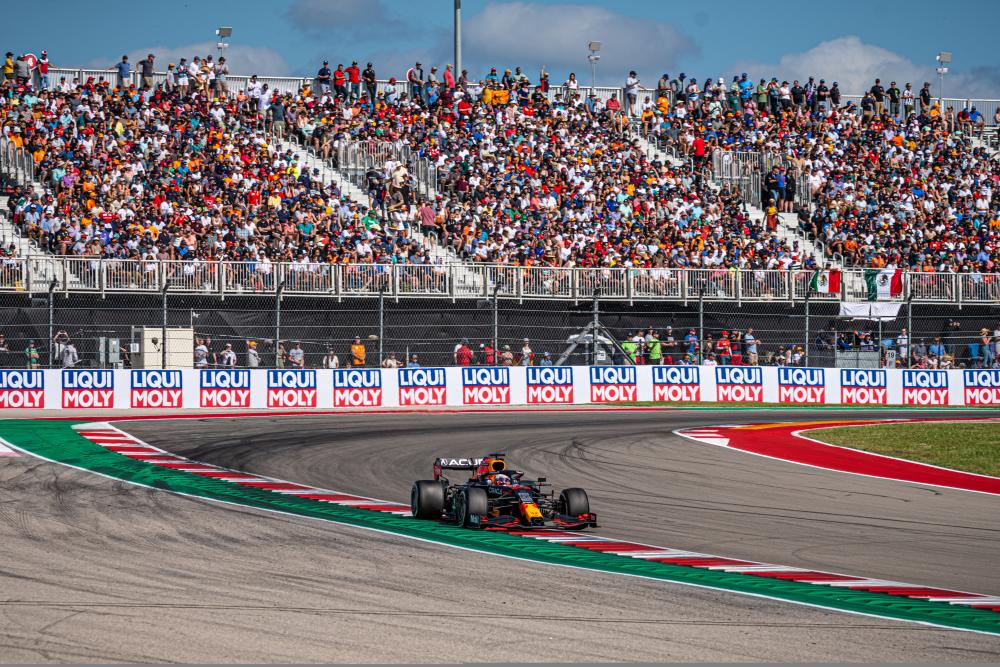
By the following Monday the grandstands are already coming down, and within a week the temporary fencing is gone, and within a month it is difficult to find much physical evidence that any of it happened at all. The rancher on Elroy Road counts what the weekend brought in, settles up with the hands who worked the gate, and lets the cattle back onto ground that still shows tire tracks from Sunday.
There is something honest in how completely the land gives the week back. Nothing about the pasture asks to keep being a parking lot. It reverts because that was always the arrangement, a loan of ground rather than a permanent transformation, and the same is true of the city around it. Austin doesn’t become a Formula One town for the other fifty one weeks. It becomes, briefly and on its own terms, a place willing to let something foreign move in, behave according to its own rules, and leave without asking the city to change what it was before.
That may be the truest measure of how well the translation worked. Not spectacle, not crowd size, not the economic figures that get quoted afterward, but how quietly everything settles back into place once the cars are gone. The field remembers it was a field. The city remembers it was already good at this, just not in the way anyone expected.
The Paddock | Vitesse