The podium ceremony runs about ten minutes, start to finish. It requires a man with an FIA super licence, the same credentialing system used for the drivers he’s introducing, and it requires him to keep that credential current for a job that most fans have never had reason to name.
Alexandre Molina has been working in Formula One since 1997. He’s handled the podium specifically since the 2009 Chinese Grand Prix, which puts him at well over two hundred ceremonies and counting. For most of the year he works under Formula One Management, coordinating the broader logistics of a Grand Prix weekend. But the podium itself falls under a different jurisdiction entirely. For those ten minutes, his authority comes from the FIA, the same body that governs the cars and the drivers and the technical regulations that decide who gets to stand on that podium in the first place.
That detail is worth sitting with before anything else. Formula One built a separate licensing structure for the person who makes sure the trophies get handed to the right people in the right order, in front of the right flags, in time for the broadcast to cut away cleanly. The sport didn’t do that because the job is hard to learn. It did it because the job is hard to get wrong in public, and the cost of getting it wrong is measured in a live global audience watching it happen.
The same shape of work exists across every major motorsport discipline, and it rarely looks the same twice.
The Operation That Follows Three Championships
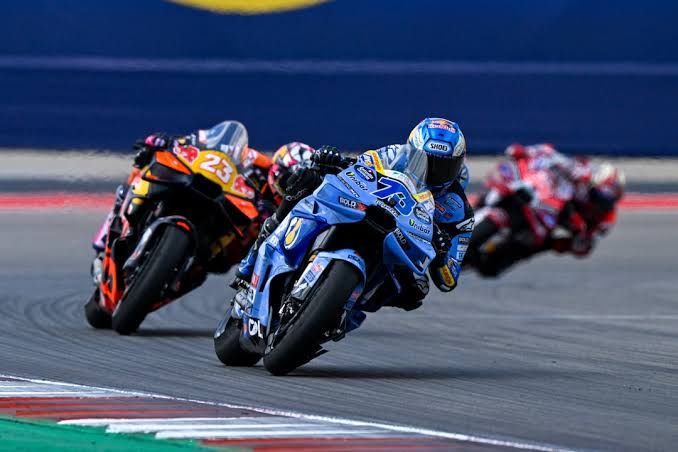
Andrea Rancan runs Red Bull’s hospitality operation for MotoGP. He’s been with the company two decades, and the job now covers roughly two hundred days a year on the road, moving across three separate championships in a single season. What started as support for a single junior series has grown into something closer to a traveling institution, one that has to function identically whether it lands in Qatar or Assen or Termas de Río Hondo.
Rancan’s version of invisible labor isn’t a ten-minute window. It’s sustained, repetitive, and built almost entirely on logistics that never touch a camera. Transport schedules. Staff rotations across back-to-back race weekends. Supply chains that have to hold together no matter what customs delay or weather system gets in the way. None of it is dramatic, and none of it is supposed to be. The measure of a good weekend, from his side of the paddock, is that nobody outside the operation ever has to think about how the coffee got there or why the staff seem unbothered by a schedule that would break most people in a month.
There’s a version of this work that gets discussed as glamorous, because it happens inside hospitality suites full of sponsors and guests who are, by definition, having a good time. But the glamour is the output, not the job. The job is the twenty years underneath it that make the output look effortless on a random Sunday in a country the operation visited for the first time that year.
The Largest Single Day in Sports
Scale the same problem up, and you get Allison Melangton.
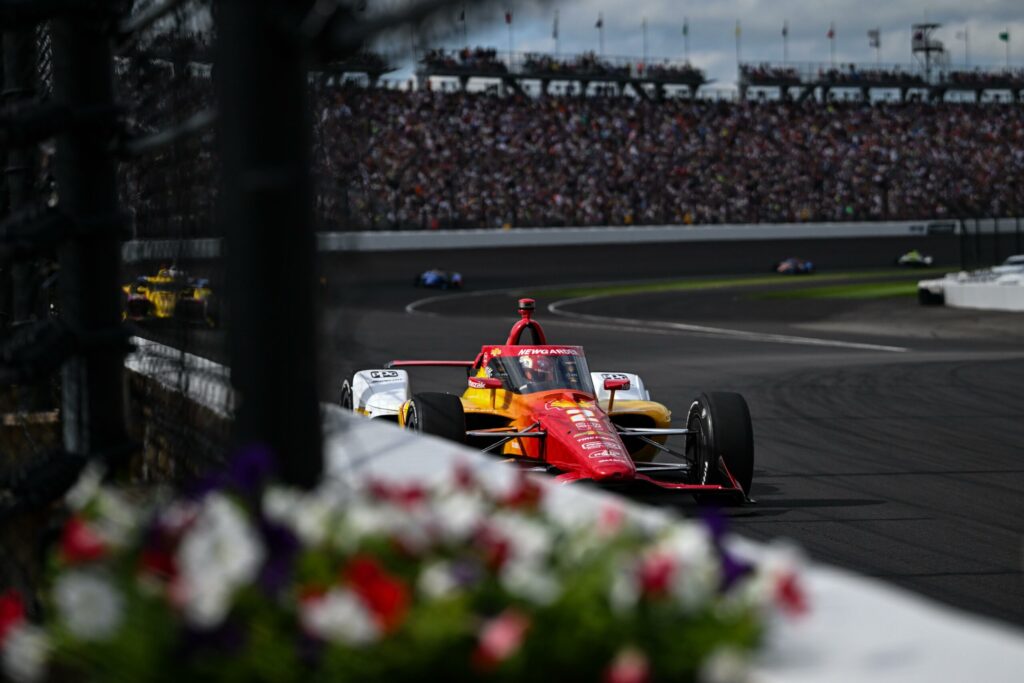
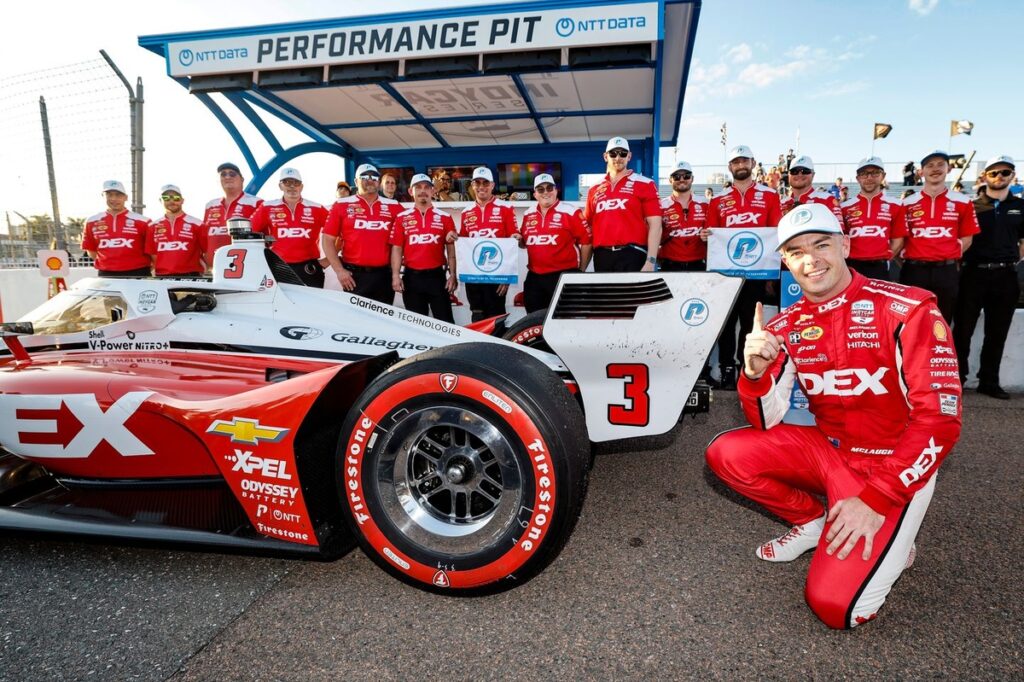
In 2016, Melangton led the planning and execution of the 100th Running of the Indianapolis 500, an event that drew roughly 350,000 people, more than three times the size of any Super Bowl. It was recognized as Sports Business Journal’s Sports Event of the Year, and it marked the first sellout in the race’s history, dating back to 1911. She didn’t come to that job from inside racing. She spent four years as CEO of the Super Bowl XLVI host committee before joining what’s now Penske Entertainment, and she now oversees a broad swath of business operations across the Indianapolis Motor Speedway and the NTT IndyCar Series.
The skill isn’t unique to one racetrack. It’s unique to the job.
Her career is a quiet argument against the idea that motorsport event production is its own closed discipline, separate from every other kind of live production. The systems she built for a Super Bowl are recognizably the same systems she applied to a speedway. Crowd flow. Broadcast timing. The management of hundreds of stakeholders who all believe, correctly, that their piece of the event matters. The venue changes. The scale sometimes changes. The underlying discipline, the one that has to hold a few hundred thousand people’s Sunday together without anyone noticing the seams, does not.
The Track That Isn’t There Yet
Every discipline discussed so far has a fixed venue. A circuit, a speedway, a paddock that exists in the same place year after year. Offshore powerboat racing doesn’t have that luxury, and the production problem it presents is correspondingly stranger.
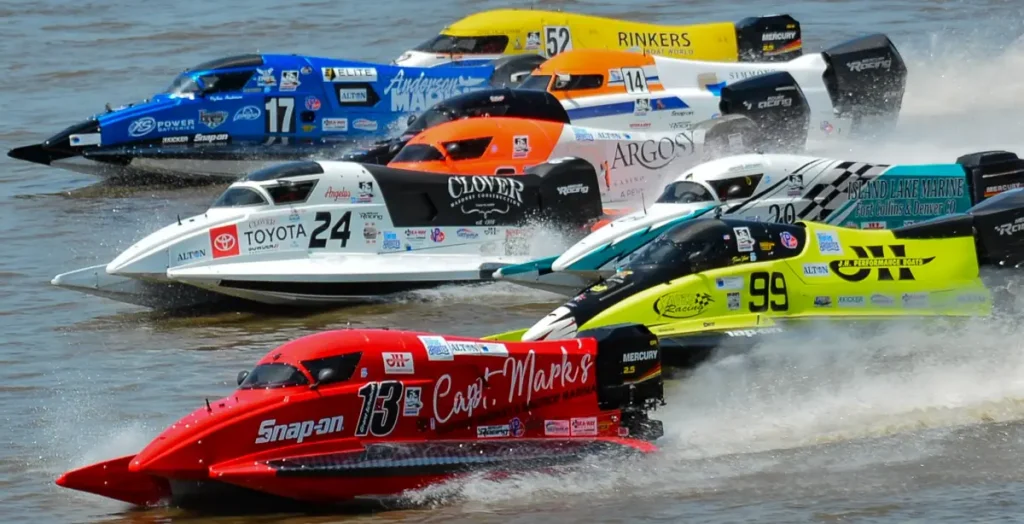
John Moore served as Event Director for the Cowes-Torquay-Cowes offshore races between 2010 and 2013, one of the sport’s oldest fixtures, before moving into powerboat journalism. Raimondo di San Germano works as Marketing Director for H2O Racing, which runs the commercial and event side of the UIM F1H2O World Championship, a series that races on temporary circuits laid across rivers, bays, and lakes rather than permanent tracks. The 2026 calendar alone runs through Italy, Kyrgyzstan, China, Saudi Arabia, and the UAE, closing at a lagoon in Sharjah.
There’s no grid to mark out on open water. There’s no fixed grandstand structure to reuse from the year before, because the year before was on a different body of water in a different country, sometimes at an altitude no F1H2O race had ever touched. Somewhere in that lake or bay, a start line still has to exist. Buoys have to be placed with enough precision to hold a world championship result. A production team has to build, from nothing, the same broadcast-ready structure that a permanent circuit gets to keep standing year-round.
Somewhere on open water, there has to be a start line. Someone has to decide where.
It’s the same job as Molina’s podium and Melangton’s speedway, stripped of every fixed advantage those venues provide. The choreography still has to happen. It just has to happen on a surface that moves.
What the Job Actually Measures
None of these four people share a discipline, a continent, or a job title. What they share is the way their work gets evaluated, which is by its own absence. Molina succeeds when the podium ceremony reads as inevitable rather than assembled. Rancan succeeds when two hundred days of logistics produce nothing worth mentioning. Melangton succeeded, in the most literal sense, when 350,000 people had an ordinary Sunday at the largest event of their lives. Moore and di San Germano succeed when a body of water that had no racetrack on it a week earlier hosts a world championship as if the water had been waiting for it.
The ceremony works when no one notices the production.
That’s an unusual thing to build a career around. Most professional recognition depends on visibility, on the world seeing the work in order to value it. This entire category of labor runs on the opposite logic. The better the job is done, the less evidence there is that it happened at all. The metric isn’t applause. It’s the complete absence of anyone asking what went wrong, because nothing did, and because the four people responsible for that outcome had already solved the problem long before the cameras arrived.
The Paddock | Vitesse