
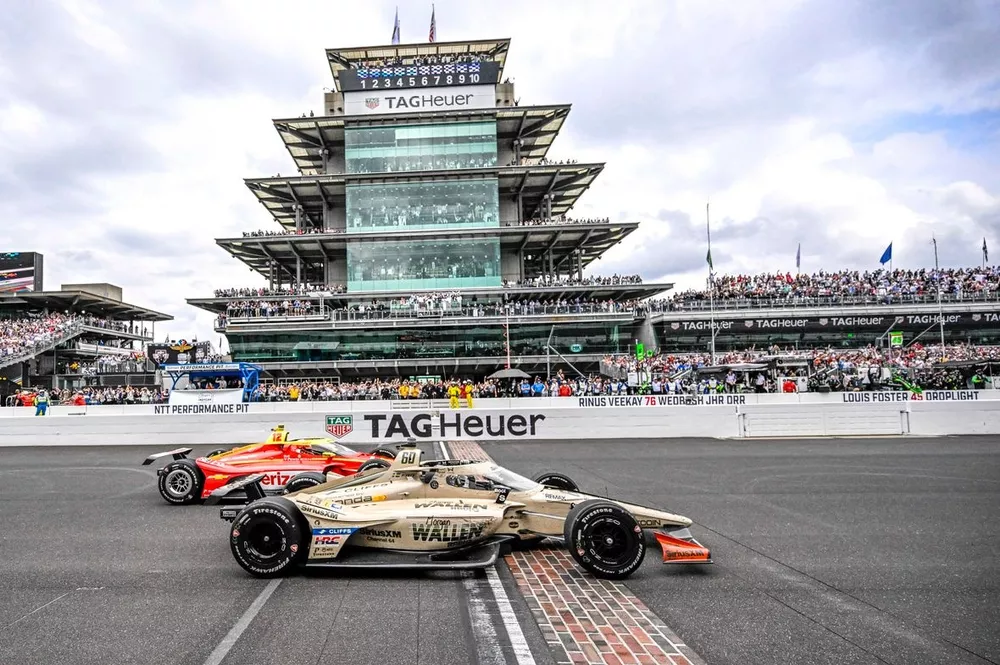
Tire degradation isn’t a problem to solve. It’s a discipline to master, and the drivers who understand that distinction are the ones who collect trophies at the end of the season.
The Illusion of the Opening Stint
The red lights go out and every instinct a racing driver carries fires at once. The fuel load is heavy, but a fresh set of tires bites into the asphalt with immediate authority. The car rotates precisely. The braking zones feel planted. For those first few laps, the machine does exactly what the driver asks of it, and the temptation to exploit that compliance is almost physiological.
This is the trap.
The race is never won in the opening stint, but it can absolutely be lost there. A driver who storms clear of the pack on lap three with a two-second gap has made a statement that the tires will eventually charge interest on. Every aggressive exit from a slow corner, every greedy throttle application at the apex tears microscopic layers of rubber from the tread block. The gap looks brilliant on the timing screen. On the degradation curve, it reads as a debt coming due.
What the broadcast cameras rarely capture is the opposite choice: the driver who settles into fifth or sixth, holds a careful rhythm, and watches rivals disappear into the distance without response. That silence isn’t a lack of pace. It’s a calculated decision about when pace actually matters.
“A driver who storms clear of the pack on lap three has made a statement the tires will eventually charge interest on.”
Two Temperatures, One Compound
The relationship between rubber and asphalt isn’t linear, and engineers spend considerable time building models to map what happens when the two interact under race conditions. The reality is still more volatile than any simulation.
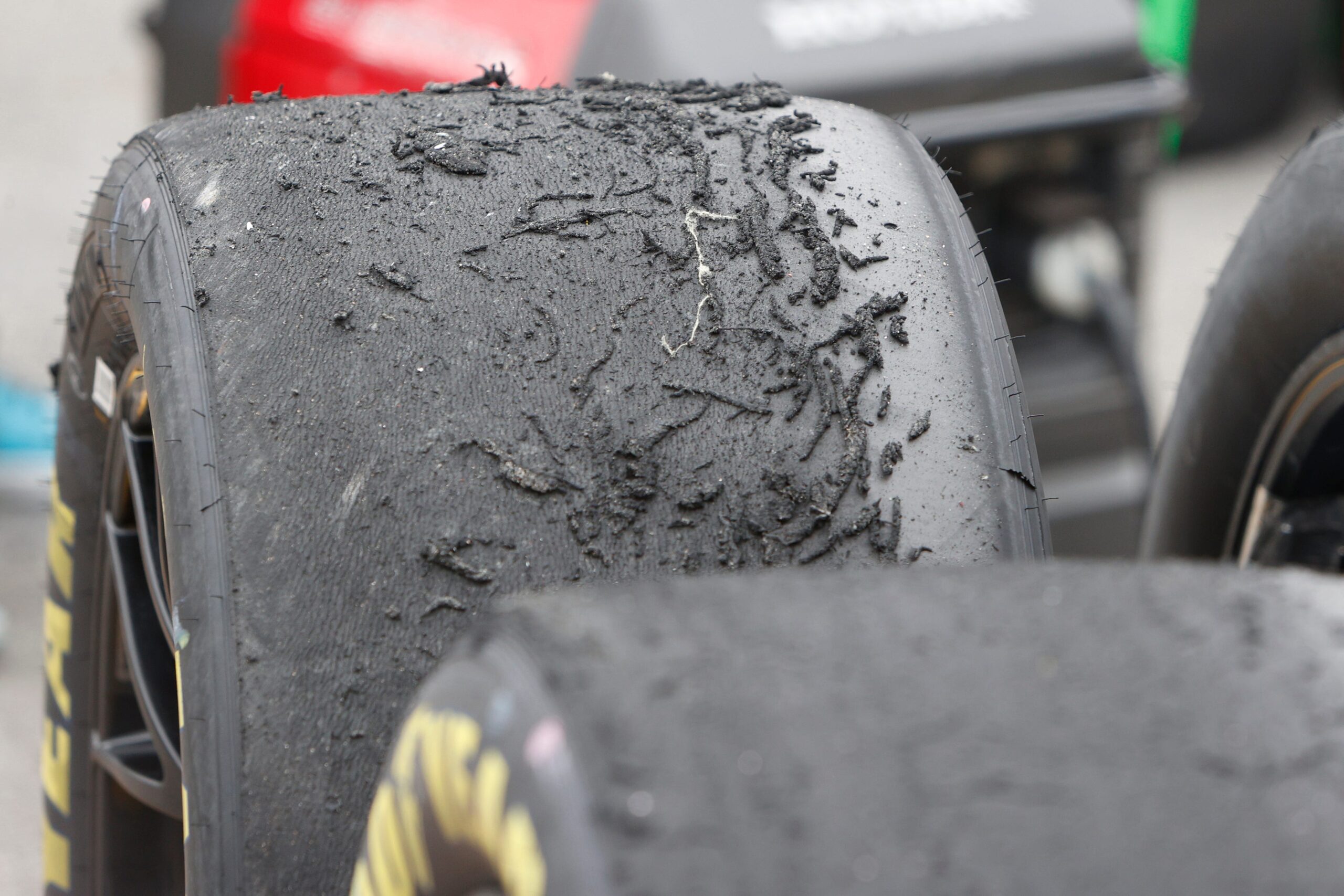
A driver managing tires well is actually managing two distinct thermal signatures simultaneously. The surface temperature responds almost immediately to every steering input and braking phase. It spikes hard through a high-speed complex and bleeds back on a long straight. The core temperature, which governs the structural integrity of the carcass itself, moves more slowly but follows the surface if the driver keeps pushing.
Lean too hard on the front axle through a fast corner sequence and the surface heat climbs fast. If the driver doesn’t modulate their style to let that heat dissipate, it eventually permeates the core. The compound begins to blister. Tread separates from the inside out. And at that point, the loss of grip isn’t a gradual fade that can be nursed through the final few laps. It arrives as a cliff. The car that was rotating cleanly into every apex suddenly won’t turn. The rear steps out under braking. The precision instrument becomes something unpredictable and dangerous.
A single locked brake into a heavy braking zone can flat-spot the rubber, setting off a harmonic vibration that destroys the remaining tread and shakes the suspension into distress. One aggressive slide on corner exit can overheat the rear surface beyond recovery. The driver is no longer racing the grid. They’re managing a chemical reaction that’s very close to failing.
“The loss of grip isn’t a gradual fade that can be nursed through the final laps. It arrives as a cliff.”
What the Pit Wall Knows and What It Can’t
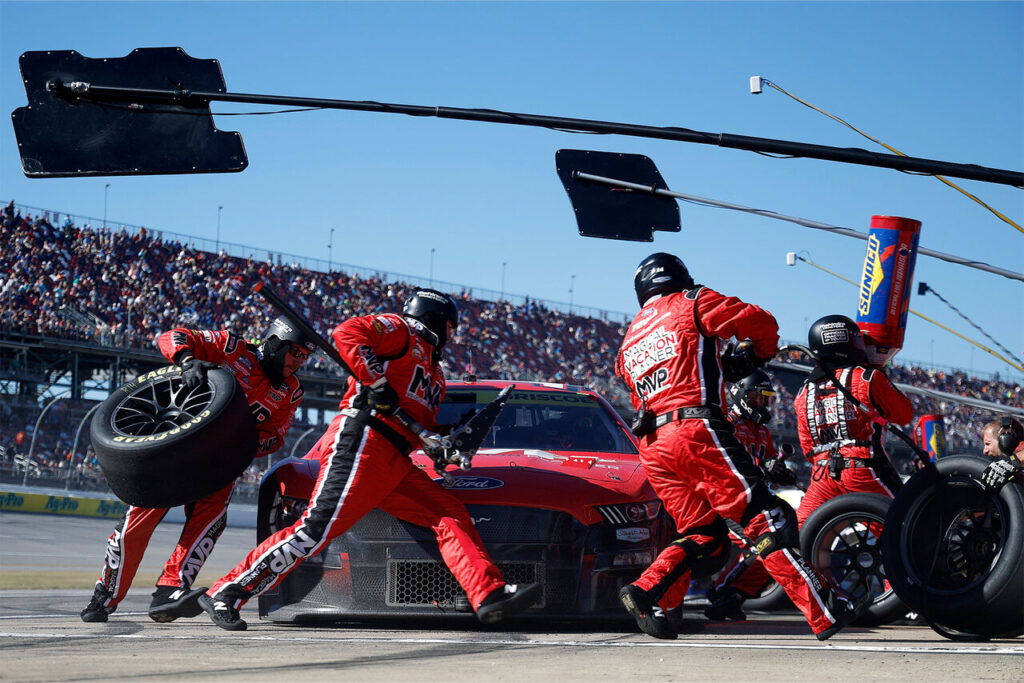
As a stint deepens, the communication over the radio shifts in character. Lap times drift upward by tenths. The race engineer monitors a wall of telemetry, sector splits flashing amber, tire temperature traces, live pace comparisons against cars already on fresh rubber. The pit wall has a mathematical view of the race that is, in some ways, more complete than anything the driver can feel from the cockpit.
But the driver feels things the data can’t capture.
They feel the steering wheel going light on entry into a fast corner, the front tires struggling to find the lateral load they carried thirty laps ago. They feel the rear squirming under acceleration where it was previously locked and committed. This creates one of the most tense dynamics in the sport: the crossover window, that short period where both sides of the radio are working from incomplete information. The pit wall sees the exact lap where the degradation curves intersect with the competitor’s pace. The driver feels the tire beginning to surrender, but can’t see what traffic they’ll emerge into after a pit stop.
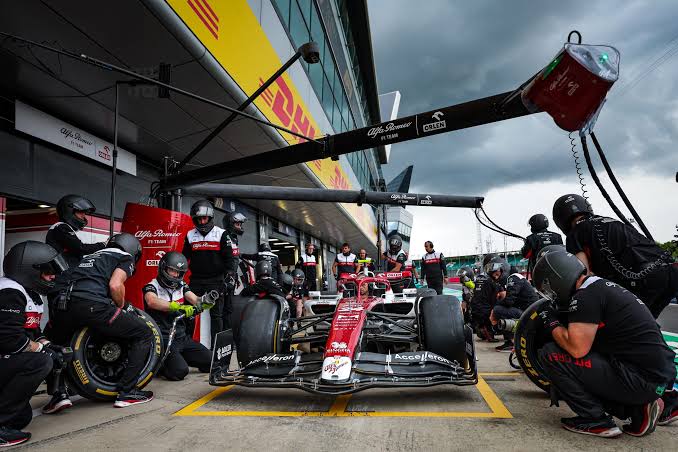
Call the stop one lap too early, and a rival still on old rubber may find pace in clear air that offsets the undercut entirely. Call it one lap too late, and those lost seconds compound into positions that can’t be recovered. The decision requires a quality of trust between cockpit and telemetry desk that is rarely talked about publicly but shapes the outcome of most races.
For a brief stretch before the call comes through, the radio goes quiet. The driver is alone on deteriorating rubber, navigating each corner with increasing caution, waiting.
“For a brief stretch before the pit call, the radio goes quiet. The driver is alone on deteriorating rubber, waiting.”
The Professor’s Lesson
Alain Prost won four Formula One World Championships without ever being the fastest driver in qualifying against his most dangerous rivals. Ayrton Senna was quicker over a single lap, and Prost knew it. His response wasn’t to match Senna’s pace over a single lap. It was to build a different kind of advantage over an entire race distance.
Prost’s mantra was to win as slowly as possible, a philosophy he may have absorbed from Niki Lauda, or even Juan Manuel Fangio. He would conserve his brakes and tires early in a race, leaving them fresher for a decisive push toward the end. Journalists who couldn’t explain how a driver who rarely topped qualifying kept ending seasons as champion gave him the nickname “The Professor.” He read the race against the field’s pace and positioned the car so the decisive move came late, when rivals had already burned through their margins.
That philosophy is still the blueprint. Lewis Hamilton’s most dominant seasons weren’t built on raw aggression. Fernando Alonso’s ability to manage a race in a car that shouldn’t have been competitive was built on the same principle. The driver who understands what they have, rations it carefully, and deploys it at the moment it will do the most damage is always dangerous, regardless of what the timing sheets said at the start of the day.
Speed Found in Surrender
The final stint of a race inverts almost everything we associate with motorsport. Broadcast coverage teaches the audience to read speed through aggression: late braking, violent steering corrections, smoke coming off the rear tires. We connect maximum pace with maximum effort. But when the laps tick down and the last set of tires begins to wane, the fastest path around the circuit runs directly through restraint.
The driver has to brake slightly earlier. Throttle application has to become patient, not tentative, but deliberate. Instead of fighting the chassis into a tight, defensive line, the driver has to let the car roll freely through the corner geometry. The steering angle has to open as quickly as possible to prevent the contact patch from scrubbing across the abrasive surface. From inside the cockpit, this rhythm feels profoundly slow. The inputs are soft. The car is rolling more than it’s attacking. Nothing about it feels like winning.
But the stopwatch doesn’t measure feeling. By surrendering the desire to dominate each corner, the driver preserves the final layer of mechanical grip still living in the tread. The rival who keeps overdriving will spin the rear wheels on exit, overheat the surface, and lose the forward traction they need to hold position. The car that looked comfortable two laps ago starts to come apart.
The victory rarely goes to the driver who simply pushed hardest. Smooth throttle inputs, smart use of the track, and on-the-fly adjustments can make a decisive difference in how long a tire stays competitive. Those adjustments aren’t visible on television. They don’t produce highlight footage. They’re felt through the steering column and expressed in tenths of a second, lap after lap, until the gap built by patience becomes impossible to close.
Racing is sold as an exercise in maximum velocity. The truth is considerably more complicated, and considerably more interesting. The art is almost entirely in what a driver chooses not to do.