There is a faster way to get to Le Mans, and almost everyone takes it. You leave Paris, drop onto the A11, and let the autoroute do the thinking for you. Four hours, one gas station stop, radio on. It gets you there. It just doesn’t get you ready.
The other way takes longer. It drops you into the Sologne, a stretch of central France thick with forest and standing water, where the roads narrow and the GPS starts recalculating out of confusion rather than necessity. It’s not a shortcut. It’s not scenic in the postcard sense either. It’s just slower, and slower turns out to matter more than it should.
The Other Way to Le Mans
I chose the backroads the way you choose to walk somewhere you could easily drive, not out of romance but because the extra time does something the highway can’t. It gives you room to think about where you’re going before you get there. The 24 Hours of Le Mans is loud before it’s anything else, and the drive through the Sologne is the last quiet you’ll get for a while. You start to notice things the autoroute would have erased. A church tower over a treeline. A farmer moving hay before rain that hasn’t arrived yet. None of it is dramatic. That’s the point, even though nobody says so out loud.
By the time the road signs started naming Brinon-sur-Sauldre, I’d stopped checking how much farther Le Mans was. That’s usually a sign the drive is doing its job.
A House Built for Someone Else’s Century
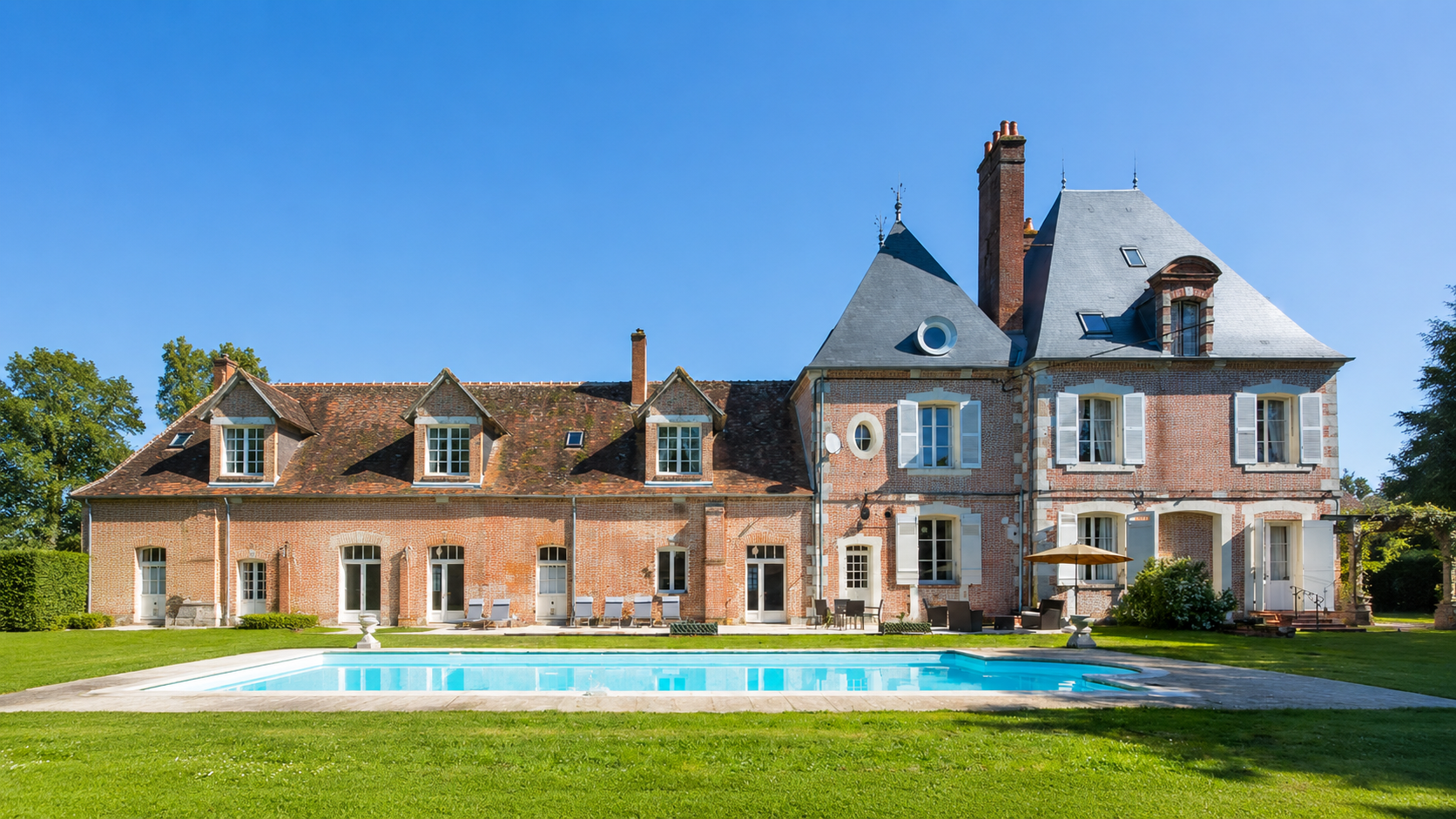
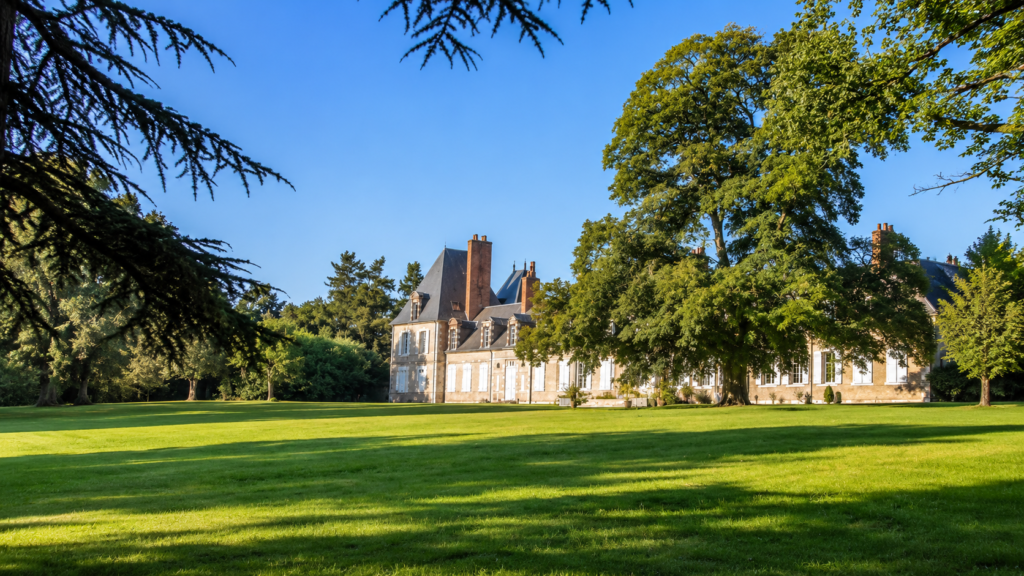
Château Le Brun was never meant for people like me passing through on their way to a car race. It started life as a hunting lodge in the seventeenth century, built for a chancellor who served as a finance minister under Louis XIII and then Louis XIV, a man whose job was almost certainly loud in its own seventeenth century way and who needed somewhere to put that noise down for a while. Four hundred years is a long time for a building to hold onto its original purpose, but this one hasn’t really lost it. It’s still a place built for disappearing into.
The house was built for a man who wanted somewhere quiet to disappear to. Four hundred years later, it still works.
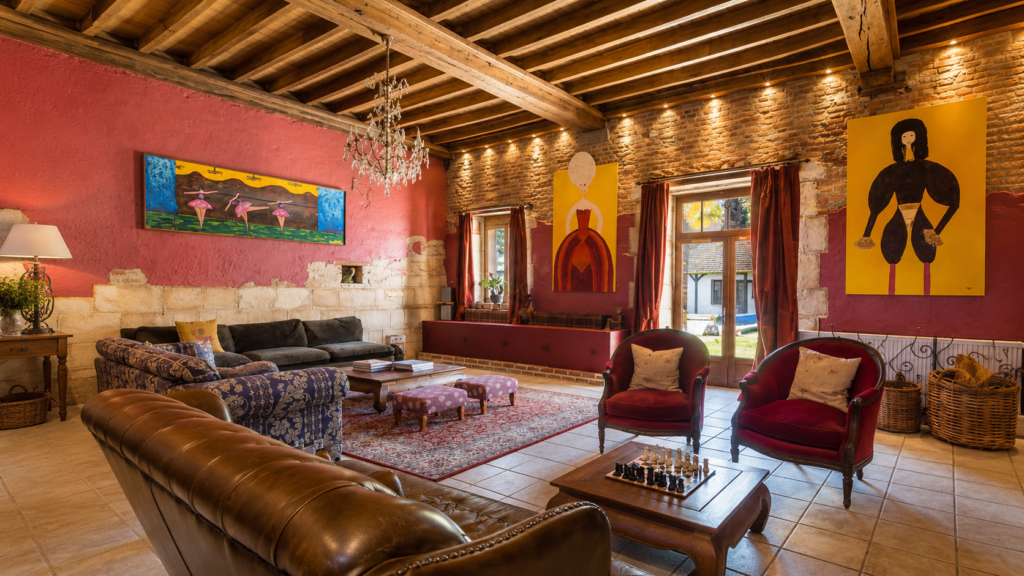
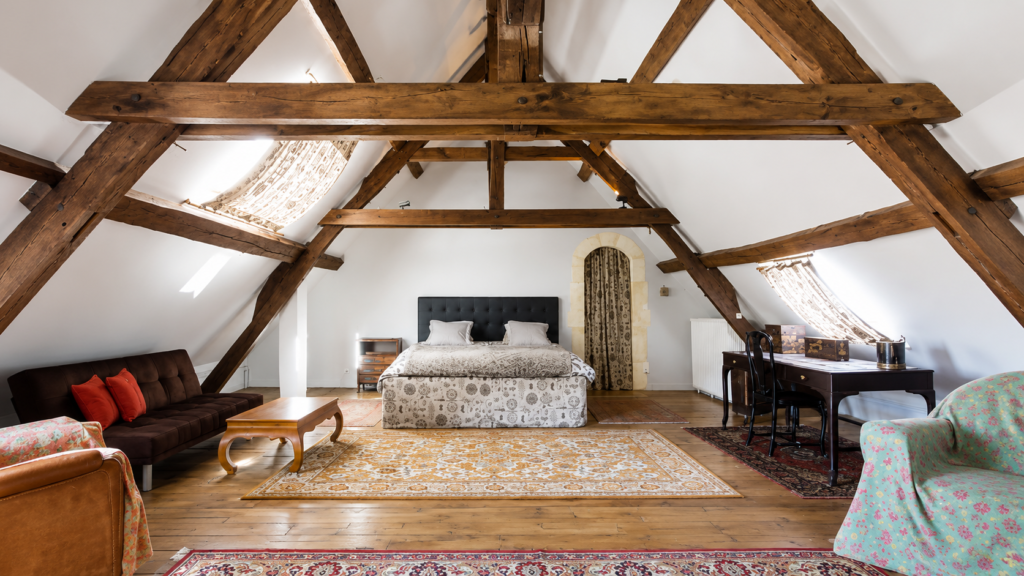
The rooms are large in the way old houses are large, not for show but because nobody had thought yet to make ceilings lower and ambition smaller. There’s nothing performed about the place. It doesn’t announce its history through plaques or curated furniture arrangements. It just carries the weight of having been used, continuously, by people who needed exactly what it offers.
The Person Who Keeps It Standing
Somebody has to run fifty-two acres of park, a lake, a stretch of forest, and a seventeenth-century house for guests who arrive for one night and leave without learning anyone’s name. That work doesn’t show up in a review. It shows up in the fact that the pool is heated when you arrive, that the fireplace has already been laid, that the grounds don’t feel neglected even in the stretch between one stay and the next.
I never asked what a normal week looks like for whoever keeps Château Le Brun standing, and I regret that now, because the honest answer is probably closer to what makes a race weekend function than anything happening on track. It’s maintenance performed in advance of anyone noticing it was needed. Nobody thanks the person who fixed the leak before the guests arrived, because the guests never knew there was a leak. The job succeeds precisely by being invisible, which is a strange thing to build a life around and an even stranger thing to be good at.
Nobody remembers who kept the grounds. They only remember that the grounds were kept.
It’s the same instinct that keeps a paddock functioning during a race weekend, the same one that keeps an aircraft airworthy, the same one that keeps most things worth trusting from falling apart in public. Somebody decided, a long time before you showed up, that the work mattered even if you’d never see it.
Fifty-Two Acres of Nothing Happening
The grounds don’t ask anything of you. There’s a lake for anyone who remembered to bring a fishing rod, woods for anyone who wants to walk until the house disappears behind the trees, and an outdoor table long enough that it assumes you brought people to fill it. Nothing about it is designed to impress. It’s designed to be used, slowly, by people who aren’t in a hurry.
I sat outside longer than I meant to that evening, not doing anything in particular, which is a rare enough thing that it took me a while to recognize it as the point. In twelve hours I’d be standing trackside with sixty cars idling at once, engines that don’t know how to be quiet even at rest. The stillness at Château Le Brun wasn’t a contrast to that. It was closer to preparation for it, the way an athlete rests the night before rather than the morning of.
Arriving Somewhere Loud, Having Come From Somewhere Quiet
Le Mans announces itself long before you see the circuit. Traffic thickens, campervans multiply, and somewhere past Tours the radio starts filling with local coverage of the race. By the time you’re parked and walking toward the paddock, the noise has become the environment rather than an event within it.
I don’t think I would have felt the difference between that noise and ordinary noise if I’d driven straight there on the autoroute. Having come from somewhere built entirely around quiet, the volume at Le Mans registered as something earned rather than simply endured. The race hadn’t started and I was already more ready for it than four hours of highway would have made me.
There’s no formula for how long a drive should take before it’s worth taking the long way. But the roads to Le Mans run through the Sologne for a reason nobody advertises, and Château Le Brun has been standing there for four centuries, quietly doing the same job it always did. Some houses get remembered for what happened in them. This one earns its keep by making sure nothing has to.
The Paddock | Vitesse