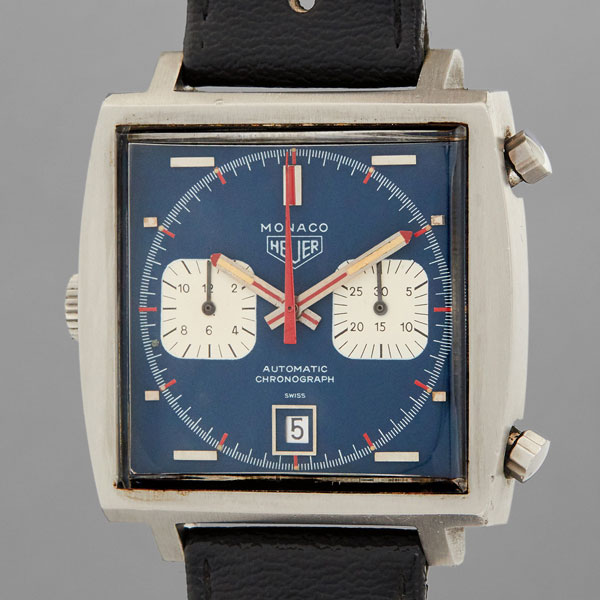
Jack Heuer wasn’t trying to build a fashion object in 1969. He was trying to win a fight nobody outside Switzerland was paying attention to. Seiko and Zenith were both racing toward the same milestone that year, a self-winding chronograph movement, and Heuer needed something that would separate his company from two competitors chasing the identical technical breakthrough. The answer came from an unlikely partner. A case manufacturer named Erwin Piquerez had developed a square case that could actually be sealed against water, something the industry had never managed before because square cases leaked at the corners. Heuer secured exclusive rights to it, built the Calibre 11 movement around it with three other manufacturers, and named the result after the Grand Prix that ran through the streets of a principality most of his customers had never visited.
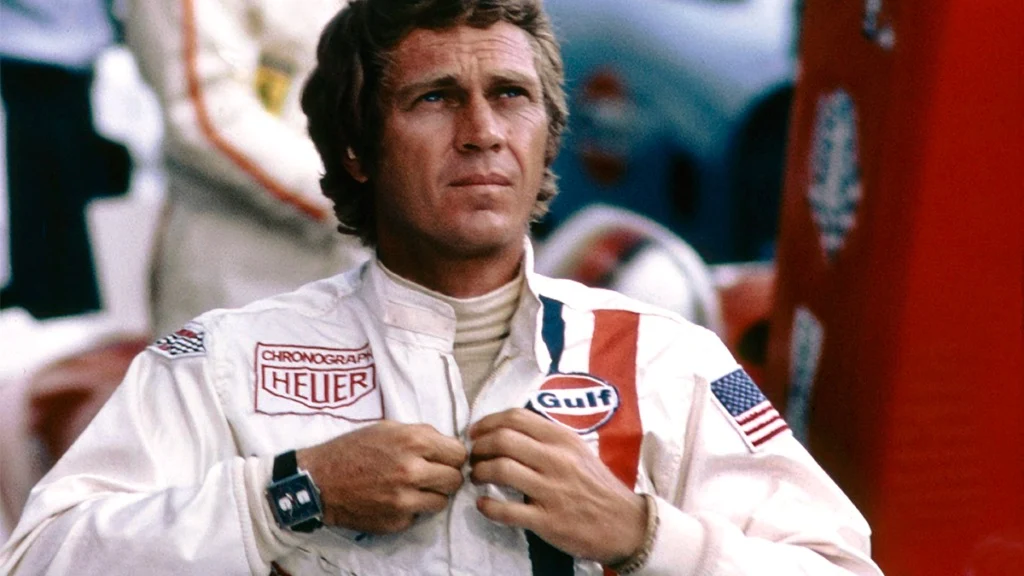
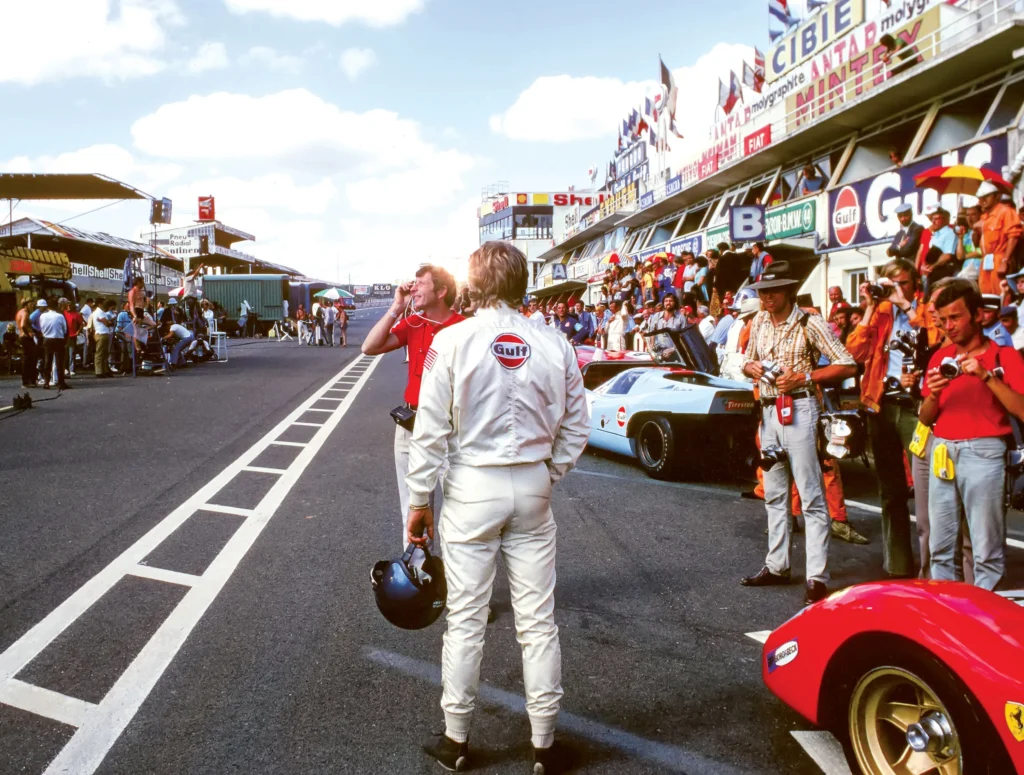
That watch became something else two years later when Steve McQueen strapped it on to play a racing driver in Le Mans. McQueen wasn’t handed the Monaco by a studio publicist chasing a licensing deal. He was a man obsessed with getting the details of a role right down to the equipment, and a serious chronograph on a driver’s wrist was one of those details that couldn’t be faked. The watch photographed like a prop. It functioned like a tool.
What a Race Team Actually Needed From a Watch
Before telemetry put sector times on a screen in real time, the chronograph strapped to a team manager’s wrist carried weight that’s hard to appreciate now. It wasn’t a nice thing to have alongside the real timing system. For most of motorsport’s history, it was the only timing system, and every split a crew chief scribbled onto a clipboard got calculated against that sweep hand. If the movement ran even a few seconds slow over a stint, or a pusher stuck under the vibration of a V12 idling six feet away, the numbers coming back to the pit wall were wrong, and wrong numbers at Le Mans in the rain could put a driver on the wrong tire compound with no warning at all.
Rolex understood this too, and had been supplying timing equipment to circuits since the 1930s. The relationship between Swiss watchmaking and motor racing wasn’t a lifestyle crossover cooked up by a marketing department. It grew out of a shared engineering obsession with the same enemy. A tire compound fighting degradation over thirty-five laps and a lever escapement fighting positional error inside a case are working at wildly different scales, but they’re both trying to hold a system to its intended behavior for as long as possible.
The tire fighting degradation and the escapement fighting positional error are working at different scales, but they’re chasing the same discipline.
What racing needed from a chronograph had nothing to do with how it looked on a wrist at dinner. It needed a dial you could read in a dark pit lane under stress, a movement that could take vibration for hours without drifting, and a pusher a gloved hand could actuate without hesitation. The watches that earned a permanent place in the paddock earned it the way a set of dampers earns its place on a car. They worked when almost nothing else around them did.
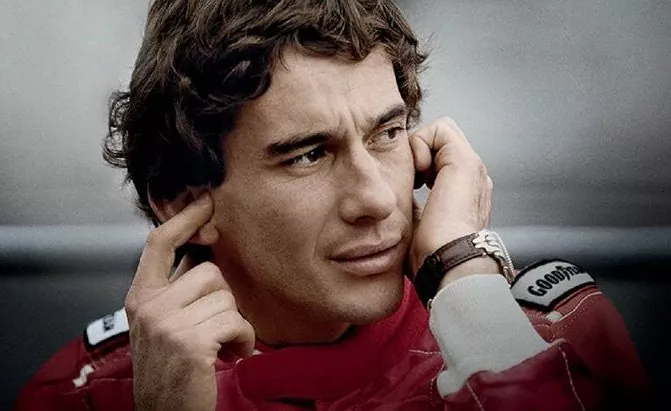
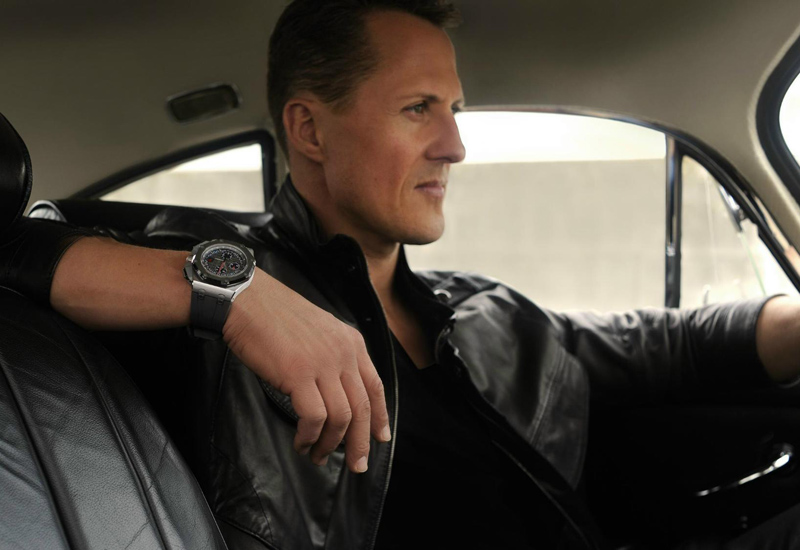
Senna, Schumacher, and What They Chose to Wear
Ayrton Senna wore Casio and Seiko digital watches through his early years, then settled into a long relationship with TAG Heuer once he arrived at McLaren, cycling mainly through the S/el chronograph for most of his championship seasons. He gave that watch to his lead mechanic, Ron Pellat, at the end of the 1993 season, a detail that says more about how Senna regarded the people around him than any interview ever did. He wasn’t a man who dressed for cameras. He was a man who walked circuits barefoot the morning before a race to feel the surface temperature through his feet, and the watch he chose to wear every day fit that same instinct toward direct, physical preparation.
Michael Schumacher’s long partnership with IWC ran in a different register. Where Senna’s relationship with his watch felt intuitive, Schumacher’s felt procedural, and the pieces he was associated with reflected it. Heavy cases. Legible dials. Nothing decorative competing for attention. Drivers who take their equipment seriously off the track tend to be the same drivers who take their preparation seriously on it, and that pattern holds up whenever you look closely at what the sport’s most focused competitors actually wore.
Built to Last Beyond the Grid
A Formula 1 car is built to be used up. The tires are engineered to degrade on a schedule. The carbon fiber tub flexes and fatigues over a season until the engineers retire it because it’s absorbed enough stress cycles. Every part of the car exists inside a window of peak performance that closes faster than most fans realize, and the entire machine is designed around that closing window rather than against it.
A mechanical watch runs on the opposite assumption. The Monaco that came out of the Chronomatic project in 1969 can still be sent to a trained watchmaker in Geneva for service today, because Heuer built the Calibre 11 to run for decades with periodic maintenance rather than a single competitive season. Senna’s S/el carries a specific pattern of scuffs from the years it spent on his wrist, and it will carry that pattern indefinitely in a way the chassis he drove that season cannot, because that chassis was scrapped or handed to a museum long ago.
That permanence means something inside a sport built almost entirely around impermanence. Chassis get retired. Compounds get revised every season. Records get broken, sometimes within the same year they’re set.
Why the Analog Object Still Has a Place in a Digital Paddock
Modern teams generate an enormous volume of telemetry across a single race weekend, tracking tire carcass temperature, aerodynamic load, and driver inputs down to fractions of a second. The gap between what a driver feels through the wheel and what the data confirms has narrowed close to nothing, and in most disputes now, the data wins.
None of that has pushed the mechanical watch out of the paddock. If anything, engineers who spend their careers building the most technically advanced machines on earth are often the ones most drawn to something built by hand, wound by a spring, and designed to outlast everyone currently standing in the garage. That’s not a rejection of the technology surrounding them. It’s a recognition that something is worth preserving even after better tools exist, because what’s being preserved isn’t accuracy. Modern quartz movements handle accuracy better than any mechanical caliber ever will. What’s being preserved is proof that human hands, working to a tolerance no machine forced on them, built something time hasn’t managed to stop yet.
The Paddock | Vitesse