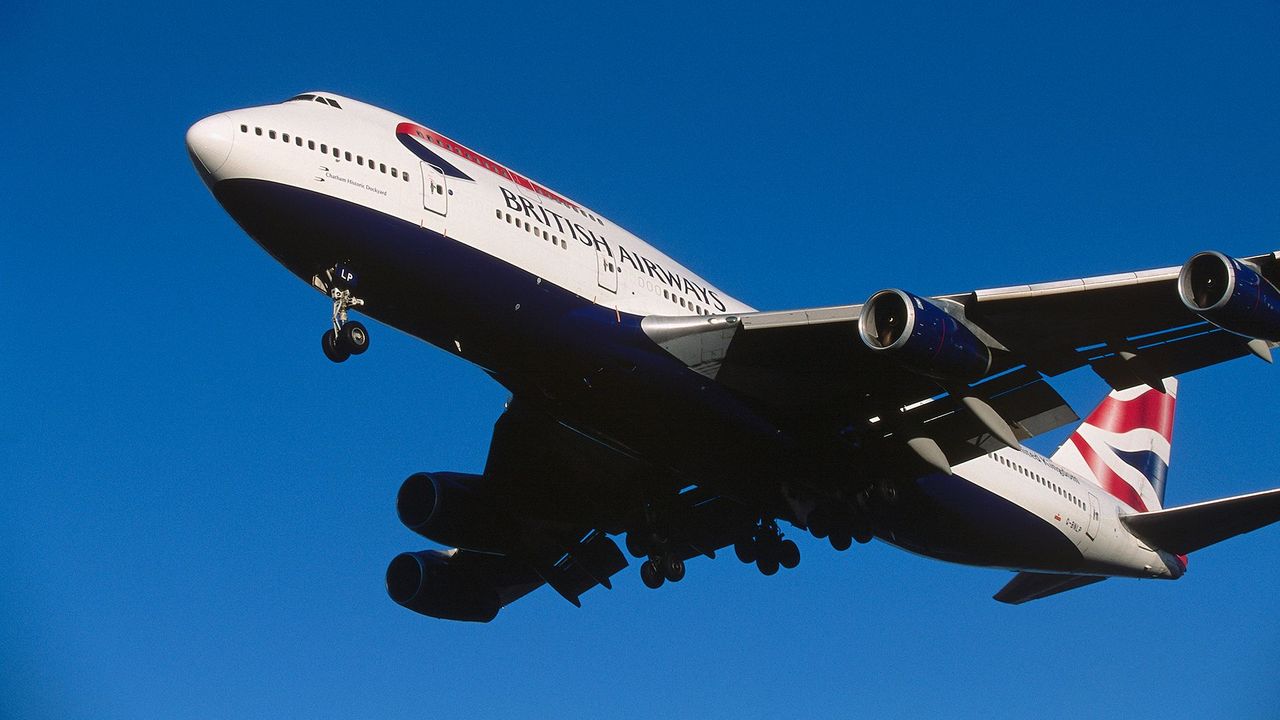



She keeps a bag packed by the door, the kind of bag that assumes nothing about where it’s going. Three days’ notice, sometimes less. A text to a scheduling desk she’s never visited, in a city she couldn’t point to on a map, and six hours later a car meets her at a private terminal she recognizes only by the smell of the coffee they keep at the counter. She owns a sixteenth of the aircraft waiting on the ramp. She has never asked who’s flying it.
This isn’t indifference. It’s something closer to a design choice, though she’d never describe it that way. She chose fractional ownership specifically so she wouldn’t have to think about any of it: not the maintenance schedule, not the crew rotation, not the weather over the Rockies that might reroute her through Denver instead of direct. She bought a share of an airplane and, along with it, permission to stop asking questions that a full owner would have to answer for himself.
Ask her who inspected the aircraft last week and she’ll shrug, not because she doesn’t care whether it was done right, but because caring about the outcome and needing to verify the process have quietly come apart for her. That separation is the actual product she purchased. Not the airplane. The right to not know.
The Desk That Never Sees the Passenger
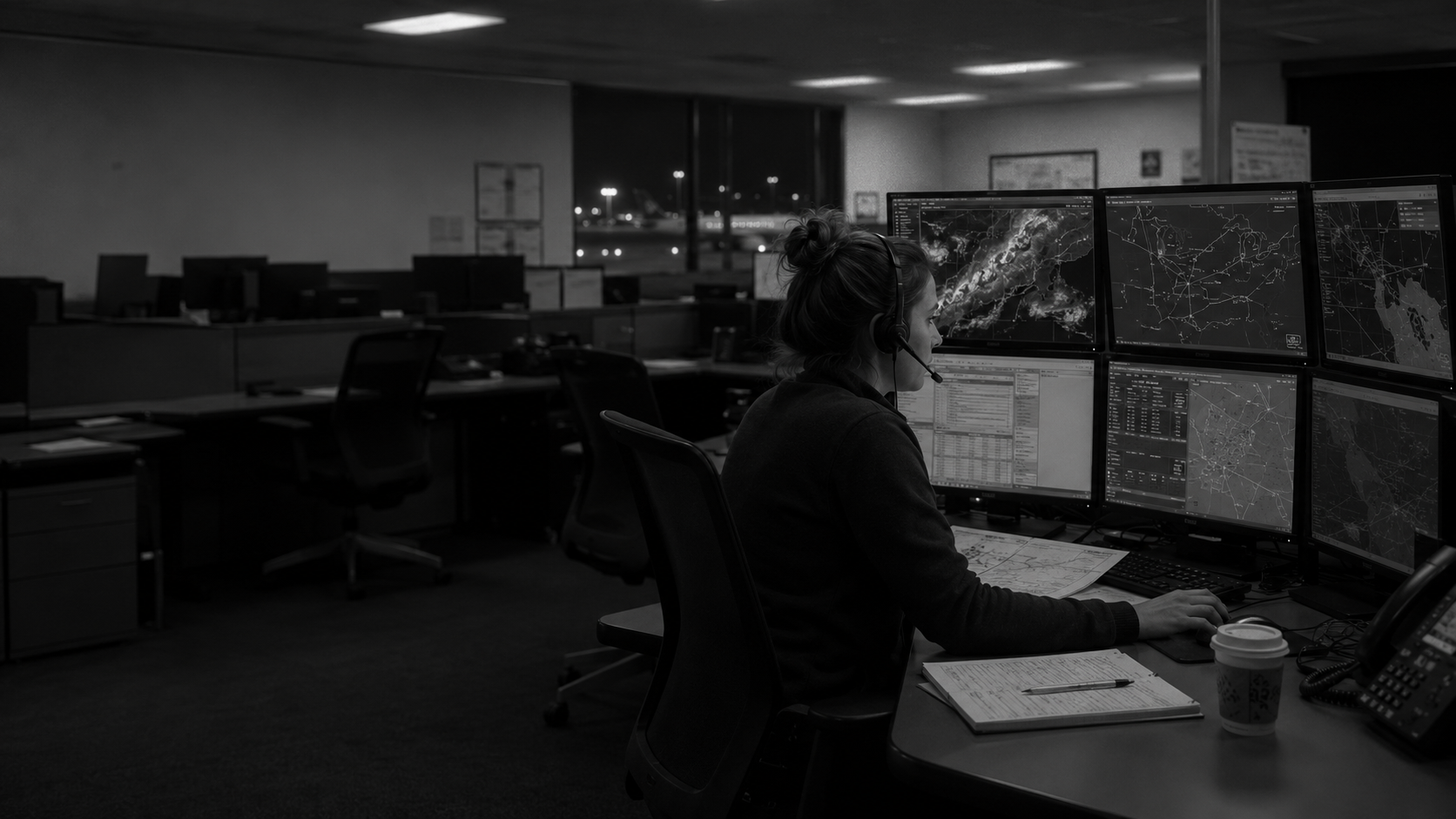
Four hundred miles away, in an operations center that looks more like a trading floor than anything with wings, a scheduler is solving a puzzle that has nothing to do with her at all. Which tail is closest to her departure city. Which crew is legal to fly given duty-time rules that reset and accumulate with a precision most passengers assume but never see. Whether the aircraft needs an inspection before it can fly again, and whether that inspection can happen in the window between her flight and the next owner’s.
The people running this desk will never meet her. That’s not an oversight. It’s the whole structure working as intended. Their success is measured by an absence: no delay she notices, no maintenance issue she hears about, no crew swap that reaches her attention. The job is to be so competent that competence becomes invisible, which means the better they do their work, the less anyone thinks to credit them for it.
A dispatcher here spends a shift running weather models for three states, cross-referencing them against fuel loads and alternate airports, building a flight plan that a captain will review, question, and either accept or push back on before a single wheel leaves the chocks. None of that reasoning travels forward to the cabin. The owner boards knowing only that the flight is on time. Everything that made it on time, every judgment call that kept it safe, stays behind at the desk.
There’s a particular kind of professional satisfaction in doing work no one will ever ask about, and a particular kind of professional loneliness in it too. The people who make fractional ownership function have made peace with being the reason nothing goes wrong, which is a strange thing to have made peace with, since it means the job is invisible exactly when it’s succeeding.

What Gets Delegated When You Delegate Everything
Fractional ownership gets sold as simplified access to private aviation, and it is that. But underneath the marketing language is a transfer of judgment far larger than most owners register when they sign.
She isn’t just outsourcing the physical act of flying. She’s outsourcing the decision about which crew is qualified enough to trust with her life, a decision she has delegated to a training department and a set of minimums she’s never read. She’s outsourcing the call on whether a maintenance deferral is acceptable for this leg or needs to be resolved first, a decision she’s delegated to a maintenance control team working off manuals she’s never seen. She’s outsourcing the weather judgment, the fuel planning, the alternate airport selection, the go or no-go call that a captain makes alone in conditions she’ll never know existed.
Full ownership at least forces the owner to confront these decisions in the abstract, even if he hires people to make them. He signs off on maintenance programs. He reviews safety audits, or at minimum knows they exist and could ask to see them. Fractional ownership removes even that layer of confrontation. The owner isn’t managing the risk anymore. She’s trusting an entire architecture of unnamed professionals to manage it correctly, and she’s doing it without ever being asked to understand what correct would look like.
What makes this rational, rather than reckless, is that the architecture itself is built to be checked. Redundant review. Standardized training across pilots she’ll never meet. A safety culture that doesn’t depend on any single person’s judgment holding up under pressure, because the system assumes someone’s judgment eventually won’t, and builds in enough overlap that it doesn’t matter when it happens. She isn’t trusting a person. She’s trusting a system designed by people who understood that trusting any single person completely would be a mistake.
The Illusion of Simplicity
The genius of the fractional model, and the thing that makes it sell, is that all of this stays hidden behind an experience built to feel like calling a car. A text message. A departure time. A door that opens onto a plane instead of a rideshare.
That simplicity is manufactured, and manufacturing it is expensive in ways that have nothing to do with the price of jet fuel. It requires operations centers staffed around the clock. It requires maintenance programs precise enough that an aircraft can be swapped between owners with no owner ever noticing a difference in how it flies or sounds or smells. It requires crew scheduling software solving constraint problems that would exhaust a team of humans working without it, and then humans checking that software’s answers anyway, because the constraint problems involve lives and nobody trusts an algorithm alone with that.
The owner experiences none of this. She experiences a text and a departure time. Every hour of complexity that made that possible has been absorbed by people whose job is precisely to make sure she never has to think about them, and who get paid, in part, for their own disappearance.

Dependence as the Real Subject
There’s a version of this story that reads as a critique, the owner as a figure of disconnection, insulated from a system she takes for granted. That’s not quite it. What’s happening here isn’t disconnection. It’s a form of trust so total it no longer announces itself as trust at all.
She isn’t unaware that she’s dependent. She’s simply stopped experiencing that dependence as risk, because the people on the other end of it have spent years making sure it doesn’t have to feel like risk. That’s not naivety. It’s what happens when a system earns confidence quietly enough, for long enough, that the confidence stops feeling like a decision and starts feeling like a fact.
Somewhere in an operations center, a scheduler is solving tomorrow’s puzzle for someone who will never know her name. Somewhere in a hangar, a mechanic is signing off on work that will never be questioned by the person it protects. And somewhere else, a woman with a bag by the door will get a text, walk to a car, and board an airplane she owns a piece of, trusting people she’s never met with the one thing she has no way of verifying herself: that everything invisible was done exactly right.
The better the system works, the less anyone thinks to credit it, which means the job is invisible precisely when it’s succeeding.
She doesn’t ask how it works. She’s not supposed to. That’s the arrangement, and somewhere underneath the convenience of it sits something closer to faith than most people would call it: belief placed in what can’t be seen, resting entirely on the character of people who’ll never be thanked for holding it up.
The Hangar | Vitesse