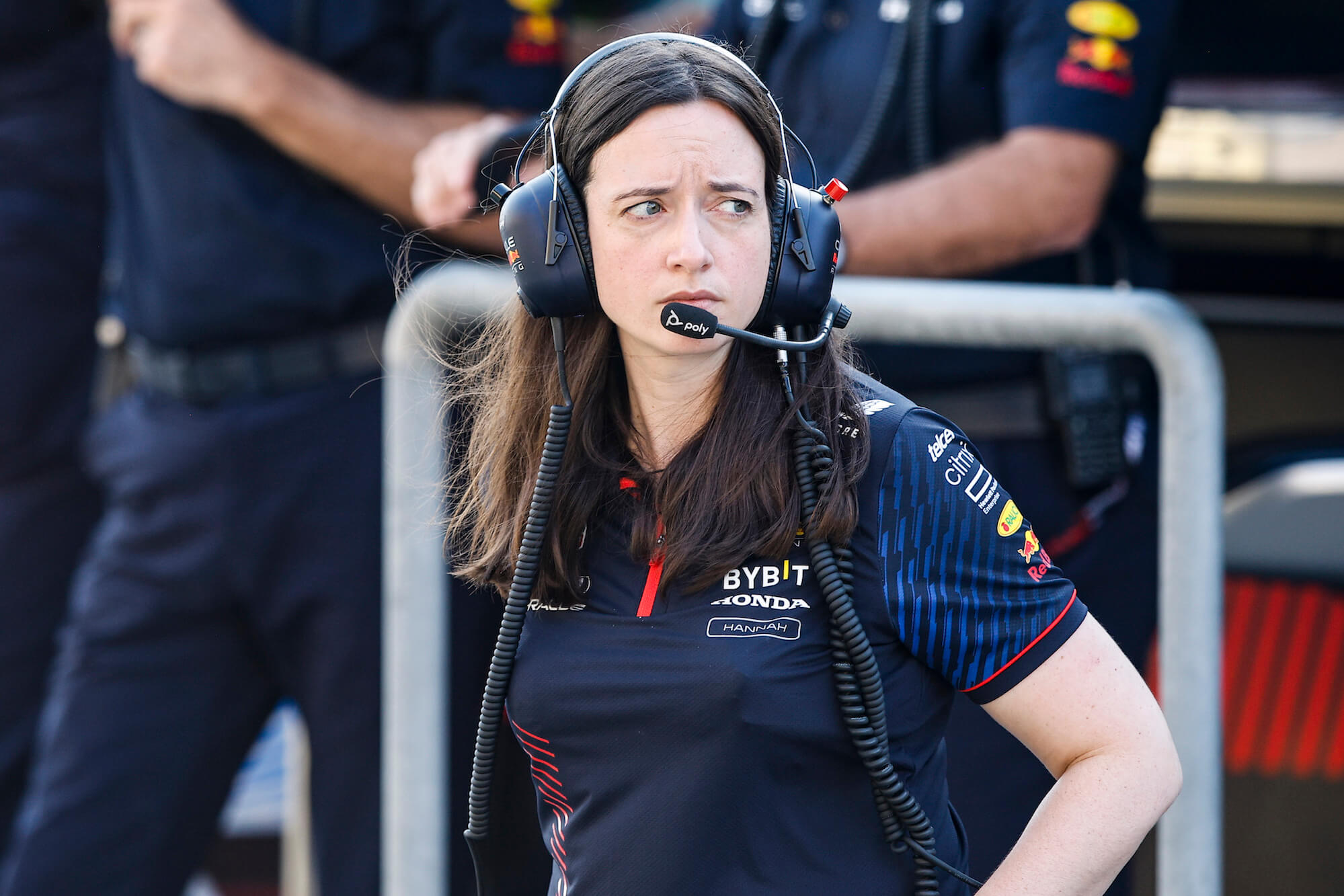
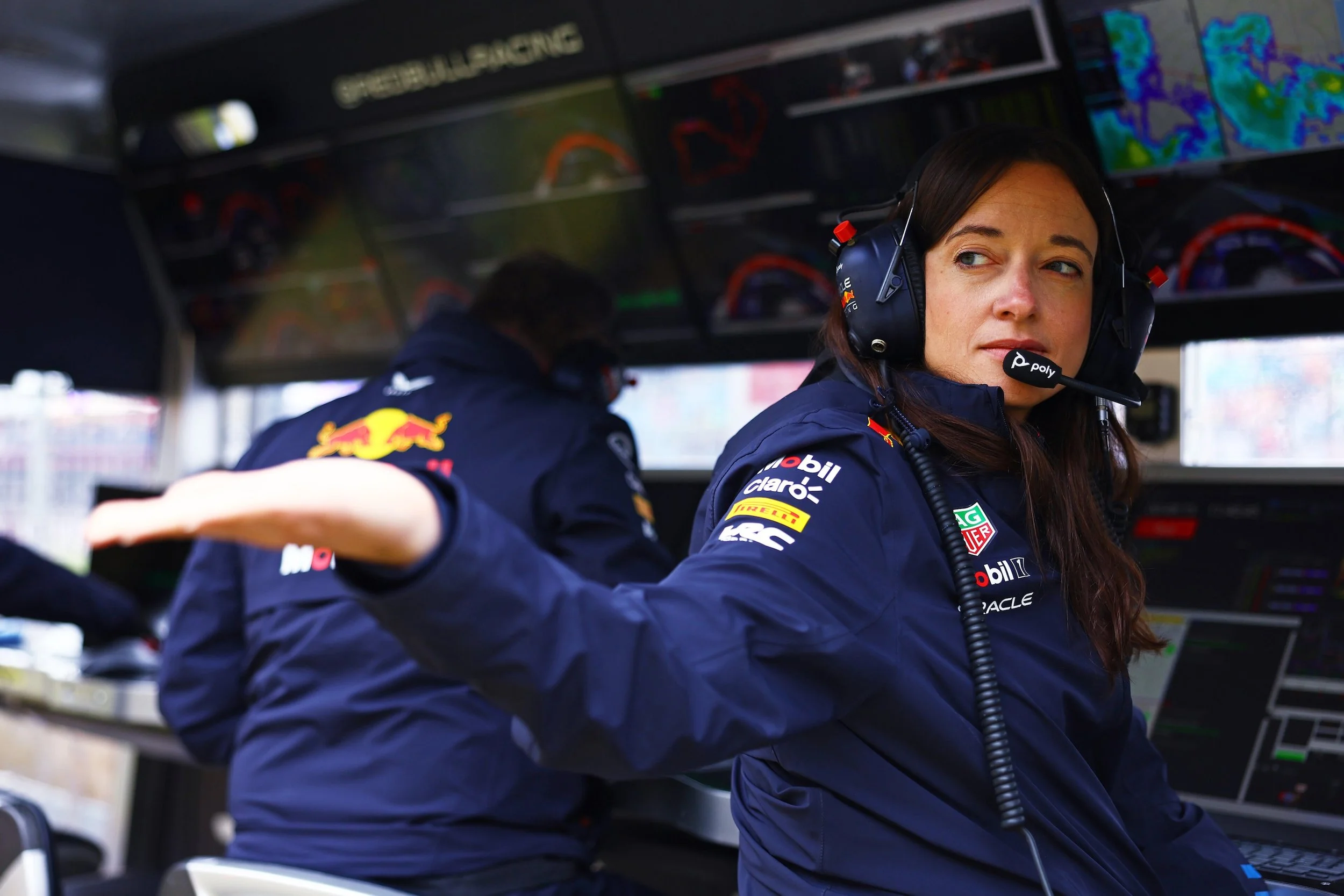
There is a habit Hannah Schmitz has when the stakes on the pit wall are highest. She talks with her palms turned down, hands flat against the air in front of her, as though she is holding something steady that nobody else can see. It is a small, almost involuntary gesture. It is also, if you know what to look for, the clearest signal in Formula One that a race is about to turn.
Schmitz has spent more than fifteen years at Red Bull Racing turning incomplete information into decisions that shape championships. She did not arrive as a star hire or a marketing invention. She arrived as a placement student in 2009, and the version of the job she does now was built one promotion at a time, in a role the sport spent most of its history not bothering to name.
The Intern Who Never Left
Schmitz joined Red Bull as a Modelling and Strategy Engineer, fresh out of Cambridge with a background in vehicle dynamics rather than strategy itself. The pull toward race day came later. By 2011 she had moved into the Senior Strategy Engineer role, embedded in the live calls at every Grand Prix. A decade of that work, building simulations, refining tire models, absorbing every circuit’s specific pattern of degradation and evolution, led to her promotion to Principal Strategy Engineer in 2021.
That arc matters because it is so ordinary in shape and so unusual in outcome. Nobody fast-tracked her into the biggest decisions in the sport. She earned her way into them by being right often enough, in a discipline where being wrong is public and being right is invisible.
The Room Behind the Pit Wall
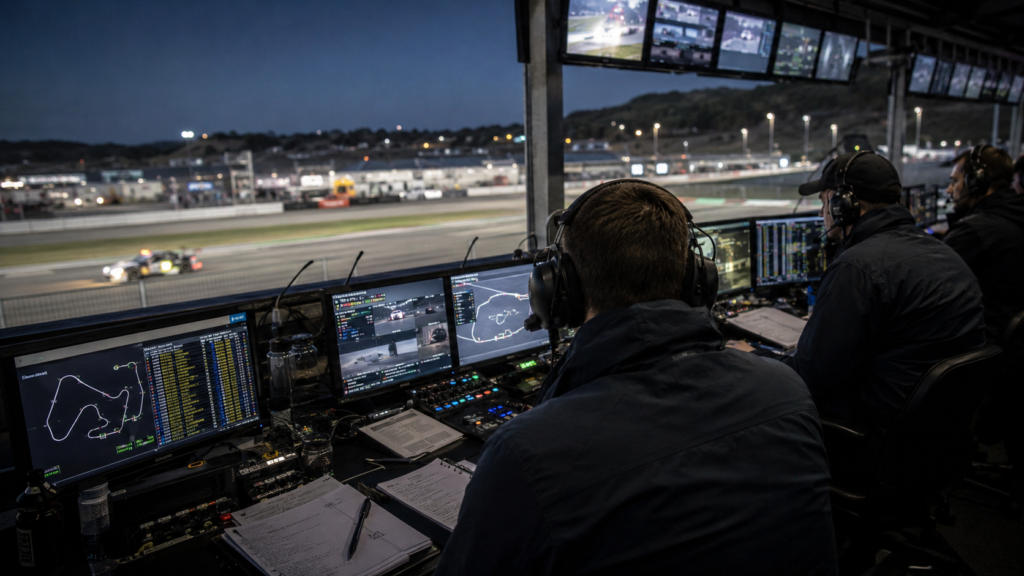
The image most fans have of a strategist is a person hunched over a laptop on the pit wall, headset on, saying a handful of words into a radio. That image is real but incomplete. Behind it sits an operations room in Milton Keynes that Schmitz has described as built along the lines of a mission control center, where a wider team tracks every rival’s radio traffic, every onboard camera, every number in real time, and feeds it to the pit wall with no meaningful delay.
That structure exists because a single person watching a single race can’t hold enough of it in view at once. The strategist on the wall is making the call, but the call is only as good as the room feeding it, and Schmitz has built her career at the center of both.
Palms Down
The tell is worth returning to, because it’s the closest thing the sport has to a visible marker of what the job actually costs. When Schmitz speaks with her palms down, she is usually in the middle of a decision that will either disappear by the next commercial break or define the headlines for a week. It is a technique, by her own account, for staying anchored while several people are talking at once and the model in front of her is telling her something the radio feed isn’t.
“The most important thing about doing the job, though, is staying calm under pressure, when you’ve got all those voices, there’s always opinions as well as data.”
That sentence is the whole job compressed into one line. The data rarely arrives in agreement with the people around you, and the strategist has to hold a position built on numbers while people with more authority and less patience are asking her to explain it in real time.
Hungary, and What Verstappen Actually Said
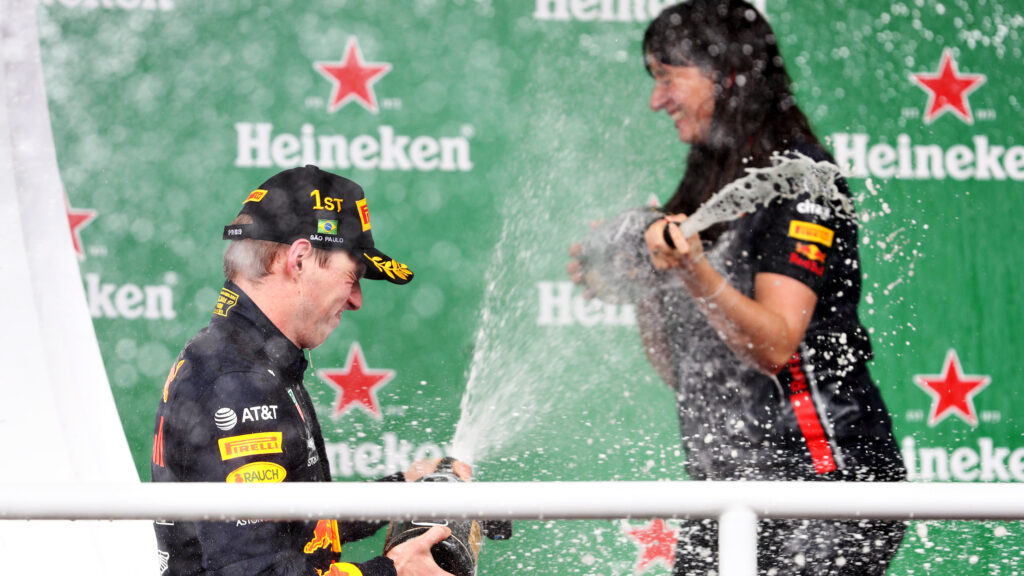
The moment that pulled Schmitz into wider view came at the 2022 Hungarian Grand Prix. Max Verstappen started tenth. Through a sequence of undercuts that Schmitz called, he finished first, a result that did more than win a race. It pushed Ferrari’s championship hopes further out of reach and turned a strategist’s name into something fans were suddenly searching for.
Verstappen said as much afterward, crediting the calm behind the calls rather than just the car underneath him.
“Today, I think Hannah, our strategist, was insanely calm.”
It’s a small compliment in the transcript of a post-race interview, and it’s also one of the only moments in the sport’s public record where a driver credits the person who was never going to be asked about it unless he did.
Monaco earlier that same season told a similar story from a different angle. A three-stop strategy Schmitz built helped deliver a win at one of the least forgiving circuits on the calendar, and Red Bull advisor Helmut Marko was blunt about where the credit belonged.
“If we won it was mainly due to Hannah.”
Both moments share the same shape. A result becomes undeniable enough that the person who engineered it briefly steps into frame, and then the sport moves on to the next weekend as though the visibility was incidental.
The Cost of Being the Linchpin
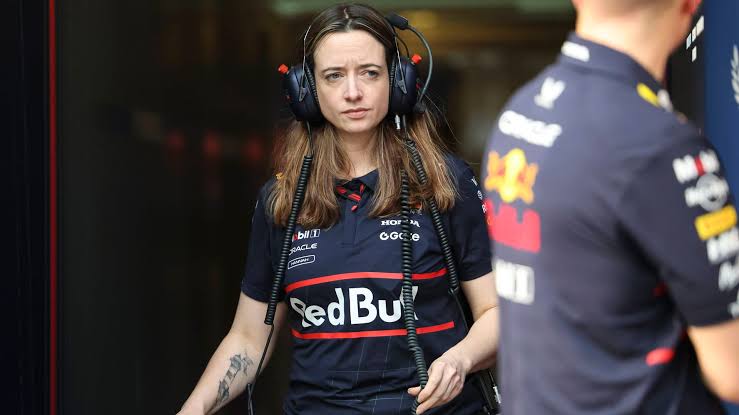
Christian Horner has called her position on the pit wall the linchpin of the operation, and the word is accurate in a way that’s easy to underestimate. A linchpin doesn’t do the visible work. It holds the visible work together, and its failure is the only time anyone thinks about it at all.
That’s the part of the role that doesn’t make it into race recaps. Schmitz’s job doesn’t reset to zero credit each weekend by accident. It resets because the structure of the sport was never built to track a role like hers, one where success looks like nothing happening and failure looks like everything happening at once, live, in front of millions of people who will remember the outcome and not the reasoning.
What sustains someone across fifteen years of that arrangement isn’t the handful of moments a driver or an advisor names them out loud. It’s something closer to a private, provable standard, the knowledge that the call was defensible even in the seasons nobody was asking. Schmitz has built an entire career on a form of correctness that the public only glimpses by accident, in a Hungary or a Monaco, before the cameras move on and the next race weekend starts the count over again.
That’s the actual shape of the job she’s spent a career mastering. Not a single gutsy call under pressure, but a decade and a half of holding a position built on information nobody else in the stadium can see, and trusting that the room behind the pit wall got it right before the world finds out either way.
The Grid | Vitesse