Hermann Tilke has designed more Formula One circuits than any other person alive. His fingerprints are on the tracks in Bahrain, Shanghai, Singapore, Abu Dhabi, Austin, Jeddah, and a dozen others. If a new country wants a Grand Prix, the conversation almost always ends up in his office in Aachen, Germany. He is the most consequential figure in the physical history of modern Formula One, and he is also one of the sport’s most criticized. Most fans can name at least one circuit they attribute to his failures. Very few could tell you what his job actually requires.
That gap, between the criticism and the comprehension, is where the real story lives.
The Man and the Mandate
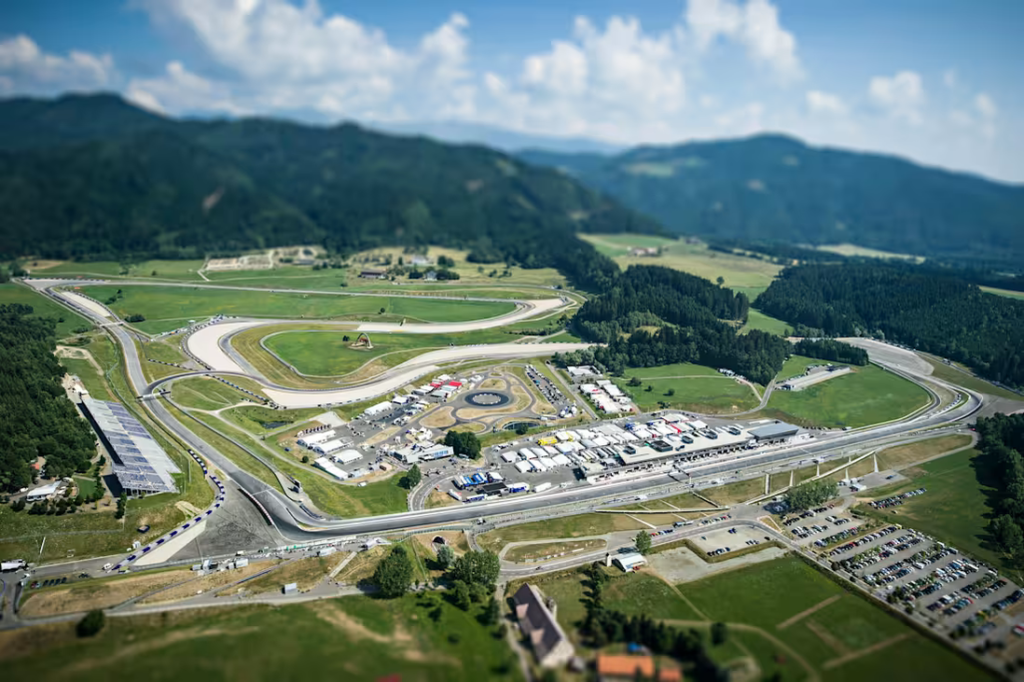
Tilke trained as a civil engineer, specialized in transport and traffic management, and founded his firm in 1984. He raced himself, mainly in endurance events at the old Nürburgring, which means he came to circuit design with a driver’s instincts and an engineer’s vocabulary. That combination is rarer than it sounds. The A1-Ring in Austria was his first major Formula One project, completed in 1996, and the contracts that followed transformed his firm from a regional engineering practice into the world’s dominant circuit design company.
By the mid-2000s, his association with Bernie Ecclestone had become so embedded that new Grand Prix applicants weren’t just encouraged to hire Tilke; they were effectively steered toward him. The sport was expanding into markets where no racing infrastructure existed, and Tilke’s firm had developed the capacity to deliver complex, FIA-compliant circuits in the compressed timelines these new venues demanded. Bahrain was built in sixteen months. Abu Dhabi in eighteen. Jeddah, a full street circuit, went from first sketch to race weekend in under a year.
The output is staggering. The criticism is persistent. And both exist largely without context.
What the Document Says
“We never have a clean slate on which to draw.” Hermann Tilke
Before a single corner is sketched, the FIA’s Grade 1 homologation requirements arrive. This document is not a suggestion. It specifies minimum circuit length, maximum straight length, minimum track width, pit lane dimensions, runoff requirements, gradient tolerances on the start-finish straight, medical center specifications, and marshal post placement. The grid must be at least fifteen meters wide. The first corner must produce a directional change of at least forty-five degrees with a radius under three hundred meters. Pit entry and exit points cannot intersect the racing line. Every one of these parameters exists before the designer touches the land.
The land, of course, has its own constraints. Property boundaries don’t move. Roads and buildings don’t move. In a city circuit, the streets are what they are. In a purpose-built venue, the parcel of land is what the client owns or has been allocated, and the topography of that land sets the ceiling for what’s possible. The elevation changes that make Spa, Suzuka, or the old Nürburgring feel alive are not design choices that can simply be replicated. They’re geological facts. You either have hills or you don’t.
Most of the land Tilke has been handed in the last two decades doesn’t. Bahrain is reclaimed desert. Abu Dhabi is a development island. Shanghai is river delta flatland. Korea was built around a port facility. When critics point to the flatness of these circuits, they’re often pointing at the land, not the designer.
The Client in the Room
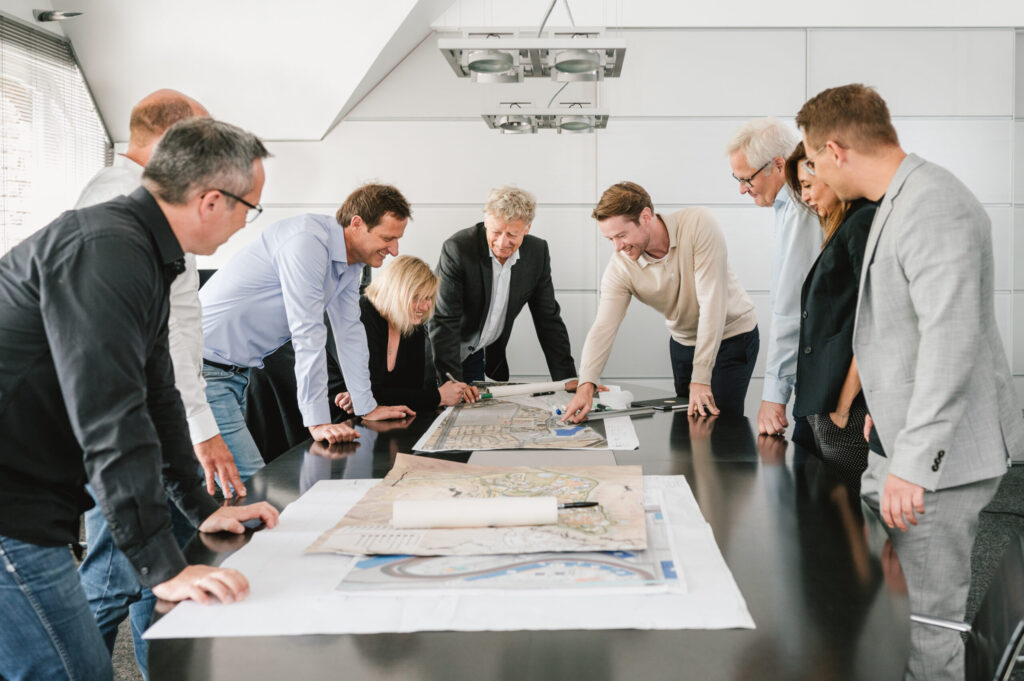
The FIA requirements are the floor. Above them sits the client, and the client’s priorities are rarely limited to what makes a race exciting.
When Tilke was appointed for the Jeddah circuit in 2020, the brief arrived with a timeline most engineers would consider impossible: a Grand Prix in under twelve months. The layout had to incorporate existing roads, work around fixed infrastructure, and produce a circuit that would reflect well on the country staging it. The Saudi motorsport federation was explicit: they didn’t want another race, they wanted something that would become a statement. The track also needed to be visible, legible, and photogenic from the broadcast angles that would carry it to a global audience.
In Baku, the starting point wasn’t a racing line. It was a paddock location in front of the government building. The political and symbolic weight of that decision shaped everything that followed. In Abu Dhabi, a hotel was built over part of the circuit, and its expansion from a smaller footprint to two hundred rooms required adjustments to the final layout. These are not engineering problems. They’re the actual conditions of the work.
The feng shui requirements in Shanghai influenced the circuit’s design. The baseball stadium in Mexico City had to be incorporated into the layout at the client’s insistence. The cobblestones in Baku’s old city had to remain intact after the race, which meant Tilke’s team developed a system of geotextiles, gravel, and asphalt that could be built before the event and removed afterwards. None of this appears in a discussion about whether Turn 8 at Yas Marina is interesting enough.
What Speed Actually Requires
The circuits Tilke is most criticized for share a common characteristic: they were built on flat land with limited topographical variation, for clients who also needed multi-purpose facilities, within FIA regulations that have grown increasingly specific about runoff, access, and safety infrastructure.
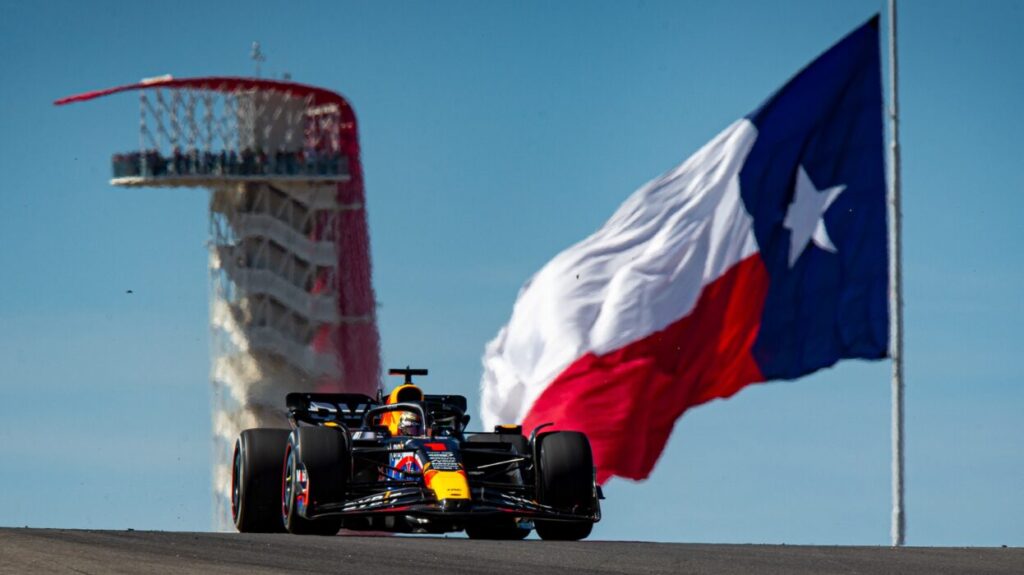
What Tilke himself has said, consistently across many interviews, is that the third dimension is the most important element of a good circuit. Compression through valleys. The feeling of cresting a hill blind. Off-camber corners that work against the driver’s instinct. Istanbul’s Turn 8, a quadruple-apex left-hander that sweeps downhill through decreasing radius, is almost universally regarded as one of the best corners built in the modern era. It came from a piece of land that had meaningful elevation change and a client that gave the design team room to use it. The Circuit of the Americas, where Tilke’s team was involved in the land selection process from the beginning, used the Texas hill country topography as the foundation for the opening sequence of corners that drivers praised immediately.
“We do not get that every time. Other race tracks, we come and it’s a flat piece of land and we have to live with that land and have to create the best thing we can do.” Christian Epp, Tilke Engineers
The gap between COTA and Abu Dhabi is not a gap in ambition. It’s a gap in geology.
The Criticism and What It Misses
The term “Tilkedrome” became part of F1 vocabulary sometime in the early 2010s, used to describe a circuit that felt generic: wide, smooth, safe, with a long straight feeding into a slow hairpin designed to manufacture an overtaking zone. The critique isn’t entirely wrong. Some of Tilke’s circuits do share those qualities, and the ones that do tend to produce races that test strategy more than driving.
But the critique tends to flatten what is actually a varied portfolio. Istanbul Park is a Tilke circuit. So is Sochi. They’re not the same thing. Bahrain’s outer circuit, used for the first time in 2020, produced arguably one of the most compelling Grands Prix in recent memory. The Red Bull Ring, rebuilt from the old Osterreichring, has been consistently praised for generating close racing since its return to the calendar.
The circuits that disappoint do so for reasons that rarely begin with a designer’s indifference. They begin with flat land and tight boundaries and clients who need a hotel to span the track and a government house to anchor the paddock. The designer works inside all of that, and when the result is processional, the criticism lands on the name that’s attached to the circuit plan.
What that criticism misses is the gap between the job description and the public understanding of it. Tilke has said it hurts, in those terms, when a circuit opens and the first conversation is about runoff areas. The runoff areas he didn’t choose to build are there because MotoGP also uses the venue, because a car hitting an armco at speed dents metal and leaves the driver intact, while a motorcycle rider at the same speed does not walk away from the same impact. These are engineering realities, not aesthetic choices.
The invisible hand behind the most visible arenas in sport is not drawing circuits in a vacuum. It’s working inside a set of constraints that most of its critics have never thought to examine: government approvals, FIA specifications, geological facts, client requirements, and construction timelines that would make most architects walk away before the first meeting ended. What gets built is what those constraints allow, shaped by the skill and experience of a firm that has been doing this longer and more often than anyone else in the world.
The name on the circuit map is Hermann Tilke. The full list of authors is considerably longer.
Vitesse | The Paddock | Lifestyle & Culture