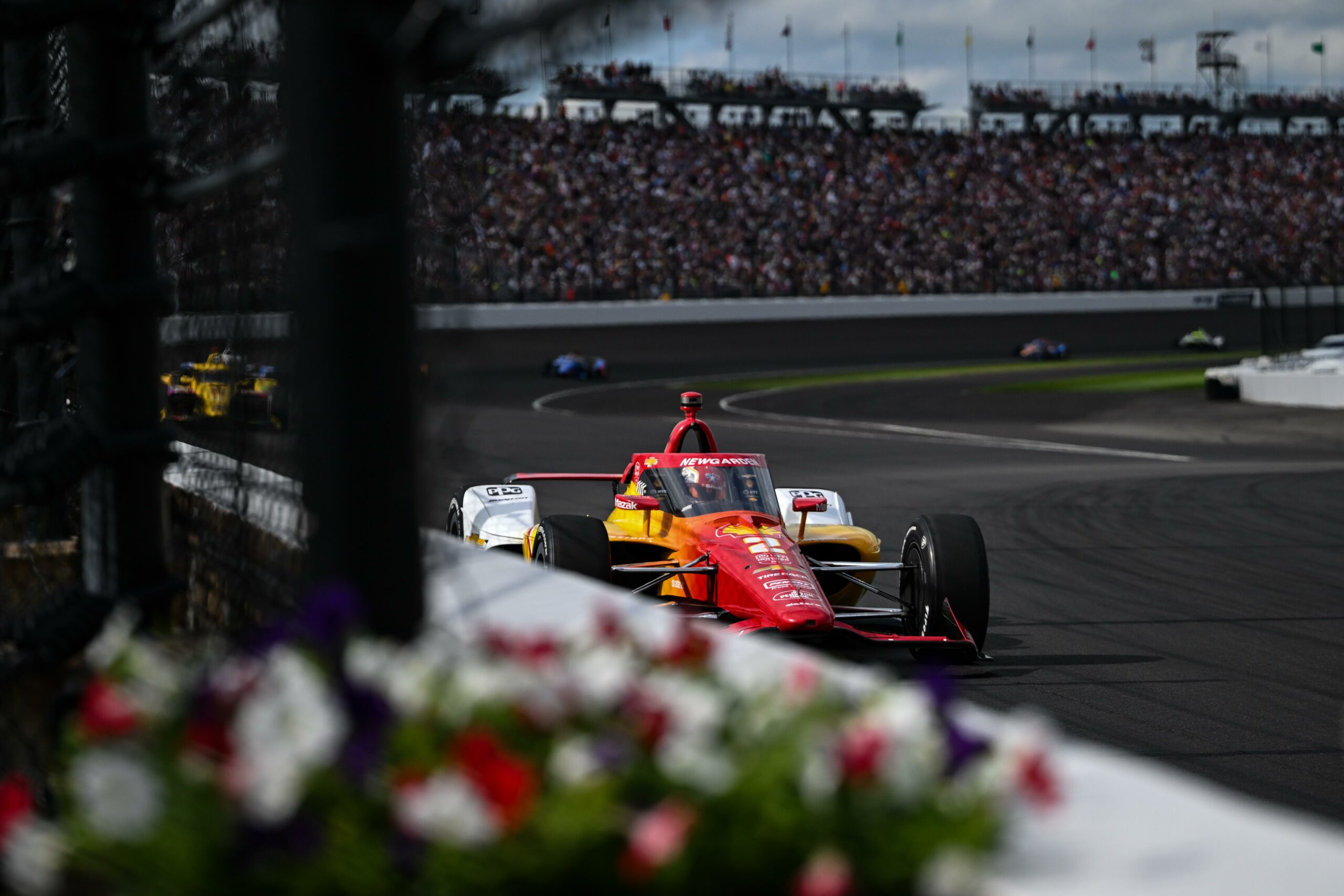
For 232 laps at Iowa Speedway, the race looked settled. Josef Newgarden led from the pole, working through traffic with the ease of a driver who has treated this short oval like his personal proving ground for the better part of a decade. He’d already passed 2,000 career laps led at the track before the sun went down. By the final round of pit stops, the broadcast had all but written its ending. Newgarden was going to win his seventh race here, and the only remaining question was by how much.
That ending never came. Pato O’Ward left pit lane ahead of him, and from that point forward, the race Newgarden had dominated became a race he was chasing. The finish, when it arrived, was decided by 0.2352 of a second, the tightest green flag margin at Iowa since 2007. Two late restarts gave the broadcast its tension, Newgarden closing, O’Ward defending, a finish tight enough to hold a room. But the pass that actually won the race happened earlier, in the pits, and it never looked like a pass at all.
The Overcut
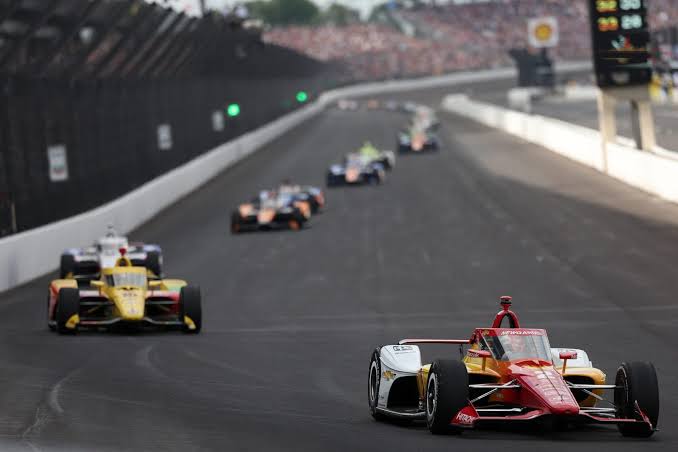
An overcut works by refusing to do the obvious thing. When a driver ahead pits, the natural response is to pit too, match the strategy, and hope for a clean stop. The overcut does the opposite. It stays out. For one more lap, sometimes two, the trailing car runs on tires that are more worn but on a track that is briefly empty of the traffic and lane changes that come with pit exit. That extra lap, run alone and at pace, can generate enough time to erase whatever gap separated the two cars going into the stops.
It’s a gamble that depends entirely on math nobody in the grandstand can see. Tire degradation over one additional lap has to cost less than what’s gained by avoiding the queue and the outlap traffic the rival will face. Get the math wrong and the driver who stayed out simply arrives at their own pit stop with worn tires and nothing to show for it. Get it right, and the position changes hands without either car touching the racing line at the same moment.
O’Ward and his crew got it right. Newgarden’s stop suffered a slight delay on the left front, the kind of cost that’s invisible in real time and only shows up afterward, on the stopwatch. O’Ward’s crew got him out clean. By the time both cars rejoined, the lead had already changed hands, decided by a wheel gun and a lap of solitary running rather than anything that happened wheel to wheel.
Winning the Race You Can’t See
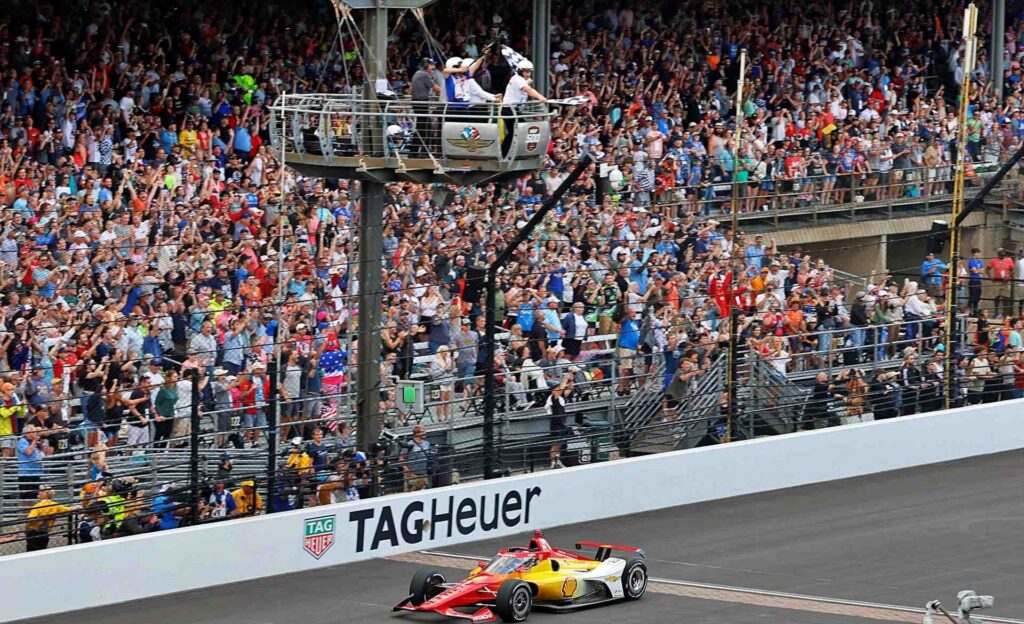
O’Ward was direct about what the moments before that stop actually required. “Josef is the master at these races. He rules around here, so I knew we had to be spot-on,” he said after the race, crediting the precision of his in-lap for setting up the swing. That in-lap, the run into the pit box before the stop even begins, is where a driver has to brake at the exact right marker, hit the pit road speed limit within a fraction of a second of crossing the line, and lose no more time than absolutely necessary before the crew takes over.
“I was so precise on the in-lap to beat him at his own game.”
None of that shows up on a highlight reel. There’s no camera angle that makes a clean in-lap look dramatic, and no replay package built around a driver braking at the correct cone rather than fifty feet later. But the margin O’Ward built there is the margin he spent the rest of the race trying to protect, and it’s the reason the finish felt closer than the outcome actually was.
Defending Nothing New
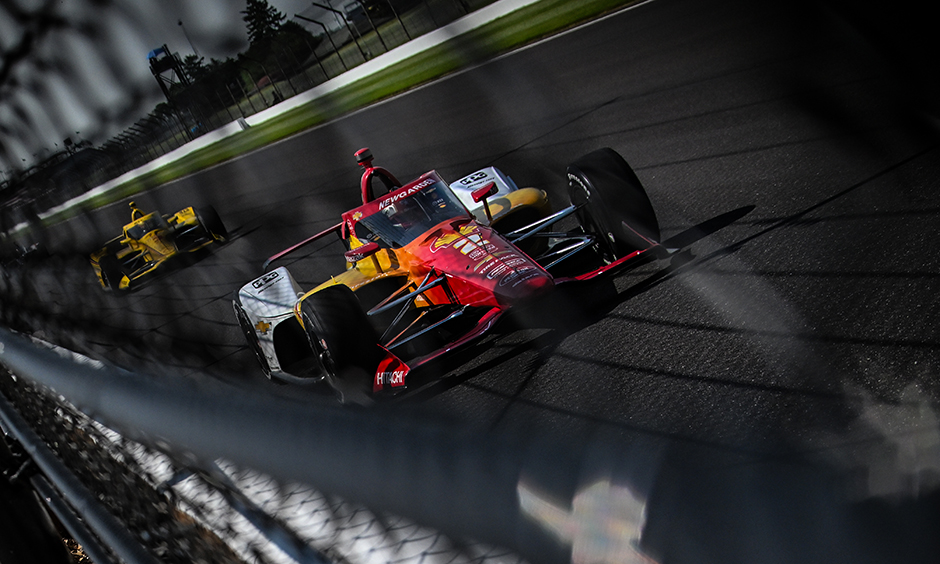
What followed wasn’t really a fight for the lead. It was a fight to keep one that had already been won. A caution period brought out by another car’s contact with the Turn 4 wall bunched the field, and O’Ward found himself managing lapped traffic at exactly the moment Newgarden needed a gap to appear. It didn’t. Two restarts remained in the final laps, and each one gave Newgarden a run, a chance to use the run-up in Turn 3 and put pressure on the position he’d lost in the pits.
Newgarden pushed him there, hard enough to draw a mention afterward. “He pushed me up in Turn 3 on the restart when I had a good run,” he said, adding that he couldn’t fault a rival racing for the win. But pushing a car up in a corner and passing it are different acts, and O’Ward held the position both times. The defending itself was clean, disciplined, and largely uneventful, which is precisely what made it effective. There was no block to complain about and no contact to review. There was just a driver who understood that the version of this race he needed to win had already happened, and all that remained was not giving it back.
The Margin
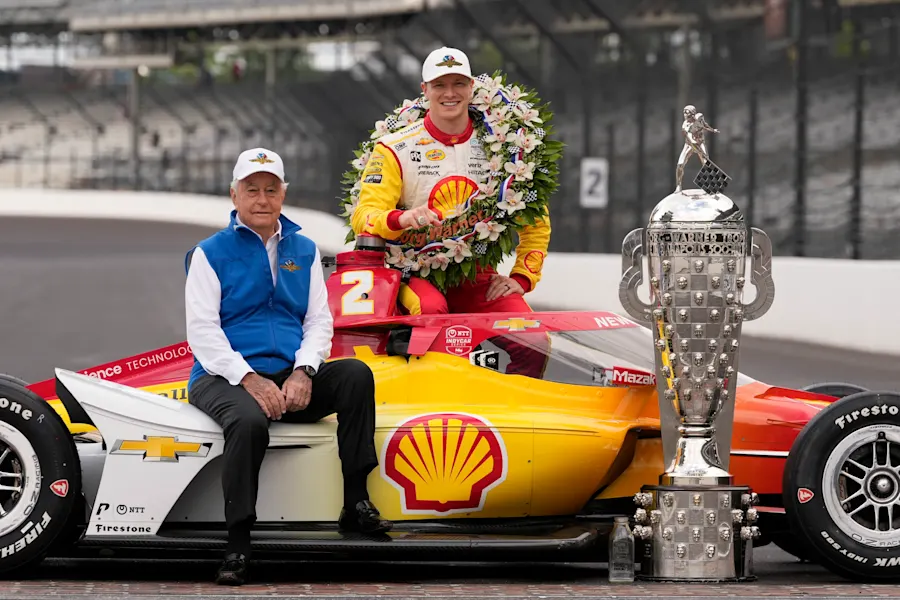
Newgarden’s own read on the finish was almost clinical. “He got track position there and it was game over. Simple as that.” He wasn’t wrong, and the flatness of that assessment says something the broadcast rarely captures. The margin at the checkered flag measured a quarter of a second, close enough to feel like a photo finish decided in the final hundred feet of racetrack. It wasn’t. It was decided in a pit box, on an in-lap driven a few tenths cleaner than the one beside it, long before either car crossed the stripe for the last time.
That’s the part racing rarely shows. The moment a broadcast frames as the finish is usually just the moment the outcome becomes visible. What actually decided it, the lap run alone in clean air, the wheel gun landing half a second faster, the in-lap braked at precisely the right marker, happened earlier and quieter, in a place the cameras were pointed somewhere else. Iowa didn’t come down to the final corner. It came down to everything that happened before anyone was watching that corner at all.
The Grid | Vitesse