At Calshot Spit in the summer of 1929, a seaplane sat on the water waiting for a signal, its floats catching the low light off the Solent. The Supermarine S.6 carried no guns, no armor, no mission beyond the one printed on the stopwatch held by the men on the judging launch. It existed to answer a single question. How fast could a shape move through air before something failed.
R.J. Mitchell had already spent most of the decade answering that question in increasingly narrow terms. The Schneider Trophy, a closed circuit seaplane race that Britain, Italy, and the United States had turned into an unofficial arms race of pure velocity, gave him something no military specification ever would. A problem with no compromise built into it. Nobody asked the S.6 to carry a payload or survive a dogfight. It only had to be fast, and everything about its design could bend toward that single requirement without apology.
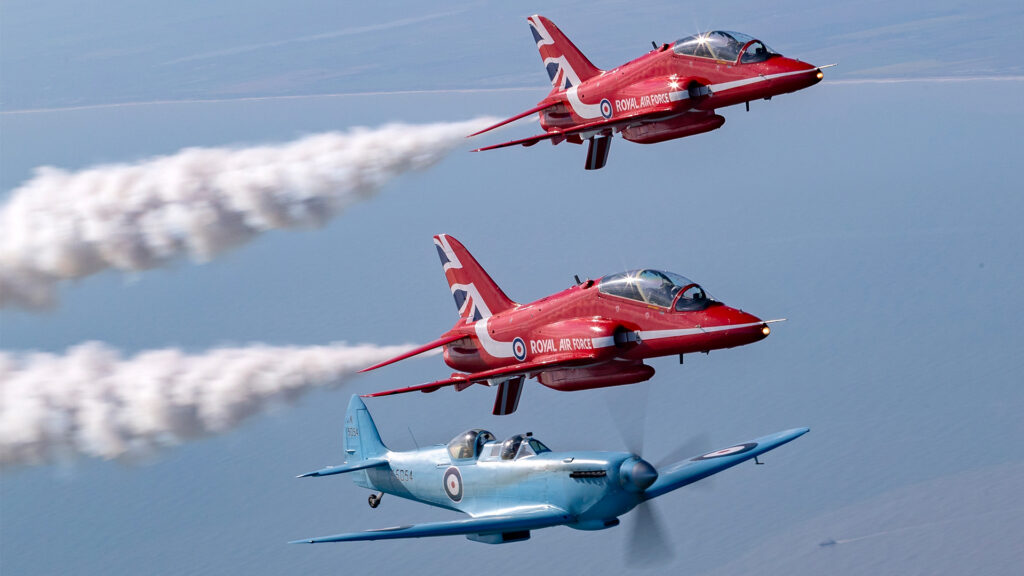
By the time the Spitfire entered service a decade later, the story that attached itself to the aircraft was a story about war. Fighter Command, the Battle of Britain, the sound of a Merlin engine climbing into a formation of Heinkels. That story is true, but it is not where the airplane came from. The Spitfire’s actual origin sits earlier, in a design language built for a sport that no longer exists in any recognizable form, refined by a man who understood drag the way a sculptor understands the material he is cutting away rather than adding to.
What Racing Actually Teaches
Military aircraft in the early 1930s were built to a different set of instincts. Strength, range, the ability to absorb damage and keep flying, the capacity to carry weight without losing controllability. Speed mattered, but it competed with other priorities in a way that inevitably produced compromise.
The Schneider Trophy offered no such negotiation. Every ounce of structure on the S.5 and the S.6B existed because it had to, and nothing existed because it might be useful someday. Mitchell’s team spent those years obsessing over radiator placement, because a seaplane engine at full racing power generated heat that could not be managed through conventional means without adding drag that would erase whatever speed gain the engine produced. They solved it by building the radiators into the wing surfaces themselves, turning cooling into an aerodynamic problem rather than a mechanical afterthought.
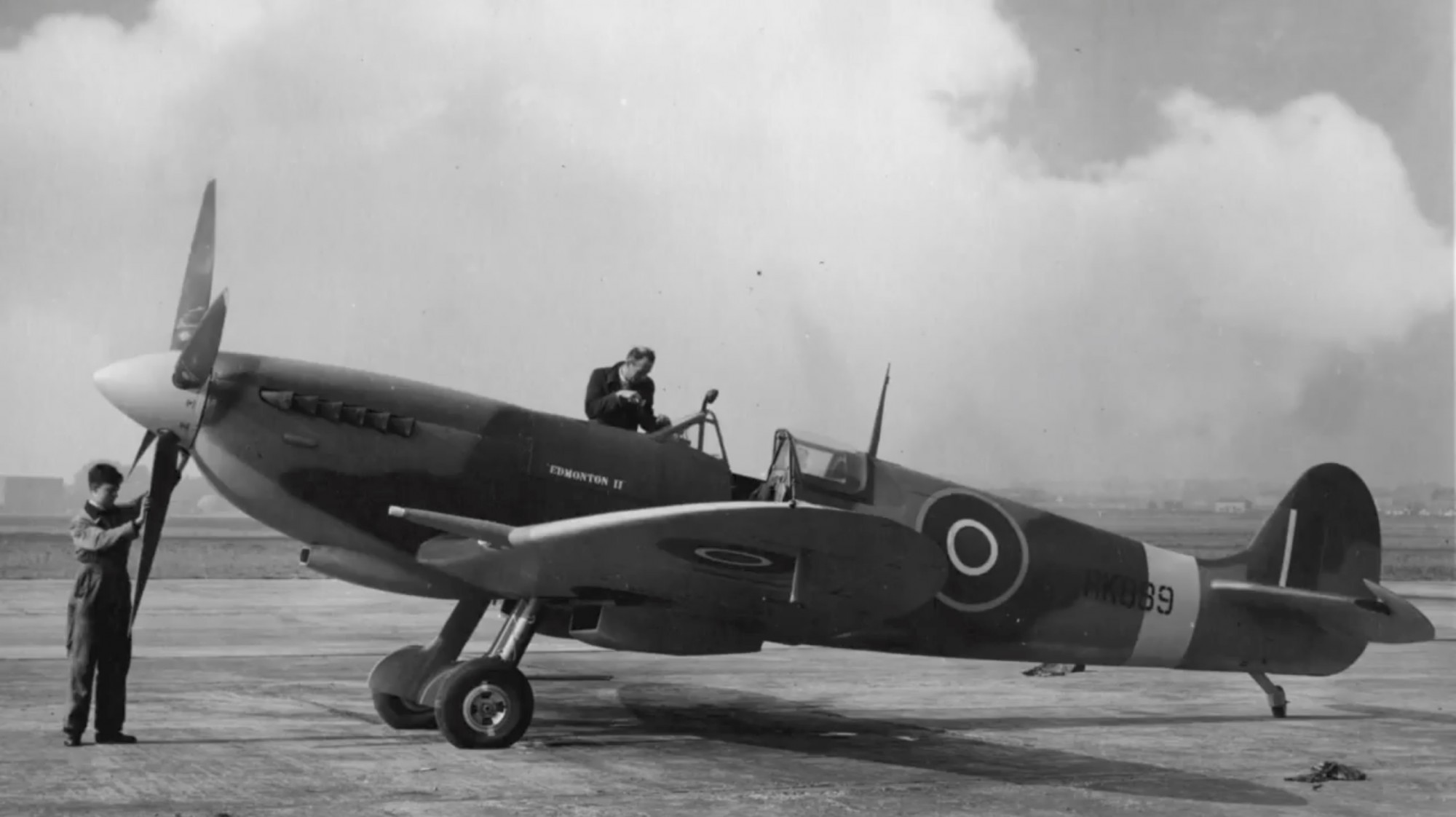
That instinct, the refusal to treat any component as separate from the aircraft’s total shape, became the foundation of everything that followed. The wing that would eventually define the Spitfire’s silhouette did not begin as a design flourish. It began as an answer to a specific problem: how do you carry enough fuel and structure to satisfy an airframe’s requirements while keeping the wing thin enough to minimize drag at high speed. The elliptical planform let Mitchell’s team taper thickness gradually across the span, which meant the wing could be structurally sound near the root, where the loads were highest, and still thin out toward the tip in a way a simpler shape could not achieve without sacrificing strength somewhere else.
None of this came from a fighter brief. It came from four years of racing seaplanes that existed for no reason except to go faster than the other country’s seaplane.
The Diagnosis
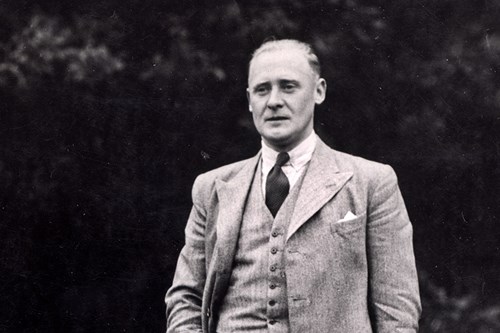
Mitchell was diagnosed with rectal cancer in 1933, not long after the Schneider program wound down and while the aircraft that would become the Spitfire was still taking shape on paper. He underwent surgery, returned to work, and continued leading the design team through the prototype phase and into early production, though by then everyone around him understood that the timeline he was working against had very little to do with the Air Ministry’s schedule.
There is a particular discipline that shows up in the decisions of someone who knows he will not be present for the outcome. It does not look like urgency in the dramatic sense. It looks like delegation done early and done seriously. Mitchell began preparing his chief draughtsman, Joseph Smith, to take over the program well before his health forced the transition, walking him through not just the specifications but the reasoning behind them, the tolerances that mattered and the ones that were negotiable. When Mitchell died in June 1937, two years before the aircraft that carried his name would fly in combat, Smith did not inherit a finished design. He inherited a set of decisions he understood well enough to defend and refine on his own terms.
That kind of handoff does not happen by accident. It requires a designer willing to separate his own presence from the survival of his work, which is a much harder thing to do than it sounds. Plenty of engineers build something excellent. Fewer build something excellent and then spend their remaining time making sure it can outlive their involvement entirely.
The Aircraft Nobody Ordered
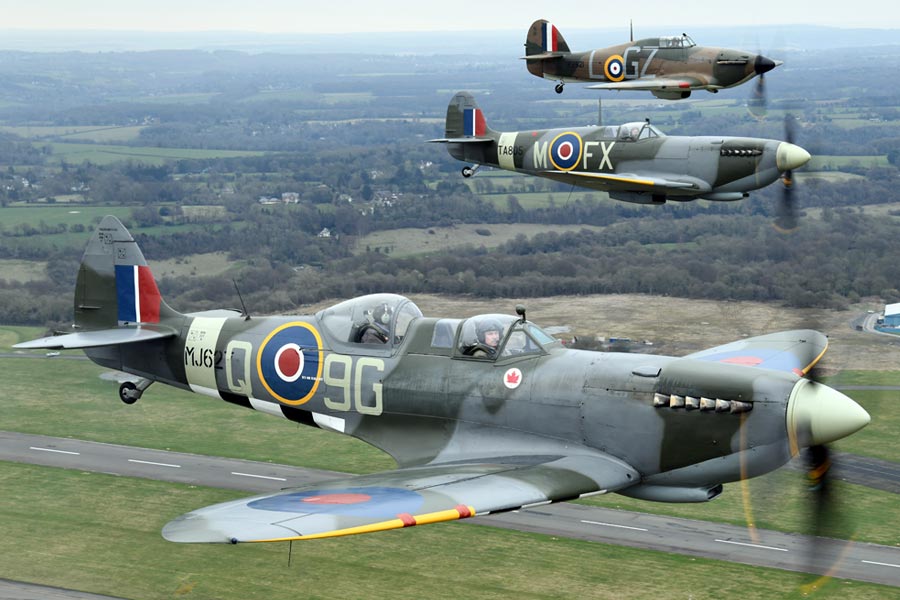
The Air Ministry specification that eventually produced the Spitfire, F.7/30 and its successors, was written by people who wanted a stable gun platform above almost anything else. The instinct within the ministry ran toward thicker wings, more conventional structures, aircraft that prioritized predictability over outright performance.
Mitchell’s team pushed against that instinct at nearly every stage. The thin elliptical wing that had emerged from years of racing logic was, to a procurement officer trained on more conservative airframes, an unnecessary risk. It was harder to manufacture. It complicated the placement of guns and ammunition, which had to be fitted into a wing that was never designed with weapons in mind. Supermarine’s engineers spent real effort making a racing wing accommodate a military requirement it was never built for, rather than the more obvious path of designing a military wing from scratch.
They won that argument because the performance numbers were undeniable. When the prototype flew in March 1936, its speed and handling made the case that a design shaped by racing discipline could outperform anything built to a purely military brief. The aircraft that emerged was not a compromise between the Schneider lineage and the fighter requirement. It was the Schneider lineage, made to carry guns because circumstances demanded it, not because the design had ever intended to.
What Outlives the Designer
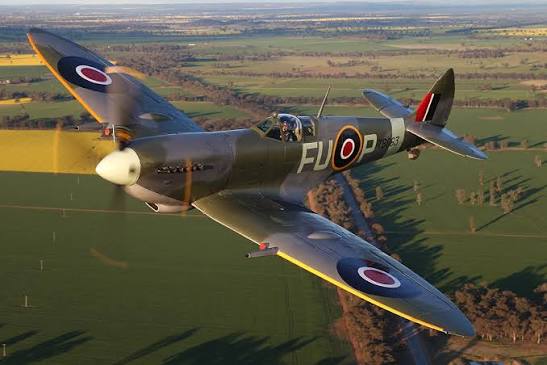
Mitchell did not live to see the Spitfire fly in anger. He died more than three years before the Battle of Britain, before the aircraft became shorthand for a nation’s survival, before the mythology attached itself so completely that most people who know the Spitfire’s silhouette have no idea it descended from a seaplane racing program most of them have never heard of.
That gap between what a thing becomes and where it actually came from is worth sitting with. The Spitfire’s reputation rests on wartime performance, but its capability rests on four years of a man solving a problem that had nothing to do with war, refined further by the discipline of someone who understood his own time was limited and built accordingly. Mitchell did not design the Spitfire to be remembered. He designed it because the problem in front of him, first at Calshot and later at Woolston, demanded an answer he was uniquely positioned to give, and he kept giving it even after the terms of his own future had changed completely.
What outlasts a person is rarely the recognition. It is the work done carefully enough, and handed off deliberately enough, that it no longer requires the person who built it.
The Spitfire’s actual origin sits earlier, in a design language built for a sport that no longer exists in any recognizable form.
He was not designing for a war he expected to see the end of. He was designing for a specification he would not live to watch fly.
The Hangar | Vitesse