Speed has a physics problem that no amount of horsepower can solve on its own. Push a car hard enough and the atmosphere stops behaving like something to move through and starts behaving like something to fight. The air thickens. Pressure builds against every surface. And the engine, no matter how violent, begins burning energy not to accelerate but simply to hold its ground against the resistance it’s creating. That wall is invisible, but it’s as real as tarmac, and the only way to understand it is to stop guessing and start measuring.
For much of motorsport’s early history, designers trusted their instincts. Shapes that looked fast were assumed to behave fast. Long tails, sloping rooflines, and teardrop silhouettes made intuitive sense because they suggested motion even standing still. What nobody fully reckoned with was that air doesn’t care what a car looks like. It responds only to geometry and pressure, and when those early machines reached the upper limits of their straight-line speed, the atmosphere exposed every assumption.
When the Cars Wanted to Fly
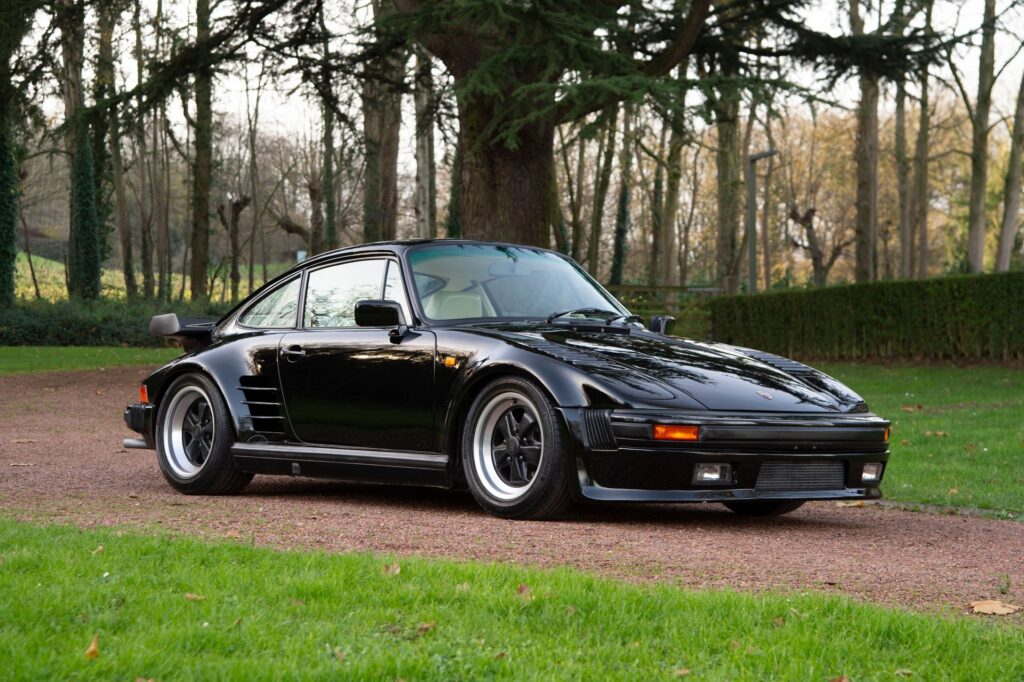
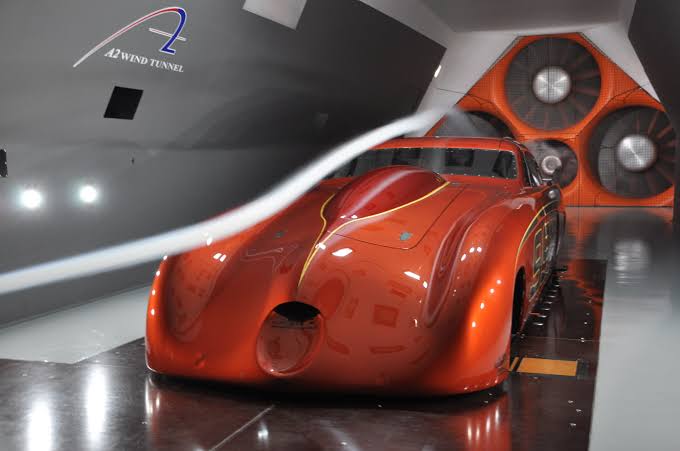
The late 1960s made the problem impossible to ignore. Sports prototypes running Le Mans and the Can-Am series were producing enough power to reach speeds where aerodynamic lift became genuinely dangerous. The sloping rear sections that looked so purposeful at low speed were acting like inverted airfoils at 200 miles per hour, reducing the load on the rear tires and turning responsive machines into unpredictable ones. Drivers described the steering going light in their hands on long straights, the car beginning to float rather than plant itself into the road. The sensation wasn’t subtle. It was the machine telling them the ground was no longer a guarantee.
The engineers’ first response was blunt. Wings appeared almost overnight, bolted high above the bodywork on spindly struts, generating downforce through sheer angle of attack. They worked, but they introduced a different set of problems. The loads those wings produced were enormous, and the structures carrying them weren’t always engineered to match. Failures happened at speed. The sport learned, painfully, that adding grip in one place without understanding what the rest of the car was doing didn’t produce a faster, more stable machine. It produced a faster, more complicated one.
“The atmosphere exposed every assumption. Air doesn’t care what a car looks like — it responds only to geometry and pressure.”
The Ground Beneath the Car
The insight that changed everything didn’t come from adding more wing. It came from looking at a part of the car that nobody had thought to treat as an aerodynamic surface at all. Lotus arrived at the 1977 season with a car whose underfloor had been shaped deliberately, its edges sealed to the track by sliding skirts that maintained a consistent gap between the bodywork and the road. The floor wasn’t flat. It was profiled to accelerate the air passing beneath the car, dropping the pressure in that channel and generating a force that pulled the car down rather than pushing it from above.
The effect was profound. Cornering speeds that had seemed impossible became routine, and the relationship between the underfloor and the tires was fundamentally different from anything a top-mounted wing could achieve. Downforce from beneath the car doesn’t carry the same drag penalty. It doesn’t create the same leverage on the chassis. The load goes into the structure more evenly, the tires work in a narrower temperature window, and the driver can carry more speed into corners because the car’s stability doesn’t depend on the angle of a wing that might stall under turbulence. Ground effect didn’t just make cars faster. It changed what a fast car felt like to drive.
The Tunnel Becomes the Laboratory
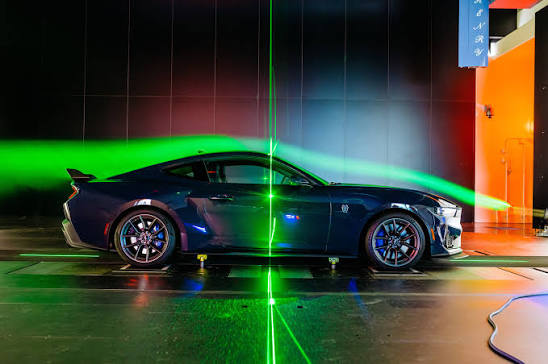
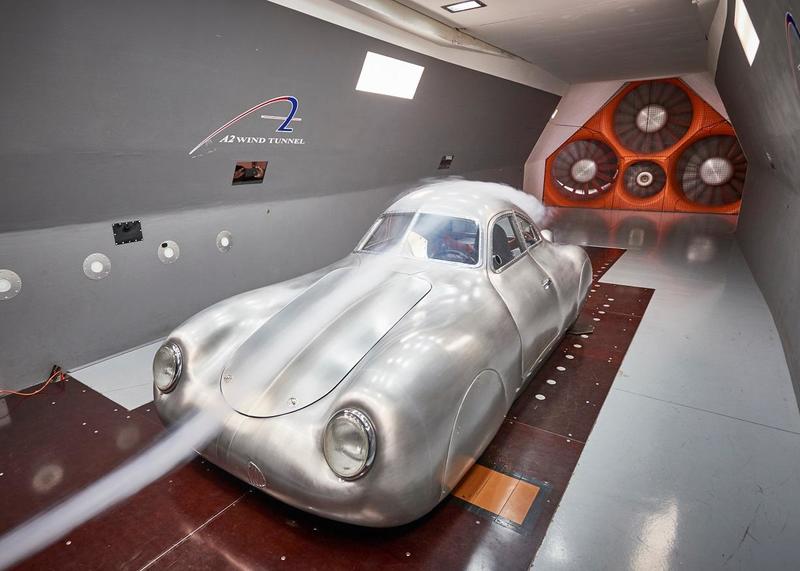
None of this could be validated by feel alone, and that’s where the wind tunnel stopped being a verification tool and became the primary engineering space. Teams built scale models, then full-size correlations. Rolling roads inside the tunnel simulated the moving ground plane. Smoke wands traced where the airflow separated and where it stayed attached. Pressure taps in the floor returned data that no driver’s hands could ever communicate with the same precision, and engineers began to understand that the car they were building existed in two states: the one you could see, and the aerodynamic one the tunnel revealed.
What the tunnel kept exposing was the cost of compromise. Every shape decision on the exterior surface of the car had a consequence somewhere else. A mirror mounting that created a vortex could destabilize airflow to the rear diffuser. A wider front wing generating more downforce could change the balance so dramatically that the rear tires overheated inside a lap. The tunnel made those relationships visible, and it forced engineers to stop treating individual components as solutions and start treating the whole car as a single aerodynamic system. The floor, the wing, the sidepod, the wheel arch — they weren’t separate problems. They were all part of the same conversation.
“The tunnel made those relationships visible — and it forced engineers to stop treating individual components as solutions.”
What the Driver Feels
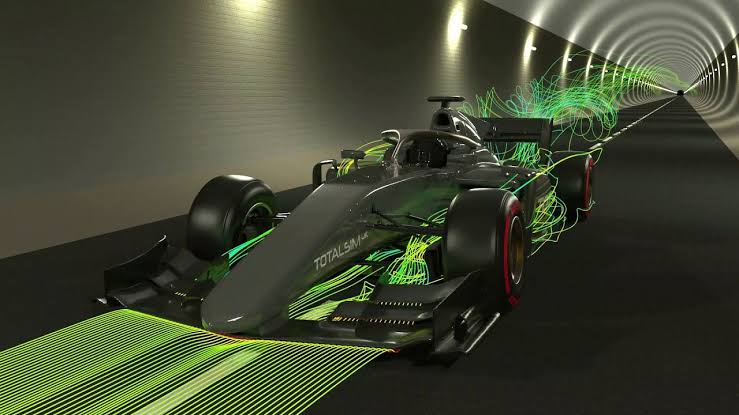
The output of all that tunnel work lands in a place that’s difficult to quantify but immediately real: the confidence a driver can carry through a fast corner. When the aerodynamic platform is stable and the downforce curve is consistent across the speed range, the driver doesn’t need to manage the car. They can attack the corner knowing the car will respond the same way at 150 miles per hour that it did at 120. That predictability isn’t a comfort feature. It’s a performance multiplier, because a driver who trusts the car will brake later, carry more speed through the apex, and get back to the throttle sooner than one who’s managing an uncertain platform.
The tires feel it too. Consistent aerodynamic load means consistent tire temperature, which means the compound works in the window it was designed for across more of a stint. It’s the difference between a car that can run long on a set of tires and one that degrades unpredictably because the aero balance shifts as fuel burns off and the car’s ride height changes. Those aren’t separate engineering problems. The tunnel work that produces a stable floor at low fuel also extends the tire’s useful life, which changes the pit strategy, which determines where the car finishes. The chain from shape to outcome is longer than most people assume.
The Shape Is Never Finished
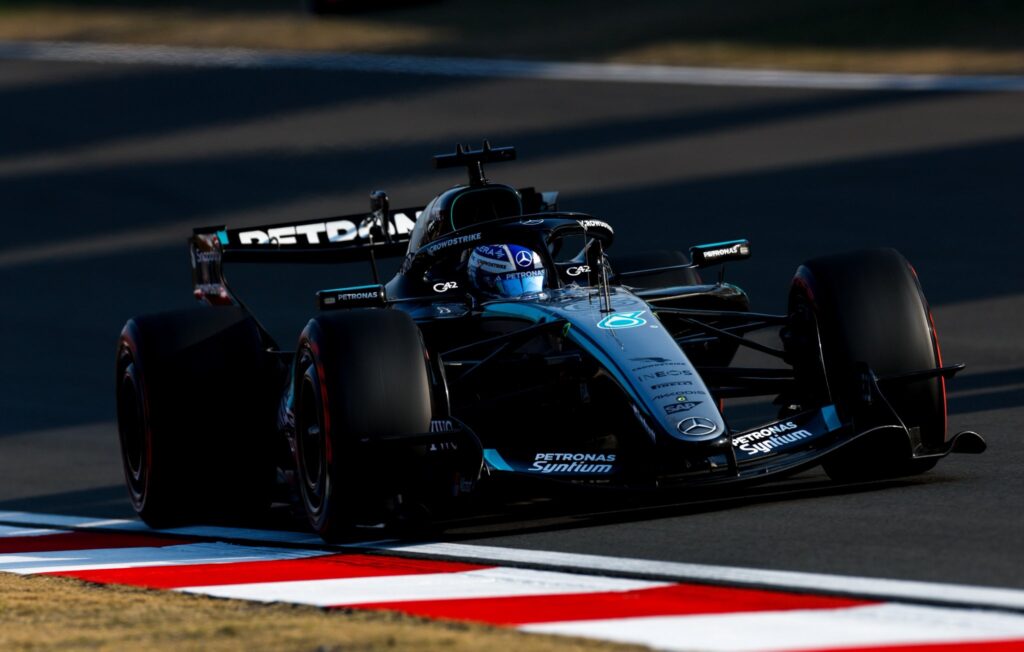
Modern aerodynamic development doesn’t end with a launch. CFD runs continuously between races, wind tunnel sessions happen on restricted schedules governed by the regulations, and even during a race weekend the engineers are watching how the car sits on the track, how the floor loads under braking, whether the rear wing angle dialed in at the factory matches what the circuit actually demands. The tunnel produces a baseline. The track is where that baseline gets challenged.
What’s changed in recent years is the depth of what the tunnel can predict. The correlation between simulation and on-track behavior has become precise enough that major development directions are validated in scale before a full-size part is ever cut. Teams can explore a hundred front wing profiles in the time it would have taken to build three physical versions a decade ago. The speed of iteration has accelerated faster than the cars themselves, and the teams that win aren’t always the ones with the most raw downforce. They’re the ones whose aerodynamic platform degrades least, shifts least, and demands least from the driver to manage. The tunnel doesn’t tell you how to go fast. It tells you how to stay fast, and that’s a harder problem than it looks.