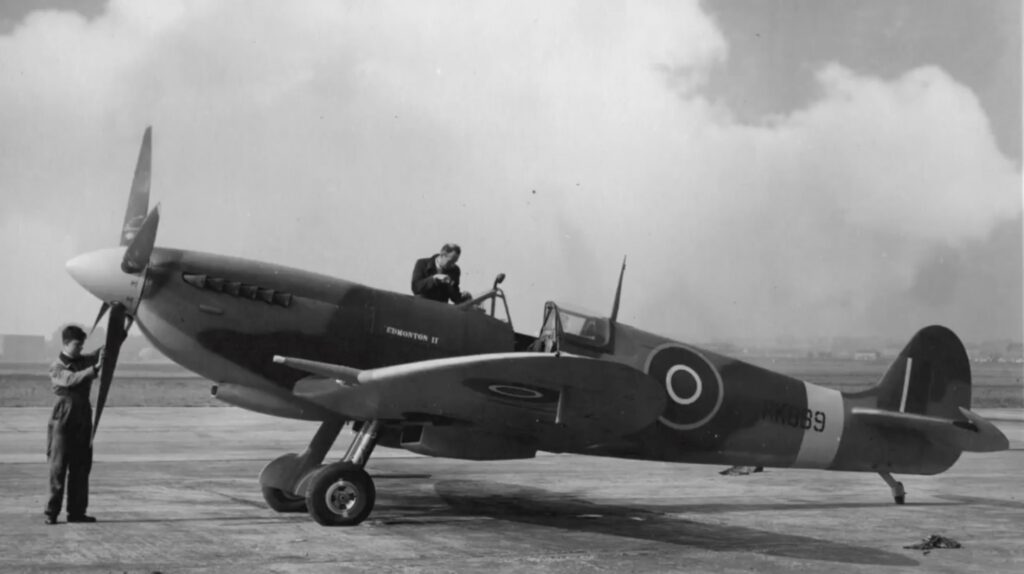

At Reno, the P-51 sitting on the ramp does not look like the one hanging in a museum forty miles away. The wings have been clipped by several feet. The canopy has been reshaped and lowered to cut drag. Somewhere behind the cowling, a water injection system has been plumbed into a Merlin engine that never carried one when it left the factory in 1944. It is still, by every legal and historical definition, a P-51 Mustang. It is also, in almost every way that matters to the person flying it, a different airplane.
That difference is not a matter of taste. It is the visible result of two engineering disciplines answering two different questions about the same airframe. Restoration asks what the aircraft was. Racing asks what the aircraft can be made to do. Both require total command of the same structure, the same aerodynamics, the same engine, and they pull in directions that do not reconcile easily.

The Same Airframe, Two Questions
Walk the ramp at an airshow, and the Mustangs look like variations on a theme. Walk it at Reno, and the differences start to matter. A race-prepared airframe has had its wingspan reduced, sometimes by four or five feet, to sharpen roll rate at speeds the original design never anticipated sustaining for laps at a time. The canopy is often reworked into a lower, more streamlined profile. Cooling intakes get reshaped, not to look different, but because an engine running at race manifold pressures generates heat the stock ducting was never sized to handle.
None of this happened by accident, and none of it happened because someone preferred it aesthetically. Every one of those changes is a response to a specific problem: how do you take an airframe built for combat speed in 1944 and make it hold together at the edge of what a piston engine and an airframe can survive, lap after lap, for the length of a race. The restored aircraft standing on a museum ramp is answering a completely different question. It is asking how close you can get an airframe back to the exact condition it left the factory in, down to the serial numbers stamped on individual parts.
What Restoration Actually Protects
Restoration work looks, from the outside, like the quieter discipline. It is not. Matching a data plate to the correct production block, sourcing period-correct hydraulic lines, verifying that a canopy frame came from the right manufacturing run rather than a compatible substitute, this is engineering discipline aimed entirely at fidelity. The restorer’s skill is not in making the airplane better. It is in resisting every temptation to make it better, because the value of the object depends on it staying exactly what it was.
This is harder than it sounds. Modern materials are frequently stronger, lighter, and easier to source than the wartime originals, and a restorer with the skill to build something superior has to choose not to. The engineering judgment here is almost entirely about restraint. What gets preserved is not just metal and rivets. It is a specific historical moment, held as intact as eight decades will allow.
What Racing Actually Demands
Air racing asks the opposite of the airframe, and it asks it without apology. Clipping the wingspan sacrifices low-speed stability in exchange for a tighter turn radius around the pylons. Reshaping the cowling sacrifices the aircraft’s original silhouette in exchange for cooling margin at sustained high power. Water injection sacrifices the engine’s original service life in exchange for a burst of horsepower it was never designed to produce for more than a few minutes at a time. <blockquote>A restored Mustang tells you what the airframe once was. A raced one tells you what it can still be made to do.</blockquote>
Every one of those trades is deliberate, and every one of them is engineering in its purest form: define the limit, understand exactly why it exists, and decide how far past it you are willing to push. The unlimited class exists because a small number of people wanted to know what these airframes were actually capable of once you stopped designing for combat requirements and started designing purely for speed. The answer, most seasons, is faster than the original engineers ever imagined, and closer to structural failure than most owners are comfortable discussing in public.

Where the Two Disciplines Collide
The tension between these two approaches is not theoretical. It shows up in insurance policies, in FAA airworthiness inspections, and in the quiet arguments that happen at warbird gatherings when a race-modified airframe and a static-restored one end up parked next to each other. A wing that has been clipped cannot simply be un-clipped. An airframe that has absorbed years of race-power engine cycles carries fatigue that a museum piece never will. Every modification made in the name of speed is a subtraction from something that can’t be replaced, because the population of flying P-51 airframes is fixed and shrinking, not growing.
This is where the disagreement gets real. Restorers see race modification as a kind of erosion, a slow conversion of irreplaceable history into a faster but lesser thing. Racers see static restoration as a kind of arrest, an airframe frozen at the exact moment it stopped being useful for anything except looking correct. Neither side is wrong about what they are protecting. They are protecting different things, and the airframe itself cannot be both at once.
What the Choice Reveals
What is left, once you set the two disciplines side by side, is not really a question about airplanes. It is a question about what people do with something they did not build and cannot replace. One approach holds the inheritance exactly as it was received, treating faithfulness itself as the achievement. The other asks what more the inheritance might still be capable of, and accepts the cost of finding out.
Most people who work on these airframes, restorers and racers alike, understand this trade better than anyone watching from the ramp. They have simply made different peace with it. The Mustang sitting still in a museum and the one banking hard around a pylon at Reno are both, in their own way, a form of respect for the same machine. They just can’t agree on what respect requires.
The Hangar | Vitesse