The Comfort of Telemetry
The modern racing garage is a sanctuary of measurement. Before an engine ever turns over, the environment is defined by screens and continuous streams of data. Engineers sit behind banks of monitors, tracking metrics that would have seemed absurd a generation ago. They read tire pressures down to the hundredth of a pound and calculate fuel loads to the exact milliliter. They run millions of simulated laps to predict how a chassis will behave under heavy braking.
There is a profound psychological comfort in all this telemetry. It offers the illusion that the physical world can be tamed by mathematics. When a team stares at a perfectly modeled aerodynamic profile, they are really looking at a promise of predictability. We hold onto a deep human belief that if we can just gather enough information, we can eliminate risk altogether. We desperately want to believe that measuring the environment is the exact same thing as mastering it.
Inside these sterile spaces, speed makes perfect logical sense. A spreadsheet will tell you exactly when the rear tires will reach their optimal operating window. The digital model guarantees the suspension geometry will absorb the harsh curb at turn four. As long as the car remains stationary on its stands, the math is flawless and the engineers remain entirely in charge. The violent reality of the track hasn’t been allowed into the room yet.
When the Simulation Breaks
The transition happens the moment the air jacks release and the tires hit the concrete. Leaving the pit lane is the exact point where theory is forced to submit to reality. The quiet hum of the server racks is replaced by the violent vibration of a firing engine. As the car merges onto the circuit, the perfect digital environment shatters. The track is not a sterile simulation. It is a living, breathing surface that changes by the minute.
Almost immediately, the variables begin to mount. A sudden cloud cover drops the asphalt temperature by three degrees, instantly changing the chemical behavior of the rubber compound. A crosswind sweeps over the crest of a hill, violently upsetting the delicate aerodynamic balance the engineers spent weeks perfecting. The air out here does not flow uniformly like it does in the wind tunnel. It is chaotic, heavy, and entirely indifferent to the math.
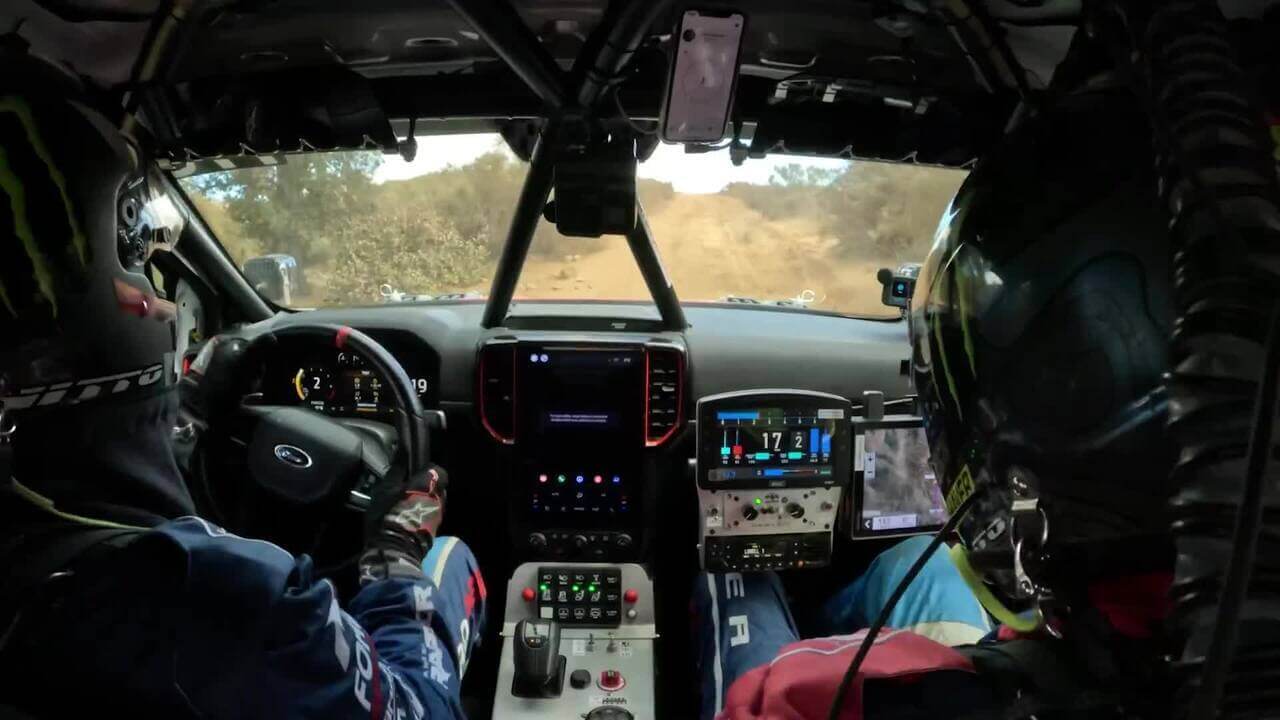
Inside the helmet, the driver feels this breakdown in real time. The steering wheel goes unexpectedly light through a high-speed sweeper. The rear chassis steps out under heavy braking just a fraction of a second earlier than the data predicted. In these fractured moments, the telemetry on the dash becomes useless. It is no longer a guarantee of what will happen next. It is simply a historical record of what was supposed to happen. The illusion of absolute mastery dissolves instantly, leaving the driver completely alone with the machine and the elements.
Fighting the Machine
The natural response to a sudden loss of predictability is resistance. When the chassis begins to slide across the track instead of gripping it, the human instinct is to fight back. A driver will grip the steering wheel tighter. They will try to bend the physics of the corner to their will by braking later and steering sharper. The conscious mind screams that if it just applies enough force, it can regain mastery over the environment.
But a racing car won’t be bullied into submission. Fighting the machine only amplifies the instability. The tension in the driver’s arms translates directly into harsh, jerky inputs on the steering column. Overcorrecting a slide upsets the delicate weight distribution, sending the rear tires further out of line. The harder the driver fights the environment, the slower the lap becomes. The physical reality of the track demands something entirely counterintuitive. Survival requires the driver to stop fighting the slide and begin working within it.
Surrendering the Grip
To find the rhythm again, the driver has to accept the loss of traction. They have to physically loosen their hands on the wheel. They must let the chassis settle and trust the remaining mechanical grip they actually have, rather than fighting for the perfect grip they want. It is a terrifying contradiction to realize that forward momentum is only found the moment you surrender the desperate need to dominate the vehicle.
We engineer our own lives with the exact same white-knuckled desperation. We build personal telemetry out of our careers, our schedules, and our timelines. We hold onto the exhausting belief that if we can just anticipate every variable, we can force the exact future we desire. When the unexpected crosswind inevitably hits our plans, we panic and overcorrect. We grip the wheel tighter, fracturing ourselves as we try to tame an environment that remains completely out of our hands. The grace we are frantically searching for only arrives in the quiet, terrifying moment we admit we were never in charge of the variables to begin with. We simply have to loosen our hands.